Tuesday, May 10, 2022

3D Printing Media Network – The Pulse of the AM Industry

3D Printing Media Network – The Pulse of the AM Industry


Is China really 3D printing the 590 ft Yangqu dam in Tibet?

Posted: 10 May 2022 04:01 PM PDT

According to an article that appeared on the China Morning Post, a pay-to-access online newspaper, China is using AI and 3D printing to build a 590-foot-tall dam in just 2 …

The post Is China really 3D printing the 590 ft Yangqu dam in Tibet? appeared first on 3D Printing Media Network - The Pulse of the AM Industry.

Velo3D reports Q1 2022 revenue growth of 900% YoY

Posted: 10 May 2022 02:51 PM PDT

Velo3D, Inc. (NYSE: VLD), a leading additive manufacturing technology company for mission-critical metal parts, reported that it has generated $12 million in sales in Q1 2022, which represents an increase …

The post Velo3D reports Q1 2022 revenue growth of 900% YoY appeared first on 3D Printing Media Network - The Pulse of the AM Industry.

Stratasys releases 16 new materials for SAF, FDM and P3 technologies

Posted: 10 May 2022 02:28 PM PDT

Stratasys Ltd. (NASDAQ: SSYS), a leader in polymer 3D printing solutions, led off a slew of announcements across AM hardware, materials and software segments with the launch of 16 new …

The post Stratasys releases 16 new materials for SAF, FDM and P3 technologies appeared first on 3D Printing Media Network - The Pulse of the AM Industry.

Mechnano Formula1 now available on Stratasys Origin One 3D printer

Posted: 10 May 2022 02:04 PM PDT

The Mechnano Formula1 photopolymer material is now included in the Stratasys Origin P3 OML (Open Material License) Exploratory release on May 10th, 2022. Through its groundbreaking discrete carbon nanotube (DCNT) …

The post Mechnano Formula1 now available on Stratasys Origin One 3D printer appeared first on 3D Printing Media Network - The Pulse of the AM Industry.

3D Printing Media Network – The Pulse of the AM Industry

3D Printing Media Network – The Pulse of the AM Industry


BCN3D and Henkel to further develop Viscous Lithography Manufacturing

Posted: 10 May 2022 05:08 AM PDT

3D printing solutions manufacturer BCN3D Technologies and one of the global leaders in adhesives, sealants, and functional coatings, Henkel Adhesive Technologies, are set to collaborate on the development of formulations …

The post BCN3D and Henkel to further develop Viscous Lithography Manufacturing appeared first on 3D Printing Media Network - The Pulse of the AM Industry.

The US Air Force and GE progress toward final phase of ‘Pacer Edge’

Posted: 10 May 2022 03:00 AM PDT

Last year, the US Air Force (USAF) and GE entered the third phase of its 'Pacer Edge' pathfinder. Phase III has focused on 3D printing for four out-of-production parts: a …

The post The US Air Force and GE progress toward final phase of 'Pacer Edge' appeared first on 3D Printing Media Network - The Pulse of the AM Industry.

Braskem releases EVA based sustainable 3D printing filaments

Posted: 10 May 2022 02:00 AM PDT

Braskem, the largest polyolefins producer in the Americas, as well as a market leader and pioneer producer of biopolymers on an industrial scale, released three new sustainable 3D printing filament …

The post Braskem releases EVA based sustainable 3D printing filaments appeared first on 3D Printing Media Network - The Pulse of the AM Industry.

Optomec receives $1.5M Air Force contract

Posted: 10 May 2022 01:00 AM PDT

In addition to the previous $500,000 process development contract for the additive repair of jet engine components, Optomec has received a $1.5 million contract to develop a metal additive manufacturing …

The post Optomec receives $1.5M Air Force contract appeared first on 3D Printing Media Network - The Pulse of the AM Industry.

Ceramic piston 3D printed by XJet for Chaos Ultra car

Posted: 09 May 2022 08:00 AM PDT

The world's first additively manufactured car engine piston, made entirely with ceramic, has been developed by Spyros Panopoulos Automotive (SPA) for its Chaos Ultra car using XJet technology. Spyros Panopoulos …

The post Ceramic piston 3D printed by XJet for Chaos Ultra car appeared first on 3D Printing Media Network - The Pulse of the AM Industry.

Fathom FY 2021 revenue results show real potential of AM

Posted: 09 May 2022 06:00 AM PDT

Wisconsin-based Fathom has been driving the use of AM from prototyping to tooling to production for three decades. The company is now one of the largest on-demand digital manufacturing platforms …

The post Fathom FY 2021 revenue results show real potential of AM appeared first on 3D Printing Media Network - The Pulse of the AM Industry.

Sculpteo is launching its new State of 3D Printing 2022 survey

Posted: 09 May 2022 03:00 AM PDT

With more than 1900 respondents, Sculpteo's State of 3D Printing has been a great success in 2021. The study has been noticed by several actors in the AM industry over …

The post Sculpteo is launching its new State of 3D Printing 2022 survey appeared first on 3D Printing Media Network - The Pulse of the AM Industry.

LFAM of composite materials goes extra large at JEC World 2022

Posted: 09 May 2022 01:30 AM PDT

The JEC World show in Paris, coming back this year after two editions off due to the COVID pandemic, is where the composites community comes together to show the latest …

The post LFAM of composite materials goes extra large at JEC World 2022 appeared first on 3D Printing Media Network - The Pulse of the AM Industry.

Golf tee markers 3D printed using NatureWorks’ bio-based Ingeo PLA

Posted: 08 May 2022 05:00 AM PDT

NatureWorks, the leading global raw material manufacturer of the bio-based polymer PLA, was a sponsor of the 2021 Zurich Classic stop on the PGA tour. In collaboration with, Slant 3D, …

The post Golf tee markers 3D printed using NatureWorks’ bio-based Ingeo PLA appeared first on 3D Printing Media Network - The Pulse of the AM Industry.

IVS 2022 to focus on AM as a solution for valve manufacturing

Posted: 08 May 2022 01:00 AM PDT

The organizers of the Industrial Valve Summit (IVS), one of the most important international events dedicated to industrial valve technologies and flow control solutions, have presented the fourth edition of …

The post IVS 2022 to focus on AM as a solution for valve manufacturing appeared first on 3D Printing Media Network - The Pulse of the AM Industry.

3DPrint.com | The Voice of 3D Printing / Additive Manufacturing

3DPrint.com | The Voice of 3D Printing / Additive Manufacturing


BICO Buys Bioprinting Startup Allegro 3D—8th Acquisition in a Year

Posted: 10 May 2022 06:00 AM PDT

BICO (STO: BICO) has purchased another bioprinting startup, adding to its now massive portfolio of 13 acquisitions. This time around, it was rapid-throughput bioprinting company Allegro 3D, a spin-off from the University of California San Diego (UCSD). Led by principal investigator and CEO Wei Zhu, Allegro 3D develops technology for fabricating tissue models at the industrial scale to advance drug discovery and assay development. The $6 million acquisition, announced Friday, is meant to complement BICO's existing bioprinting systems by helping customers increase their output of biofabricated constructs.

As bioprinting technology, like BICO's, continues to lower entry barriers for researchers, universities, and companies worldwide, identifying faster solutions is essential. Following the deal’s announcement, BICO claimed that Allegro 3D's tools could enable high precision and high-speed bioprinting tailored for multi-well printing, providing life science companies the features needed for developing tissue constructs in regenerative medicine and drug testing workflows.

According to a company statement, Allegro 3D's patented light-based printing technology will be commercialized by BICO subsidiary Cellink but will remain an independent entity. Given the high throughput nature of the process, the addition of Allegro 3D's impressive portfolio, including its proprietary digital light processing (DLP) system that prints directly into multi well-plates, provides a massive injection in opportunities to scale operations for bioprinting customers.

Medical scientist working on non-animal testing.

BICO partnered with the Center for Contemporary Sciences to support FDA Modernization Act of 2021. Image courtesy of Center for Contemporary Sciences.

As Zhu announced the next step in Allegro 3D's journey through a LinkedIn post, he also looked back at his work with co-founder Shaochen Chen, a bioprinting expert, professor, and chair of the NanoEngineering Department at UCSD. The company's success builds on the bioprinting technology that Chen's team invented in 2013, which started out as a platform for creating living biological tissues for regenerative medicine, with projects 3D printing liver tissues, blood vessel networks, heart tissues, spinal cord implants, and even coral-inspired structures that marine scientists can use for studying algae growth and for aiding coral reef restoration projects.

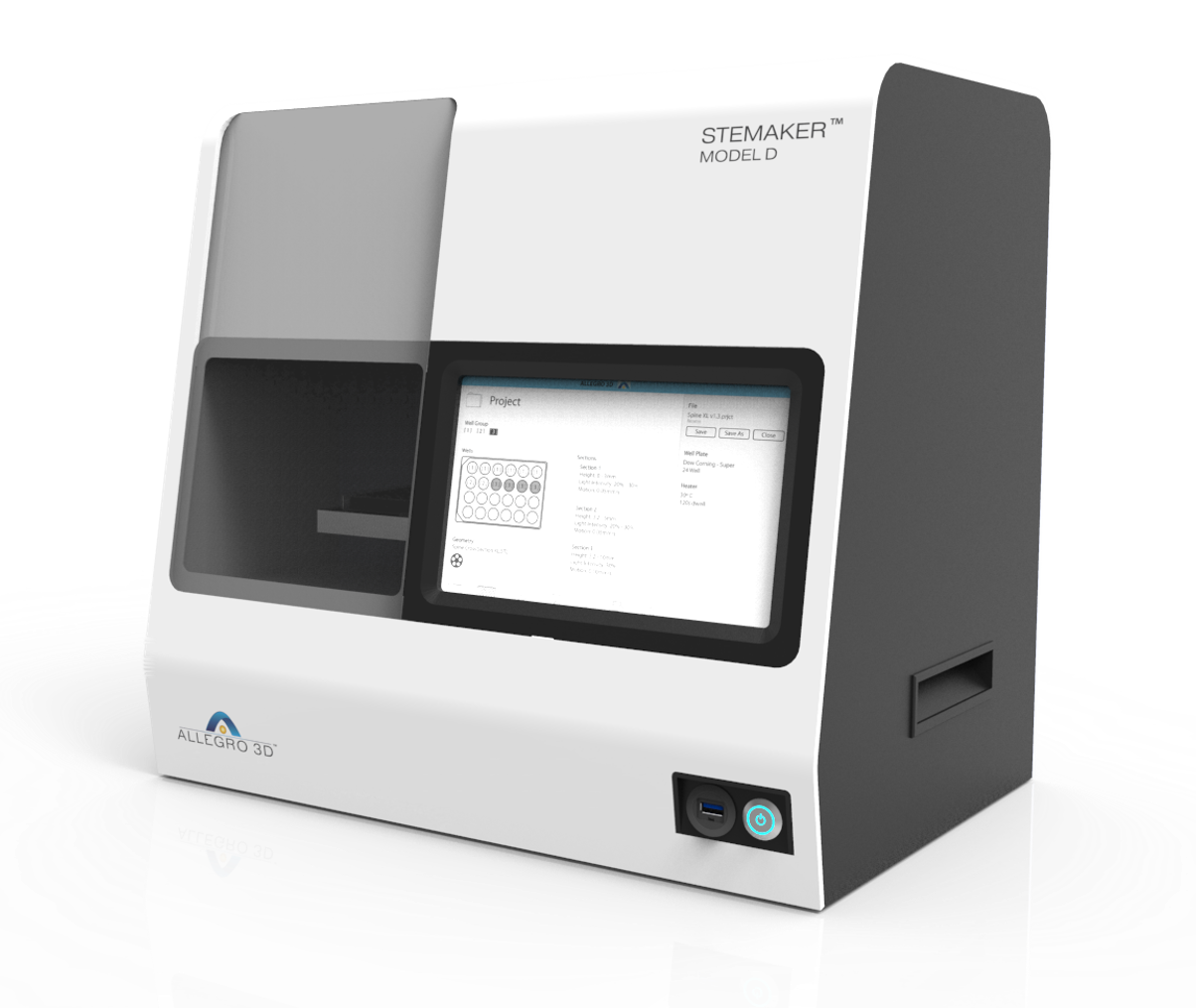
In 2017, Chen co-founded Allegro 3D with nanoengineering alumnus Zhu, and together they received grant and funding to develop the 3D bioprinting model into the fully commercialized Stemaker device, which is automated for printing in 6-, 12-, and 24-well plates and has a compact design that makes it easily fit any biosafety cabinet.

Today, Zhu pointed out that it has been a "great journey to work with Dr. Chen and the entire Allegro 3D team to translate our high-throughput and high-precision DLP bioprinting technology from lab research into broader commercial applications in regenerative medicine and drug discovery. We are extremely excited to join the Bioconvergence revolution. We truly look forward to Creating the Future of Health alongside Cellink, and the wider BICO family."

Allegro 3D's Stemaker Model D Bioprinter.

Allegro 3D’s Stemaker Model D Bioprinter. Image courtesy of Allegro 3D.

With the acquisition officially closing on May 5, 2022, Allegro 3D will be consolidated in BICO’s financial statements and the financial reporting in the second quarter of 2022. Allegro 3D's products were commercialized by year-end 2021, and in 2022 the company is expected to generate roughly one million dollars in revenue with positive EBITDA (earnings before interest, taxes, depreciation, and amortization) margins. In the near term, Allegro 3D is expected to grow exponentially and above BICO's financial targets.

Commenting on the deal, BICO's Head of Mergers and Acquisitions (M&A), Jacob Thordenberg, said this follows the brand's strategy of "add-on acquisitions" where Allegro 3D complements Cellink's product portfolio strongly and can quickly be integrated into the current product offering and commercialization infrastructure. Moreover, the brand claims its solutions "bring us closer to a world where on-demand tissue is a reality," reducing the dependency on animal models.

After rebranding as BICO, the company revealed that its net sales grew by more than 600% during the first half of 2021, driven by M&As and organic growth. For the full year 2021, the company revealed that 44% was organic growth, while the rest comes from the new companies in its portfolio. The strategy to acquire complementing technologies to cover the entire bioprinting workflow has been around since 2018, when BICO took over the German provider of automated liquid handling instruments, Dispendix. Following that first move, the company acquired 12 other startups, including Allegro 3D.

However, news of the latest M&A deal follows an internal rift that started after the departure of one of the company’s co-founders and Chief Financial Officer (CFO), Gusten Danielsson. In late April 2022, Danielsson, responsible for strategizing BICO's economic direction, said CEO Erik Gatenholm was "no longer the right leader for the company, even if he remains a controlling shareholder." The internal battle is not over yet, but that hasn't seemed to stop the company from moving forward with its strategy.

The post BICO Buys Bioprinting Startup Allegro 3D—8th Acquisition in a Year appeared first on 3DPrint.com | The Voice of 3D Printing / Additive Manufacturing.

NASA Copper Alloy Qualified for Use with VELO3D Metal 3D Printers

Posted: 10 May 2022 05:30 AM PDT

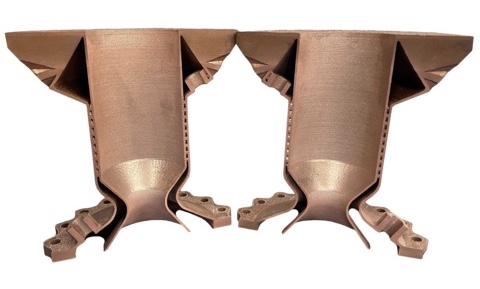
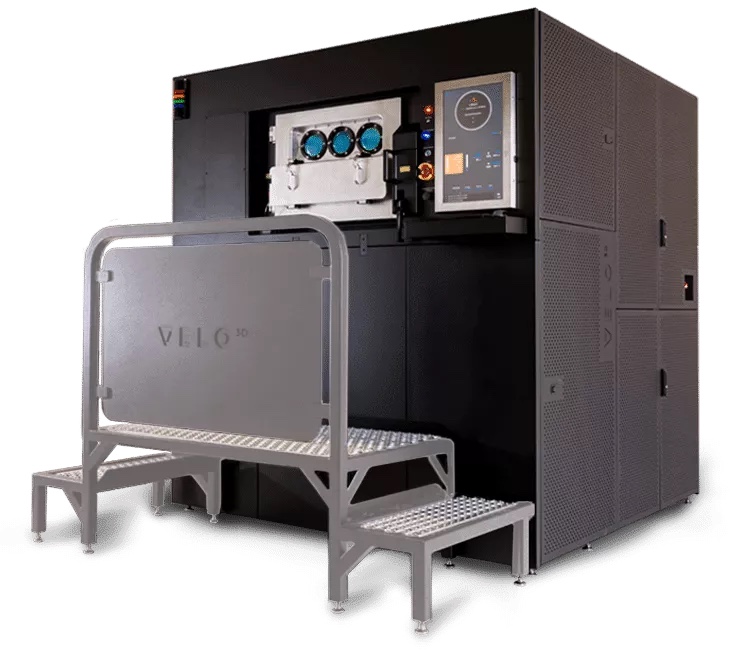
Velo3D announced that it has qualified GRCop-42, a NASA-developed copper-chromium-niobium alloy, for use with Velo's Sapphire range of metal 3D printers. Velo3D, a leading additive manufacturing (AM) startup based in Silicon Valley, specializes in producing AM solutions optimized for the aerospace and space sectors. The company's first demo parts printed from GRCop-42 will be exhibited at the Velo3D booth (#1508) at the RAPID + TCT conference next week (May 17-19), in Detroit.

Texas-based machine shop Knust-Godwin, which already has three Velo3D systems in use, will be the first customer to receive a Sapphire for GRCop-42. Aside from Knust-Godwin, Velo3D noted in a press release that it has several more systems capable of printing with GRCop-42 currently on order. Along these same lines, the CEO and founder of Velo3D, Benny Buller, said that the company has had "extensive demand" for Sapphire machines that can print with the copper alloy.

The third-most-used industrial metal, copper is especially prized by engineers for its resistance to corrosion and thermal conductivity. These qualities make copper ideal for end-use applications involving extreme environments, and are indeed the two main attributes that make the element so crucial to the space sector. It’s no surprise, then, that, in its Copper Additive Manufacturing 2020–Market Database and Outlook report, SmarTech Analysis anticipates over 1.4 million kilograms of copper powder, both pure and alloys, to be shipped by 2029. In this vein, as the tests conducted thus far have illustrated, the initial intended use of GRCop-42 is for 3D-printed rocket engines: the engines get their strength from the chromium and niobium, and their ability to remain consistent after cooldown from the copper.

The "GR" in "GRCop" stands for Glenn Research, in reference to the NASA institute where GRCop-42 and its "predecessor", GRCop-84, were created. As noted in a 2019 academic paper on the application of GRCop-42 in 3D-printed combustion chambers for rocket engines, NASA started studying the use of copper-chromium-niobium alloys for conventional production methods in 1987. The initial tests led to GRCop-84 and GRCop-42 being "selected for further development", which ended up lasting through 2005. During this first phase, GRCop-84 was studied much more thoroughly than GRCop-42.

The next phase of testing these materials, for use in AM applications, began in 2014, when NASA engineers started using GRCop-84 in laser powder bed fusion (LPBF) production of combustion chambers. In 2018, NASA began similar testing with GRCop-42, at which point the latter alloy quickly started to gain favor with engineers. In another 2019 research paper, the authors concluded, "In this study, MSFC [Marshall Space Flight Center] and GRC [Glenn Research Center] demonstrated that GRCop-42 is a readily printable alloy that can be additively manufactured into fully dense components with consistent properties at higher throughput rates than its predecessor, GRCop-84."

Velo3D is one of the first companies able to sell machines capable of working with this alloy, which further solidifies the company's place among the leaders of the space AM sector. And although GRCop-42 is so far being sought for this particular purpose, now that systems that are capable of working with it are commercially available, new possibilities for the alloy's use will no doubt be explored. This development is a good reminder of how long in the making has been the payoff that the 3D-printing industry, as a whole, is now finally starting to see.

Images courtesy of Velo3D

The post NASA Copper Alloy Qualified for Use with VELO3D Metal 3D Printers appeared first on 3DPrint.com | The Voice of 3D Printing / Additive Manufacturing.

Harvard Grads Aim for Mass 3D Printed Alt Meats with $3M Seed Round

Posted: 10 May 2022 05:00 AM PDT

Businesses trying to revolutionize the alternative meat industry through 3D printing attracted hundreds of millions of dollars in funding in the last ten years, growing from just a few companies to dozens in the same time frame. One of the newcomers in the race to recreate meat sustainably is Y Combinator-backed startup Mooji Meats. Based out of Baltimore, Maryland, this developer of meat alternatives leverages its own advanced 3D printing process and has just raised $3 million in an oversubscribed seed round the same year it launched to the world.

Led by technology startup accelerator Y Combinator, the round included participation from food tech VC firms AgFunder, Lever, Lifely, Good Startup, Clear Current Capital, Siddhi Capital, and other investors like Collaborative Fund, FoodHack, and several angel backers. The startup said the funds would go towards enabling the next generation of alternative meats.

As one of the world's leading start-up accelerators, Y Combinator has backed unicorns like Airbnb, Reddit, Coinbase, Stripe, DoorDash, and GitLab. Today Mooji Meats is part of Y Combinator's Winter 2022 batch, which was presented during the 34th Demo Day along with 413 other startups from 42 countries, representing more than 80 sectors.

Y Combinator Winter 2022 batch includes Mooji Meats.

Y Combinator Winter 2022 batch, climate startups includes Mooji Meats. Image courtesy of Mooji Meats via LinkedIn.

Founded by software engineer Insa Mohr and Johns Hopkins University professor Jochen Mueller, Mooji leverages new printing technologies developed by Harvard University‘s Faculty of Arts and Sciences engineering school SEAS (John A. Paulson School of Engineering and Applied Sciences) to create what it calls "meat 2.0." This is basically the next generation of ethical and sustainable meat, which does not require farming and butchering livestock.

Both founders studied at Harvard University. Mohr finished her master's degree in information technology, and Mueller did his postdoc work to texture plant-based meat and cultured meat at Harvard SEAS, worked at the research lab of microscale 3D printing pioneer Jennifer Lewis and became a research fellow at the acclaimed Wyss Institute for Biologically Inspired Engineering. Through their combined experience, it's easy to see why they would turn to 3D printing technology to channel their interest in alternative meats.

3D printed meat by Mooji Meats.

Mooji Meats wants to 3D print plant- and culture-based meats. Image courtesy of Mooji Meats.

According to Y Combinator, by building a system that utilizes this new technology, which can print with hundreds of nozzles simultaneously, Mooji can create alternative meats quickly, inexpensively, and at scale while closing the gap in taste, look, feel, nutrition, and cost between meat mimics and real meat. Tapping into this $1 trillion market opportunity is the ultimate goal for the founding duo.

Still in its early stages, the team plans to develop the first meat prototype within the next six months, hoping to bring its printers to market in the next year and a half. Just two weeks ago, Mooji was "graduating" from Y Combinator, and today the startup has already received millions of dollars in funding and has staged a plan for the future of its product.

Although we tend to hear about startups focusing on either plant-based or cultured meats, we rarely get to learn about a company tackling the two simultaneously. But for Mooji Meats, the core of the business is the technology; whether it’s used for plants or cells is not the issue.

The gist of their proposal is centered around creating whole cuts instead of ground meats to compete with the real meat industry in the long term. In the last few years, 3DPrint.com has followed competing brands through this path, including Redefine Meat, Novameat, and even Plantish with its alternative whole-cut fish filets. But there’s nothing like a bit of competition to get this new industry up and running.

3D printed chicken by Mooji Meats.

Mooji Meats wants to 3D print plant- and culture-based meats. Image courtesy of Mooji Meats.

Mooji Meats considers its proprietary process to yield best-in-class textures for an "authentic mouthfeel," which industry experts deem to be one of the toughest challenges that newcomers face. Recreating that full, savory feel of eating meat needs to be at the top of the list for companies trying to sell an alternative to traditionally sourced meat.

But other than texture, Mooji has also focused on creating a solution that will allow for high throughput, suitable for mass production, while costing less than one-fifth of comparable processes. Clearly, the future of this industry is texture, scalability, and cost, but if Mooji has all three of these qualities down already, then we can't wait to see what they will launch next.

The post Harvard Grads Aim for Mass 3D Printed Alt Meats with $3M Seed Round appeared first on 3DPrint.com | The Voice of 3D Printing / Additive Manufacturing.

How Intelligent Automation and Networking of 3D Printing and Post-processing Increase Productivity

Posted: 10 May 2022 04:30 AM PDT

The market for Additive Manufacturing (AM) processes continues to grow and will even fivefold by 2030, according to SmarTech Analysis. More and more companies are taking a step towards the factory of the future because of the advancement of standardization in Additive Manufacturing at the industry level. Moreover, the advantages of Additive Manufacturing are convincing: lower inventory costs due to individual post-production of parts, a higher degree of specific product configurations, and flexible prototyping of complex geometries.

Nevertheless, AM is still often found in prototyping, small batch production, or as a supplement to mass production lines. The main challenge still lies in the long production time of a component in the AM system, whereas upstream and downstream production steps have significantly shorter cycle times. But companies that start right here can save up to 70 percent of their manufacturing costs and make their AM fit for (large-scale) series production. How? With intelligent automation and networking of the individual AM process steps using state-of-the-art transport, handling, and software technology. In this way, companies enable an optimal flow of materials, lower cost per part, and a safer working environment for employees.

Four reasons for automation

1. Increased efficiency and productivity

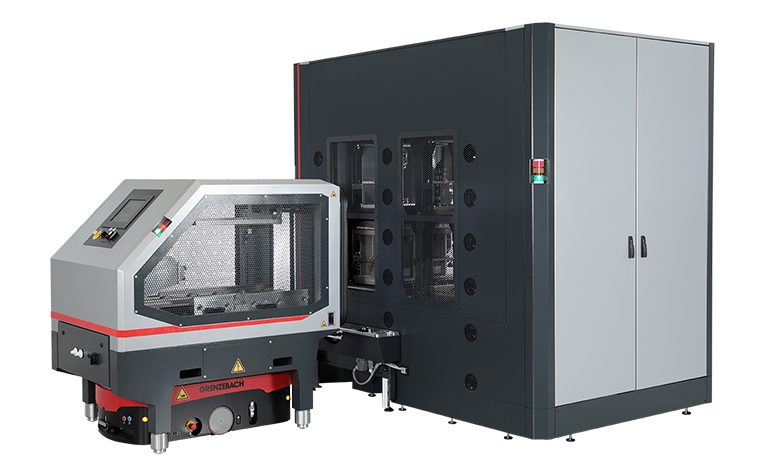
Due to automation, the printing process is intelligently networked and synchronized with downstream process steps (post-processing) that have significantly shorter cycle times. A practical example: while the part is still being printed in system 1, the finished build job of system 2 is already transported to downstream stations such as unpacking and inspecting; system 2 can already start the next print. No manual intervention is required, so production can also continue even though operators are not on duty.

Furthermore, there is no idle time – on the line as well as on the machine side. Employees can concentrate on more demanding tasks during the shift.

Exchange and transport solutions for a fully automated process chain and several build jobs is a row for Laser Sintering

2. Lower cost per part

Intelligent networking of the individual production steps allows companies to make maximum use of equipment. Companies enhance the workload of all equipment along the process chain and avoid unnecessary investments. For example, automation enables machines to be used in three-shift operations, even though only one or two shifts are staffed with employees.

In this way, companies not only optimize their production times and machine utilization (OEE) but ultimately even produce at lower costs per part.

Bin-picking solutions with a camera-based part detection and robot-based sorting bring a significant advantage for mass customization.

3. Enabling occupational health and safety

During the post-processing of 3D-printed parts, there are health risks due to fine dust exposure and the handling of hot objects. Using automated guided vehicles (AGV) with suitable sealed transport solutions, customized interfaces and machine fittings, and installed conveyor lines, the dust exposure for employees and the risk of injury from hot objects are reduced.

Inert Gas Container and Docking Station for a fully automated and dust-tight transport in an EOS M 400 system environment

4. Repeatability and reproducibility

By always carrying out individual process steps, in the same way, the undesirable influence on the often still sensitive manufacturing process is minimized. The path is cleared for 24/7 series production and a light-out factory.

Intelligent automation and networking with the right partner

Networking the various working steps in AM processes is essential for a successful factory of the future. Moreover, it is fundamental to have a reliable and experienced partner at the side to master the challenges of additive series production. Grenzebach is the ideal partner for automating and networking individual process steps in powder bed-based Additive Manufacturing. Together with leading manufacturers of industrial 3D printers and post-processing equipment, Grenzebach develops individual solutions: from single machines to holistic automation concepts. Customers benefit from Grenzebach's wide range of transport, exchange, bin picking, depowder, and combined, digital solutions – for higher efficiency and smooth workflow.

Grenzebach is also active as a partner in research projects such as NextGenAM and Polyline. The latter focuses on the Additive Manufacturing series production of plastic components. Here, the company contributes automated hardware and software interfaces as well as holistic solutions for material flow and transport between the individual processes.

With production sites in Germany, Romania, the US and China, as well as additional worldwide service locations, Grenzebach offers global on-site customer support and contact.

Meet Grenzebach experts – live

Companies can meet the AM experts of Grenzebach and explore the company's latest automation solutions at the largest and most important trade fair for Additive Manufacturing in the US RAPID + TCT from May 17 – 19, 2022, at Huntington Place Detroit, booth 1131.

On top, customers can arrange an individual guided tour through Grenzebach's dynamic and innovative '365 days Grenzebach World' in Hamlar (Germany) – digitally or on-site – to get to know the latest automation solutions for 3D technologies.

Not attending RAPID?

Meet Grenzebach experts – live or digitally

You like to get to know more about Grenzebach technologies and solutions? Come and explore our dynamic and innovative '365 days Grenzebach World' in Hamlar (Germany) – digitally or on-site – to get to know the latest automation solutions for 3D technologies.

More information about Grenzebach can be found by clicking the embedded link, or you can contact am@grenzebach.com.

The post How Intelligent Automation and Networking of 3D Printing and Post-processing Increase Productivity appeared first on 3DPrint.com | The Voice of 3D Printing / Additive Manufacturing.

Monday, May 9, 2022

3DPrint.com | The Voice of 3D Printing / Additive Manufacturing

3DPrint.com | The Voice of 3D Printing / Additive Manufacturing


Where is 3D Printing in Gartner’s Hype Cycle?

Posted: 09 May 2022 06:30 AM PDT

Gartner´s Hype Cycle outlines five distinct phases of a technology’s lifecycle. We start with the Innovation Trigger, in which media initiates the spread of a technology. Subsequent success stories fuel a Peak of Inflated Expectation. When expectations sour, we end up in the Trough of Disillusionment. After this, the Slope of Enlightenment sees more adoption. Mainstream adoption happens when we reach the Plateau of Productivity. I really like the Gartner model, it’s a useful tool to think through trends that seem to be either glacial or incomprehensibly hectic.

Trough of Disillusionment

Welcome to the Trough. SPAC binges have turned sour, with even credible SPAC firms now trading in the single digits. 3D Systems (NYSE: DDD) stock is at a 52 week low, even though the company’s pivot toward healthcare and bioprinting is lucid and has been done with aplomb. Materialise (Nasdaq: MTLS), which is a de facto monopoly on the software used for managing 3D printing, is also trading near a 52 week low. The stock of stalwart Stratasys (Nasdaq: SSYS) has halved in a month. Voxeljet’s (Nasdaq: VJET) stock is making the company look remarkably inexpensive. Its market cap is around what its revenues were last year. That’s an insanely low valuation, given that they are profitable and grew by 22 percent in Q4 last year.

Head spinning is the best way to sum up the fall in 3D printing stock valuations. Startup funding has also evaporated. Idle chatter on picking up millions and tens of millions has resulted in desperation for some who missed the gravy train. Indeed, the tens of millions given liberally to companies over the last few years will not quickly be repeated. I told friends to raise A, B and C rounds in one, because we were never going to be this loved again. But, the speed of our fall from grace surprised me.
Low valuations of public 3D printed stocks means that funding requests to banks and investors for future potential revenues tomorrow under threat from real inflation today are looking riskier than they used to be. At the same time, exits are under threat through our now-abysmal, public track record. Corporates could have expected an injection of stock market excitement if they made 3D printing investments, but now this effect is questionable. We’re very likely to be transplanted by nanotech or quantum or something newer still as a fountain of excitement for the media. Yes, there are 3D printing stories, but they’re no longer ones where you can the feel bright eyes and wonder shine at you through their words. So, there was a 3D printing revolution, apparently.

will.i.am at 3D Systems Booth (image by Eddie Krassenstein – 3DPrint.com)

Not everyone has a 3D printer. In fact, only very few people have one. Of those millions, few use them everyday. A lot of projects and corporate optimism have soured in the face of the limitations of our expensive technology—which hasn’t really improved a lot over the past decade or so. We’re only sparingly utilized in manufacturing. And, if we are used in manufacturing, it’s by a guy who is dusting off parts he just cut off a build plate with a saw. You could perhaps think that we are dawdling in the Trough of Disillusionment.

MakerBot founders (left to right) Adam Mayer, Zach Smith and Bre Pettis with the final MakerBot Cupcake prototypes.

But, do not mind the electric sheep, the poor herds have just their greed and algorithms to guide them. The stock market looks dire and we might be not the flavor of the month with investors generally. But we’re fine. If we look at signals from the market itself, our industry is slowly but surely extending its tentacles into manufacturing and commerce.

Slope of Enlightment

We’re a 3D printing evolution not a revolution. We’re slowly but surely catering to the needs of more and more companies in more and more ways. More firms have printers that are being used to duck tape all sorts of problems. We’re solving business problems as they occur. There are instances where the improvisational use of 3D printers to solve crises—to create parts in a pinch—have more than made up for investments into them. AM is becoming standard in the commercial space industry, used extensively in satellite, drone, and defense manufacturing. Our growth in orthopedics continues apace, and that is a revolution that has taken 30 years to happen. I see more and more examples of highly optimized industrial components that are being made with 3D printing and can only be made in that way. AM is growing in popularity in dental, as well, and have been pretty much standard in a lot of jewelry and hearing aid applications.

For a lot of applications, 3D printing is actually a very useful technology that shows real return on investment and real value as it grows. Based on the growth I’m seeing in private firms and across the industry, we’re not in the trough. We’re actually very far along the Slope of Enlightenment. Industrial adoption is growing, but perhaps not in the way we’d want it to. This is what may cloud your view.

Now, don’t get me wrong. I’d prefer a kind of Google—where the masseuses are millionaires—kind of a scene. The snacks will be better and everyone will have pools. And I want you to have a pool. I’d hate to see the number of people I know with Lamborghinis stabilize. I’m rooting for you. But, what if we take a step back, and think.

We drank the Kool-Aid, too. Now, we must wake up. We must realize that, just because some journalists started using the term “3D printing revolution” doesn’t mean it’s the right way to think of our technology’s development. A revolution builds and then suddenly changes everything. It breaks, shatters, and divides a timeline into a definitive before or after. No one has printers and then everyone has 3D printers. Did you really think that this was going to happen?

Doctors still write prescriptions on paper. 134 years after contact lenses were first made and 74 years after, LASIK was developed, people still wear glasses. The fastest car in the world was electric in 1899. The first two successful English channel crossings were by balloon, as was the first air crash. The QR code was invented in 1994. However, in Spain where I live, it took a pandemic to make them commonplace… as stickers which link to menus.

Rarely does the world work exactly as a metaphor. Rarely does a technology grow as you think it will. Some of the smartest people on Earth thought that the Segway was going to be “bigger than the internet.” Now it is something that occasionally ferries tourists around. Commonplace though are kids scooters with electric batteries that are used by millions to commute to work.

Dean Kamen, the inventor of the Segway, also developed a revolutionary way to clean water. He sold his invention to Coca-Cola, hoping that the firm would use it to give inexpensive clean water to billions of people. Instead, the beverage giant uses it to power Freestyle machines at your local Five Guys. And not even every fast food place has a Freestyle.

IBM Chairman Thomas Watson often ends up on “world’s dumbest quotes” lists because he said, "I think there is a world market for maybe five computers." First off, he said this in 1943. Secondly, with cloud computing becoming the norm, he may very well get proven right, in the long run.

In short, we get the future wrong. And thinking of 3D printing in terms of a revolution is incorrect. 3D printing is a virus, not a revolution. 3D printing is something that spreads in a very directed way. We are the perfect method to make a part that solves a problem. If that problem is expensive enough, then we can supplant existing technologies which are more well known and cheaper. For that one perfect host, we are a perfect virus. But, if we try to infect a thousands others we may not take hold. But, for that one we can be everything and all to them, we can define them.

The post Where is 3D Printing in Gartner’s Hype Cycle? appeared first on 3DPrint.com | The Voice of 3D Printing / Additive Manufacturing.

Biocompatible Materials for 3D Printed Prosthetics in Development from Essentium & Vorum

Posted: 09 May 2022 06:00 AM PDT

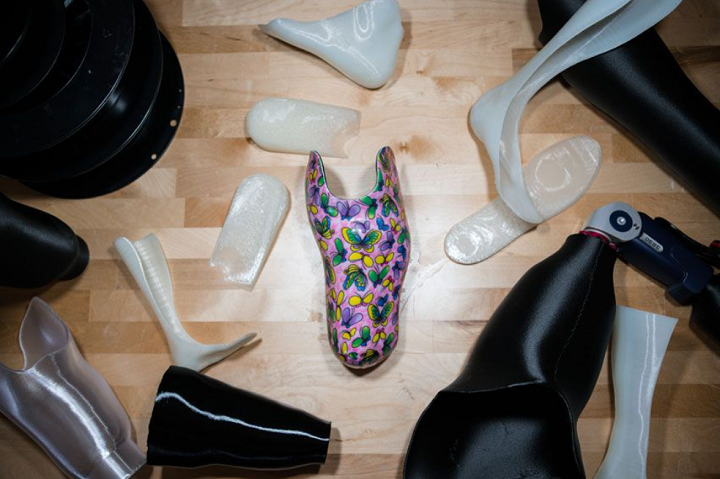
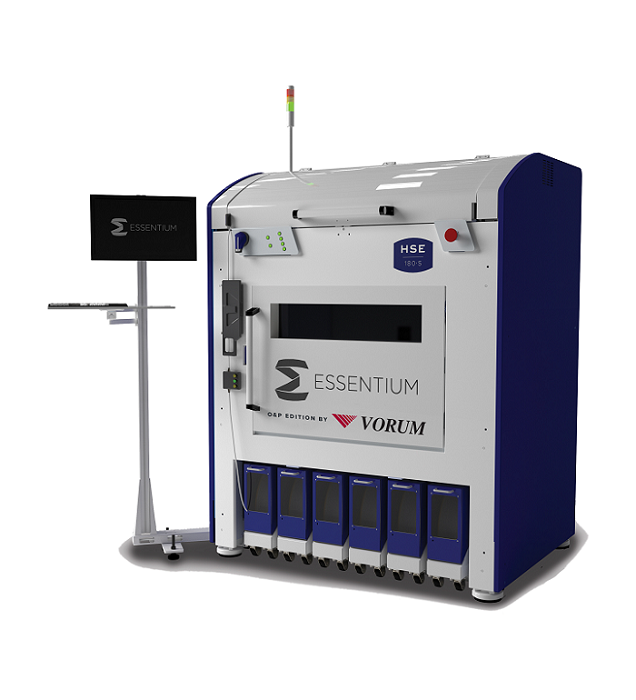
Industrial 3D printing company Essentium, Inc. is announcing its continued collaboration with Canadian CAD/CAM solutions provider Vorum, which provides end-to-end digital solutions for the global orthotics & prosthetics (O&P) market. The two companies will work to improve biocompatible 3D printing for O&P applications by introducing a line of biocompatible AM materials. Texas-based Essentium itself is ISO 9001:2015 and ITAR certified, and its materials have been proven to safely interact with human skin, which is critical for O&P patients who have to wear devices that touch their skin for long periods of time. Together, Essentium and Vorum will work to print biocompatible O&P devices that are affordable, comfortable, lightweight, and safe.

“Developing comfortable, properly fitting orthotics and prosthetics is not just a science but also an art. Our biocompatible materials, combined with advanced 3D printing platforms, means O&P clinicians can use their skills to create O&P devices better, faster, and cheaper than before — which also means O&P devices that are more accessible, comfortable, and affordable for many more people around the world,” Blake Teipel, PhD, Essentium’s CEO, stated in a press release.

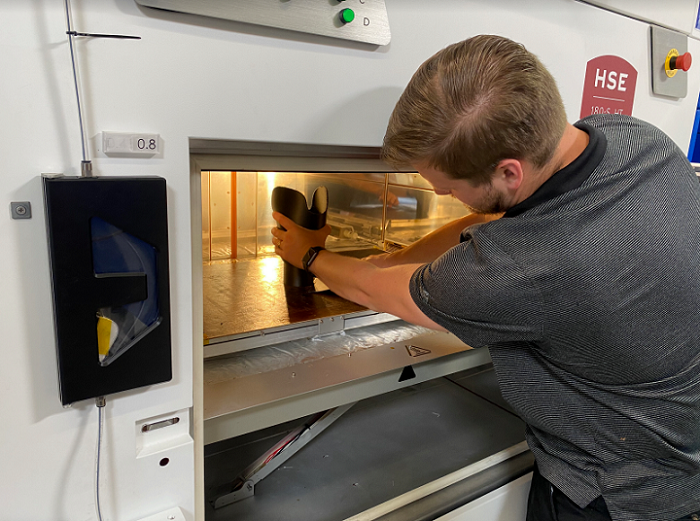
Part removal – PACF socket (Image courtesy of Essentium)

Essentium and Vorum first began working on 3D printed O&P solutions together in 2020, two years after Essentium 3D printed a super-strong prosthetic socket with partner BASF. The startup has long been interested in the O&P market; it even has a subsidiary brand called TriFusion Devices that’s focused on creating accessible prosthetics. Essentium’s materials can help create more advanced 3D printed O&P devices, like lightweight, comfortable prosthetic sockets that are strong and reliable.

As 3D printing platforms and software solutions continue to advance, O&P clinicians are better equipped to efficiently design and create bespoke, yet affordable devices for their patients, faster than traditional methods of manufacturing are capable of delivering. According to the SmarTech Analysis report on “Medical Devices 2021: Market Opportunities for 3D printed Prosthetics, Orthotics, and Audiology Devices,” 3D printing is truly beginning to disrupt the healthcare industry “in varying degrees across different fields,” due to its ability to offer more customization and digitization, thus leading to improved patient outcomes and cost reduction. As for the O&P sector specifically, 3D printing ” is on the cusp of moving out of the R&D lab and into full scale commercialisation,” as more O&P startups begin to scale up and partner with established names in the AM industry.

Image courtesy of Vorum

But, this ability to deliver functional, lightweight, comfortable O&P devices at a lower cost has majorly brought up the demand for biocompatible 3D printing materials with which to create the devices. As verified by certified, independent lab testing, the new materials that Essentium and Vorum are releasing meet ISO 10993 and US FDA guidance for intact skin surface devices. Additionally, the two companies co-commissioned a study, which they said prove that Essentium’s TPU 74D, PET-CF, PCTG, and PA-CF materials are non-cytotoxic, non-contact sensitive, and non-irritant, which means that O&P clinicians can use them to print devices will come into contact with human skin long-term.

“Modern O&P devices are often designed with a more intimate fit than in the past, which means we need to consider how the patient's skin might behave in direct contact with the final orthosis or prosthesis,” explained Angela Saunders, the CEO of Vorum. “We know the practitioners who work with our solutions need to be confident that they can provide the best possible result for their patients. Therefore, it's imperative to have certified materials so that the 3D printed O&P devices work with the body, not against it.”

Image courtesy of Vorum

This continuing partnership combines Essentium’s biocompatible materials and High-Speed Extrusion (HSE) 3D printing platform with Vorum’s Canfit CAD software for O&P solutions and SurePath methodology, which offers O&P clinicians a solid approach for adopting and implementing 3D printing, in addition to training and support.

Despite the recent sting of the cancellation of its SPAC merger, Essentium is looking to the future and not the past. The startup is continuing to move forward with meaningful industry partnerships, first with blue laser developer NUBURU to developer copper 3D printing, and now with Vorum. I know we’re all curious to see what’s next for Essentium as it deals with the fallout of its IPO deal.

The post Biocompatible Materials for 3D Printed Prosthetics in Development from Essentium & Vorum appeared first on 3DPrint.com | The Voice of 3D Printing / Additive Manufacturing.
DARPA Tasks Elementum 3D to 3D Print World’s Rarest Metal

Posted: 09 May 2022 05:30 AM PDT

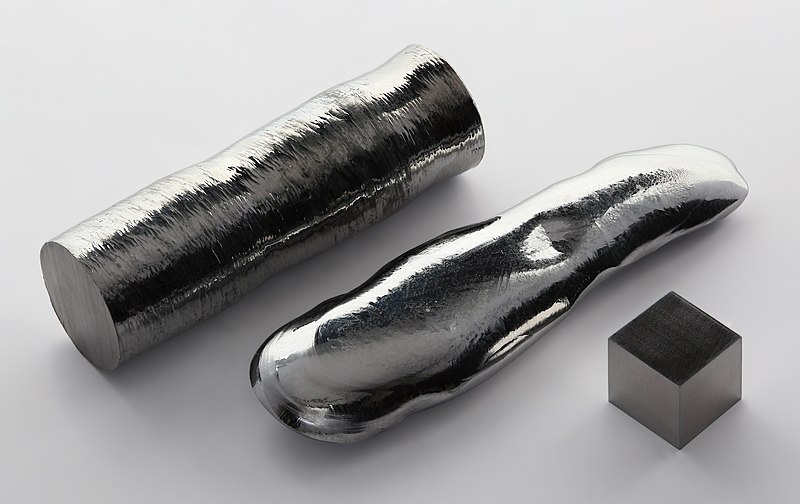
Rhenium, the last of the stable elements to be discovered, is one of the scarcest elements in the Earth's crust. It has the highest melting point of any metal aside from tungsten, as well as the highest boiling point of any stable element; finally, it's the fourth-densest element. Its rarity and unique properties make it an extremely sought-after — and pricey — commodity, used most often in the manufacture of jet engines. Increasingly, rhenium is also in-demand for rocket and missile propulsion systems.

Image courtesy of Wikipedia

The Defense Advanced Research Projects Agency (DARPA), one of the U.S. federal government's oldest and most influential R&D organizations, has awarded a Direct to Phase II Small Business Innovation Research (SBIR) contract to Elementum 3D, so that the latter organization can develop an additive manufacturing (AM) method for rhenium applications. The same qualities that make the metal so valuable also make it a challenge to manipulate via conventional metallurgical techniques. Rhenium's high melting point renders it especially expensive to work with, and also causes it to be quite susceptible to work hardening. As such, the metal is almost always used as an alloy with other metals, mainly tungsten and nickel. One of the main purposes of the grant DARPA has awarded to Elementum is to develop solutions using rhenium as a base, rather than just as an alloy.

The SBIR program is a U.S. Small Business Administration (SBA) grant program that doles out about $2.5 billion a year to fund R&D by small businesses. The largest share of the money ($1 billion) is, unsurprisingly, spent by the Department of Defense, with the remaining $1.5 billion going to institutions such as the National Institute of Health (NIH) and the Department of Agriculture. SBIR Phase II grants are for "up to $1 million, for as many as 2 years". Companies are awarded Direct to Phase II grants when they demonstrate that they've finished Phase I stages with non-SBIR money. This means that Elementum has already documented promising results with the earliest phases of research into 3D-printed rhenium.

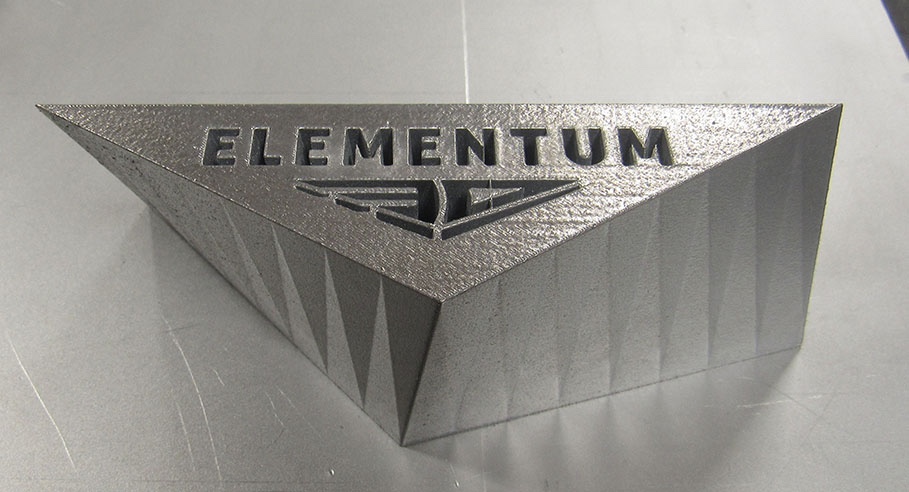
Image courtesy of Elementum 3D

Elementum 3D, which specializes in maximizing the repertoire of metal solutions available for the AM sector — especially for laser powder bed fusion (LPBF) 3D-printing — has received SBIR funding on at least three other projects. The company received Phase I funding from NASA for a project completed in 2020: a hot-fire test of a metal 3D-printed fuel injector, in collaboration with Masten Space Systems. Elementum later received two Phase I contracts, in 2021; one was again from NASA, to develop AM techniques for soft magnetic materials. The other came from the U.S. Navy, to develop modeling frameworks for 3D-printed metal alloys.

A part of Elementum's latest, Phase II contract, with DARPA, is that the latter organization — assuming it likes the results — may offer Elementum a contract to scale up the testing for eventual commercial 3D-printing of rhenium. This is the latest in a series of moves by U.S. military and intelligence investment funds to influence markets for 3D-printing materials, especially metals. As I noted the other day, that could be a signal that the AM sector as a whole is on the cusp of both scaling up and consolidating. It's of course too soon to say whether either of those things turn out to be the case, but a variety of other factors, also primarily geopolitical, hint in that direction as well.

The post DARPA Tasks Elementum 3D to 3D Print World’s Rarest Metal appeared first on 3DPrint.com | The Voice of 3D Printing / Additive Manufacturing.
3DPOD Episode 104: Large Format 3D Printing with Caracol CEO Francesco De Stefano

Posted: 09 May 2022 05:00 AM PDT

Francesco De Stefano was a consultant before he came to Caracol. You’ll notice that when he answers questions about the market and the future of his firm. He had to learn a lot of other things during his time helming the large format AM startup, however. Francesco talks to us about the challenges of printing large parts, the applications, the journey his company has taken and the possibilities.

The post 3DPOD Episode 104: Large Format 3D Printing with Caracol CEO Francesco De Stefano appeared first on 3DPrint.com | The Voice of 3D Printing / Additive Manufacturing.