Tuesday, July 12, 2022

TCT Magazine | Additive Manufacturing & 3D Printing Intelligence | News, Interviews, Features | Additive Manufacturing | Product Development Technology

TCT Magazine | Additive Manufacturing & 3D Printing Intelligence | News, Interviews, Features | Additive Manufacturing | Product Development Technology


U.S. Navy install 3D printer on USS Essex as part of naval research

Posted: 12 Jul 2022 07:23 AM PDT

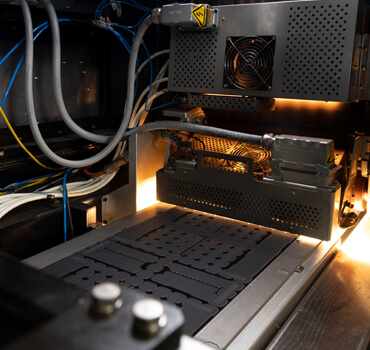
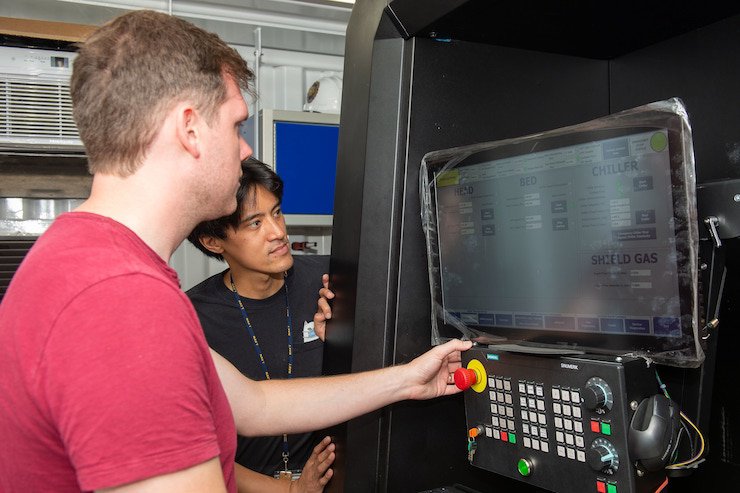
The USS Essex (LHD 2), a Wasp-class amphibious assault ship in the U.S. Navy, has been equipped with a 3D printer as part of Naval Postgraduate School (NPS) research. Essex is the first ship to participate in the initial testing and evaluation.

This posting includes an audio/video/photo media file: Download Now

Toyota begins partnership with SOLIZE to produce replacement car parts through HP 3D printing

Posted: 12 Jul 2022 06:01 AM PDT

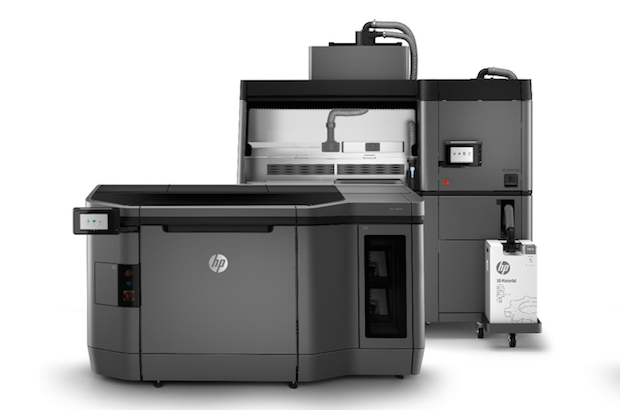
Toyota started an initiative in 2021 to produce replacement parts using 3D printing and sell them as genuine parts, in response to customer demand. Toyota has decided to deploy the HP Fusion Jet 5200 Series.

This posting includes an audio/video/photo media file: Download Now

Markforged set to acquire Digital Metal in mixed offering deal

Posted: 12 Jul 2022 05:31 AM PDT

Markforged is to expand into metal binder jetting after reaching a definitive agreement with Höganäs AB to acquire metal binder jetting firm Digital Metal.

This posting includes an audio/video/photo media file: Download Now

Bosch partners with the Karlsruhe Institute of Technology and BASF to produce 3D printed micro-reactor

Posted: 12 Jul 2022 03:10 AM PDT

Bosch Advanced Ceramics has collaborated with the Karlsruhe Institute of Technology (KIT), and the chemical company BASF to develop a highly complex 3D printed micro-reactor made of technical ceramics for high-temperature reactions.

This posting includes an audio/video/photo media file: Download Now

3DPrint.com | The Voice of 3D Printing / Additive Manufacturing

3DPrint.com | The Voice of 3D Printing / Additive Manufacturing


3D Printed Wheat Bran Combines with UV Printing to Create Colorful Designs

Posted: 12 Jul 2022 06:30 AM PDT

Polish startup GREENFILL3D continues to expand the applications for its wheat bran 3D printing feedstock. To make its GF3D Branfill3d material, the company combines PLA with waste from pasta manufacturing. So far, the company has used the filament to 3D print pop-up Point of Sale stands. Now, GREENFILL3D is working with Deckard Design to add full-color UV labelling to the bran-filled parts to make labels for potted plants.

A Polish, Etsy-driven home decor and gadget shop, Deckard Design will distribute the 3D printed products in North America and Europe. Available in two varieties, the posts can be used to describe a range of plants and herbs that one might seed in their garden. GREENFILL3D suggests that the wheat bran improves the surface finish of its parts, while also making them tough. Using 2D UV printing, which Deckard’s founder first relied on for printing colored inks onto metal, Deckard is able to apply colorful images to the wheat material.

I’m always happy to see innovation related to green products. In this case, we are not told how much wheat bran is in the PLA mix. So, we can’t really see just how advantageous this material is—especially if it were compared to cardboard or other alternatives. The use of UV inks makes the products more colorful, but may negate any environmental benefit in the first place. I’m wondering how ecological sustainable these UV resins are. My guess is that they aren’t. However, the companies say that they are experimenting with environmentally-friendly materials. For now, I want to urge caution before everyone becomes too enthusiastic. We’ve seen eco-friendly materials before, such as 3D printed lignin, 3D printed milk cartons and more.

Both companies use desktop 3D printers to innovate. I’m hearing of more firm that are developing, iterating, and going to production with extremely low-cost devices, such as Creality 3D printers. In this sense, lower cost printers really do democratize innovation more than in the past by making the technology accessible to anyone that with a few hundred dollars to spare. If they can successfully scale up production, then these businesses will also have a very low cost basis from which to operate. Will someone that got started on a desktop machine ever go to a $200,000 printer? I think that there really is a considerable opportunity here to offer scalable low-cost 3D printing and automation solutions for emerging 3D printing startups. If people can get these inexpensive machines to work well long term, then this could be a big market.

The use of low-cost printers can be expanded widely, as can the combination of UV printing on 3D printed parts. This could be a low-cost method to add color and may be an otherwise overlooked opportunity. There may be a number of opportunities in applications such as packaging and point of sale displays that need to be considered, as well. In addition to that, wheat bran is far from the only material that you can mix in with PLA to get interesting properties and possible ecological benefits, as well. I would love to have more data on just how environmentally friendly this is overall, but there is a lot to be inspired by here.

The post 3D Printed Wheat Bran Combines with UV Printing to Create Colorful Designs appeared first on 3DPrint.com | The Voice of 3D Printing / Additive Manufacturing.

New Research Optimizes Weed Pulling with 3D Printing

Posted: 12 Jul 2022 06:00 AM PDT

Backyard gardeners view weeds as a nuisance to be pulled. They may be viewed even more negatively by the agricultural industry. Uncontrolled weeds on a piece of farmland can damage the crop, preventing it from reaching its full yield and negatively impacting the overall sale price at harvest.

Farmers initially pulled weeds by hand, walking up and down the rows on each field, hunting for any invasive species. This method may have been effective for farmers who were only trying to grow enough food to feed their families. However, as the industry expanded, the areas got larger, and hand-weeding was no longer practical.

Modern agriculture has relied heavily on herbicides — chemicals designed to kill the weeds without damaging the crops. Unfortunately, modern science has painted a clearer picture of these chemicals, discovering the long-term impacts that herbicides can have on human health and local ecosystems. The industry needs a new method for weed control.

Introducing Sonora Ortiz

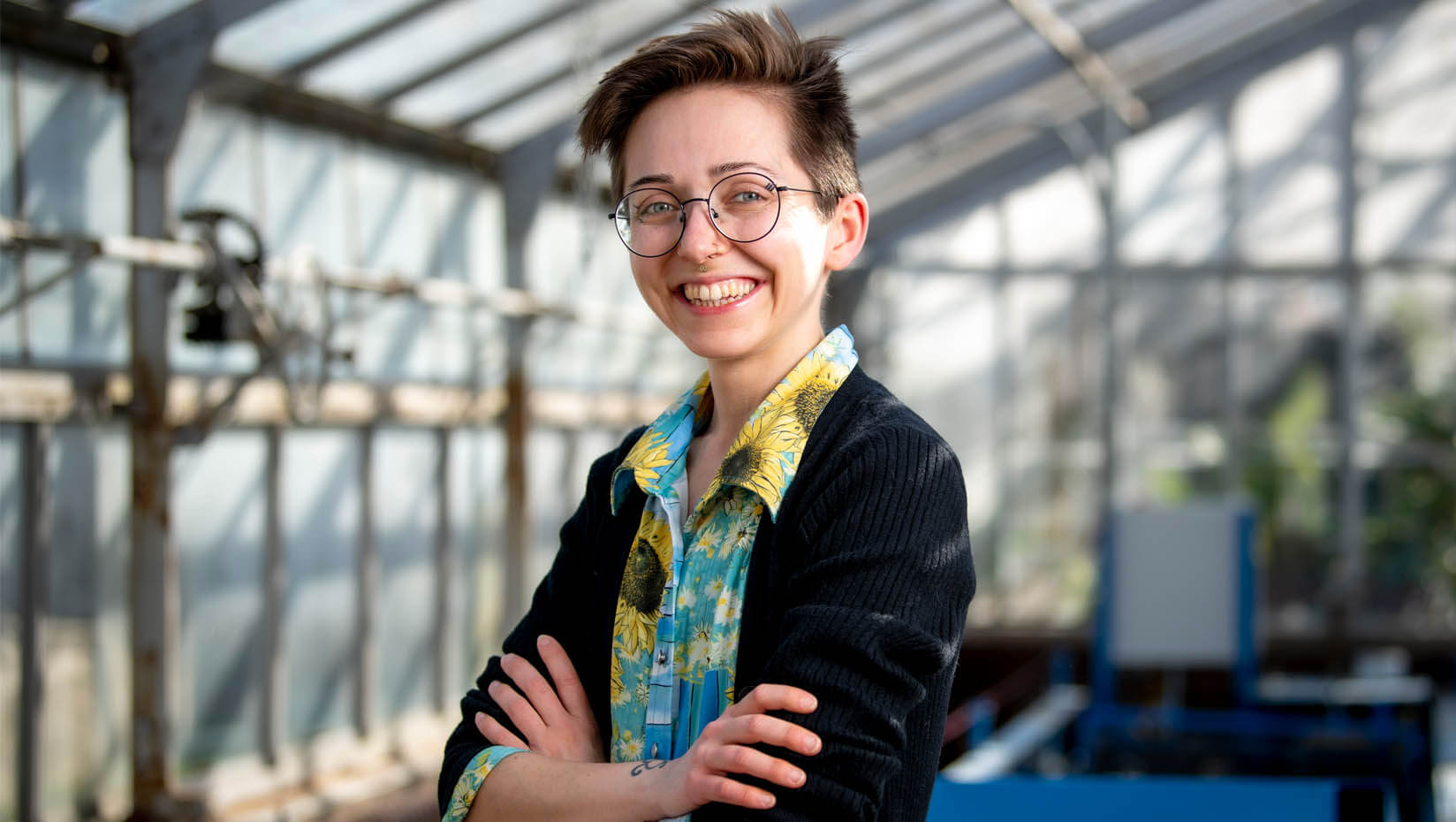
Sonora Ortiz is a native of Southern California and is no stranger to weeds. Before coming to the University of Maine, they worked on farms in California, as well as throughout Europe, developing a passion for sustainable agriculture. A casual observer might think this would lead Ortiz to a career in agriculture, but when they reached Orono, they chose a physics major.

Sonora Ortiz. Image courtesy of University of Maine.

A weed science class taught by Professor Eric Gallandt — a professor of weed ecology for the School of Food and Agriculture — reignited Ortiz's passion for agriculture. Gallandt invited them to work with him on a project focusing on manual weed control. It might seem like this team is taking a step backward, returning to older methods. However, Ortiz combines 3D printing and physics to teach a metaphorical old dog some new tricks.

Pulling Weeds with 3D Printing

3D printing has a growing number of applications in nearly every industry, but the agricultural sector has been slower to adopt. So far, the most prominent use there has been prototyping and producing parts for heavy agricultural equipment. The applications may continue to growth the help of researchers like Ortiz, who is combining additive manufacturing with nanotechnology to assist with weed removal in an agricultural setting.

Understanding weeds in the wild can be a challenge. These plants adapt to their environment, so there can be massive variability even within the same species. Good science needs control to remove some of this from the experiment and make it easier to draw accurate conclusions about weed removal methods.

3D printing is much more efficient for testing methods of physical weed removal. This involves pulling the plants from the ground, roots and all, instead of treating them with herbicide. Previous research techniques relied on rods as weed substitutes, which provided a control in experimentation but didn't behave like a living plant, with a root system. The alternative was the use of actual weeds grown in soil specifically for such testing.

The problem with the latter was that ,once the test was complete, it was unrepeatable. Researchers were stuck waiting for the next batch of weeds to grow, and there was no guarantee that each new plant would be identical to the last.

3D printing, combined with nanotechnology, addresses both of those problems. Researchers like Ortiz can print a test weed with a root system and use that same printed plant repeatedly. Nanocoatings, applied by simply dipping the artificial roots in the coating solution, work to mimic the root hairs that can cling to soil and make it more difficult to remove the entire plant.

The science behind these physical weed removal tests goes back to beam-bending physics. How hard can they pull before the roots snap, leaving plant material in the ground to regrow into a new weed? These "force curves" allow researchers to understand how each plant clings to the soil, making it easier to remove them without the need for harsh herbicides or other chemicals that could damage surrounding plants.

The Future of 3D Printed Weed Pulling

With a new grant, Ortiz will be able to further their research into weed science. Specifically, they will be working with Bashir Khoda, assistant professor of mechanical engineering, to create nanocoatings that actually orient molecules on 3D printed roots to even more accurately replicate the force of hairs on roots. The grant will also allow Ortiz to attend the Weed Society of America annual conference to present their findings. In the long run, Ortiz aims to apply 3D printing techniques to a wide variety of crops to optimize weed control such that weed removal doesn't damage surrounding crops.

Feature image courtesy of Mississippi Watershed Management Organization

The post New Research Optimizes Weed Pulling with 3D Printing appeared first on 3DPrint.com | The Voice of 3D Printing / Additive Manufacturing.

Aussie Transport Companies Adopt Cold Spray Metal 3D Printing

Posted: 12 Jul 2022 05:30 AM PDT

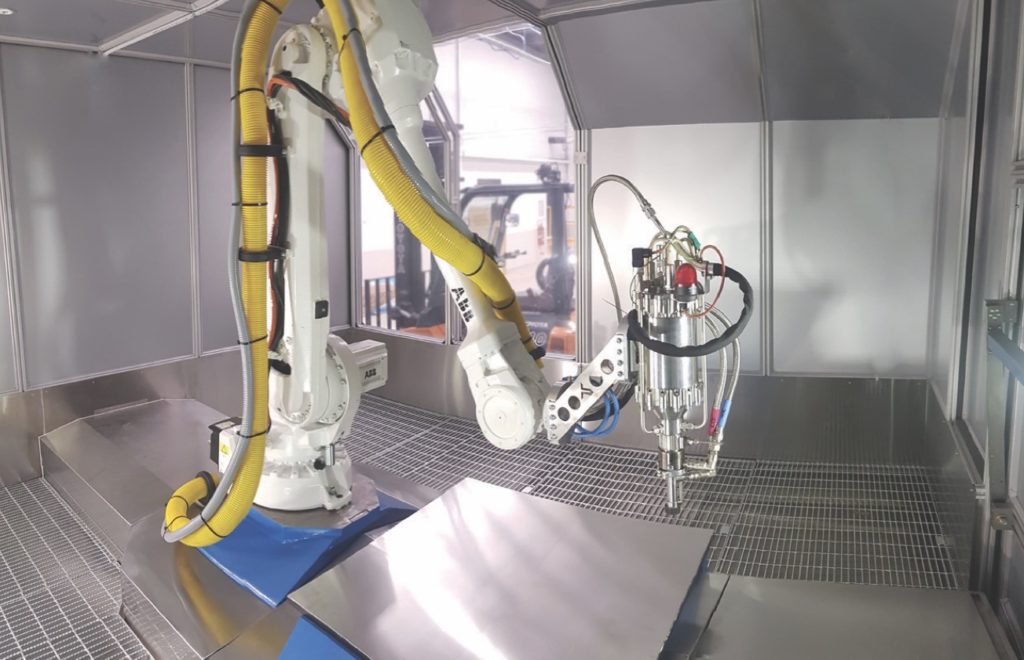
Titomic (ASX: TTT) has previously sold its Kinetic Fusion technology to the marine, defense, and aerospace sectors for a variety of applications, including drones. Now, the Aussie company reports that it has sold four low-pressure cold spray systems, dubbed D523s, to the transport industry—its first foray into this sector.

Kinetic Fusion is a cold spray process that prints near-net-shape titanium parts which are then machined to size. The company has very large systems attached to robot arms, but also much simpler systems such as the D523 of which it has now sold four to the “engine remanufacturing and rail transport sectors.” All systems will be used for maintenance, repair, and overhaul (MRO) in either repairing, rejuvenating, or replacing parts. Previously, the D523 had been sold to such clients as boilermaker Brauntell and oil and gas company DNC Coatings.

Titomic says that it has a focus on coatings and repairs, which is logical since the part cost is low with cold spray. It is also possible to rejuvenate parts by applying new material over worn areas. Additionally, users can use the process to harden components, apply corrosion-resistant coatings to them, and repair larger objects fairly quickly. The largest Titomic systems can cost over $1 million, but you’d probably be surprised at just how accessible their low-cost systems are. The company mentions that all four in total represented revenue to the tune of $314,900. So that’s a surprisingly affordable unit price.

"The sale of these four D523 systems into the Australian transport industry expands the reach and highlights the universal need for the in-the-field servicing capability provided by these systems. The D523 system's capability of making parts, repairing damaged or corroded parts, and general maintenance on-site in a quick turnaround time, ultimately leads to higher profitability for users and secures their supply chains. The sales of the D523 systems follow on from the Dycomet acquisition in December last year, enabling Titomic to be the only global supplier of low, medium, and high-pressure cold spray systems. With this ability, Titomic can partner with businesses across multiple regions in the engine remanufacturing and rail transport sectors by offering technology which compliments those existing manufacturers. These D523 sales also validate our market orientation, as we're beginning to fulfil the strong and growing demand for efficient and effective repairs and servicing – a need that has long existed in the market. These four system sales prove that we're building and growing our commercial network, which we expect will lead to exponential sales growth,” said Titomic Managing Director Herbert Koeck.

It is a good sign that the firm can offer these affordable systems as seen above but can also then upsell customers on much larger machines, such as the TKF mounted on ABB robot arms. The same system can also be mounted on a gantry to increase its build volume even more.

Australia may be far away, both in distance and in the imagination, for the broader 3D printing industry. However, this local firm can sell four of these systems within its own national borders. It may be nice to chase Airbus, Lockheed, and Volkswagen, but there are many smaller firms that could really use additive manufacturing in production. Our industry really should focus more on the right companies in the right niches, including smaller businesses. MRO, rejuvenation of engines, industrial coatings, and transport generally are much bigger markets together than the large automotive companies. Titomic is showing us that there is a lot more territory to be explored in 3D printing.

The post Aussie Transport Companies Adopt Cold Spray Metal 3D Printing appeared first on 3DPrint.com | The Voice of 3D Printing / Additive Manufacturing.

ARPA-E Funds Hempcrete for Construction 3D Printing via Texas A&M Grant

Posted: 12 Jul 2022 05:00 AM PDT

Last month, the U.S. Department of Energy (DOE) awarded a $3.74 million grant to researchers at Texas A&M University, for a plan to research applications for additive construction (AC) using hempcrete. Specifically, the DOE's funding comes from the Advanced Research Projects Agency- Energy (ARPA-E), via its Harnessing Emissions into Structures Taking Inputs from the Atmosphere (HESTIA) program. Hempcrete is any building material made from a mixture of hemp with lime and water.

The research team is led by Petros Sideris, an assistant professor at Texas A&M's Zachry Department of Civil and Environmental Engineering. The five other members include three professors that also come from the Zachry Department, as well as two professors from Texas A&M's College of Architecture. The plan centers around exploring the potential for using hempcrete to accentuate the emissions reductions achievable by AC, while also creating affordable residential, and possibly commercial, buildings.

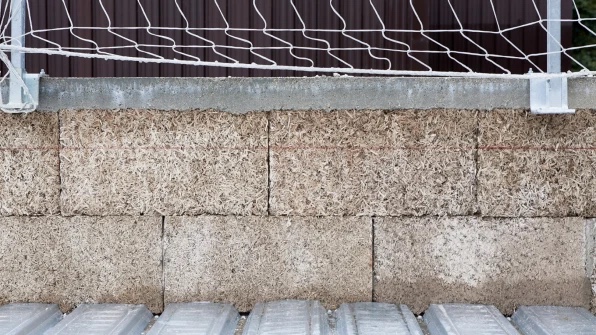
Hempcrete bricks produced with additive construction. Image courtesy of Elodie Dupuis and Lemoal Lemoal Architecture.

In a university press release, Dr. Sideris pointed out, "While production of conventional construction materials such as concrete requires large amounts of energy and releases large amounts of CO2, hempcrete is a net-carbon negative material, which can provide major environmental benefits. …Resilience to natural hazards is [also] intertwined with environmental sustainability because building damage and subsequent repairs due to extreme events such as hurricanes result in major environmental impacts."

Regarding resilience, Dr. Sideris is referring to the capabilities of AC to produce unique shapes, as a way to create structures that are more resistant to natural disasters than those produced by conventional construction methods. As for its being net-carbon negative, this is what accounts for its receiving the HESTIA grant, which was created in 2021 specifically for encouraging the use of net carbon negative building materials.

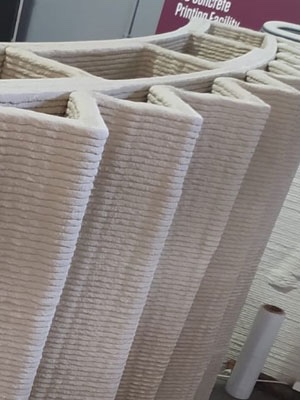
Image courtesy of Texas A&M

Although hemp has been used as a building material for centuries, and European companies have been relying on it for modern construction projects for decades, the plant was banned in the U.S. in 1937. It was not until the passage of the 2018 Farm Bill by the U.S. Congress, that American hemp production was once again permitted at the federal level. Since then, scattered amounts of interest in using hemp as a building material have surfaced in news cycles from time to time.

Still, there has been little progress in using the material for AC until now, so hempcrete's future incorporation with the technology could be accelerated if the Texas A&M project is successful. Moreover, it would seem that the use of hempcrete in general would itself be accelerated long-term, were cannabis to be legalized at the federal level in the U.S. Federal legalization would facilitate larger supply chains for both cannabis in general, and hempcrete in particular. Its use in production of hempcrete would be a logical way to upcycle large amounts of cannabis industry waste. Finally, the relative independence of AC from existing construction supply chains means that it could be far easier for the material to take off with AC than with companies using conventional building methods.

The post ARPA-E Funds Hempcrete for Construction 3D Printing via Texas A&M Grant appeared first on 3DPrint.com | The Voice of 3D Printing / Additive Manufacturing.

Monday, July 11, 2022

3DPrint.com | The Voice of 3D Printing / Additive Manufacturing

3DPrint.com | The Voice of 3D Printing / Additive Manufacturing


New HQ Grows the 3D Printing Potential of Eplus3D Domestically and Abroad

Posted: 11 Jul 2022 06:30 AM PDT

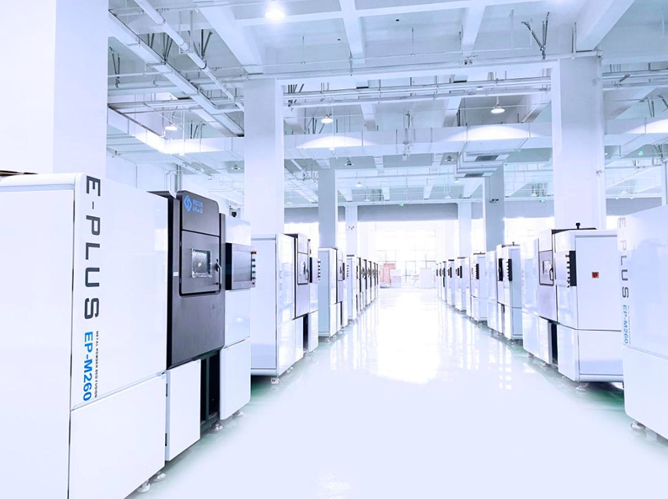
Eplus3D, a Chinese-based metal 3D printer manufacturer, recently announced that it is moving its headquarters to a 23,000 m2 state-of-the-art building in Hangzhou. The larger building will allow the company to increase its capacity for research & development, production, and marketing and sales, as well as the potential to expand business domestically and abroad.

3DPrint.com has previously reported on China’s desire to usher in an era of stability and wealth by becoming economically independent. To do this, it has been investing heavily into Chinese-grown talent in addition to emerging sectors, such as additive manufacturing (AM). China sees how quickly those technologies are being adopted, and wants to establish itself as a global hub for innovation.

Out of all its investments, one of the more successful AM ventures has been Eplus3D. The company was founded in 2014 and is best known for its metal 3D printers. While Eplus3D began selling printers that were eerily similar to those from more established brands, the firm's business model evolved towards building, designing, and manufacturing sophisticated 3D printers for both the Chinese and foreign markets.

That switch in business models has panned out, and Eplus3D has started to prove itself as a player in the AM field. It already has printers at British Steel, and other companies in the aerospace, dental, and railway industries.

With this growth, it’s not surprising Eplus3D quickly outgrew its shell. The firm needed to find a larger place that would allow it to broaden its business ventures. Otherwise, it risked stagnating and not aiding China's goal of becoming a global hub for 3D printing.

Eplu3D's 3D printers. (Image courtesy of Eplus3D)

The company ultimately found its new home in the 23,000 m2 Hangzhou building, equipped with all of the bells and whistles. This includes Eplus 3D printers—an EP-M650 with quad lasers, an EP-M450H, an EP-M260, an EP-M300, and an EP-M150)—along with space to house its burgeoning teams, and a new showroom. Eplus3D seems poised to continue to widen its reach and now has the facilities to do so.

But will it? We don't know yet.

There have been genuine questions raised about Eplus3D's part reliability and its adoption as a younger company. In addition, it still must compete against more established brands, and answer questions about national security as its products are sold internationally. While past collaborations have shown promise, time will ultimately tell if the company succeeds or not.

If Eplus3D continue building reliable, high-volume, lower-cost printers, it may be competing with Velo3D, 3D Systems, and EOS sooner rather than later. It's a competitive market that is increasingly being filled by other manufacturers. Lower cost equipment could give Eplus3D traction to ingrain itself in the market more. Based on how Eplus3D has developed in the past eight years, and with the backing of the Chinese government, we wouldn't discount the company making that leap. In that case, Eplus3D might need to start scouting its next building move now because it might outgrow this 23,000 m2 shell quicker than even the company's team may think.

The post New HQ Grows the 3D Printing Potential of Eplus3D Domestically and Abroad appeared first on 3DPrint.com | The Voice of 3D Printing / Additive Manufacturing.

3DPOD Episode 111: 3D Printing Medical Devices with Ajay Panwar, Medtronic

Posted: 11 Jul 2022 06:00 AM PDT

In our latest episode, Ajay Panwar, Sr. Engineering Manager, Design Assurance at Medtronic, discusses the intersection of quality and 3D printing for the medical field. To be clear, Ajay does not speak for or represent Medtronic on the show. He is merely sharing his ideas, knowledge, and best practices. The conversation may have been highly technical, but it does get you thinking about what goes into making a medical device with 3D printing, including the problems, issues, and opportunities.

The post 3DPOD Episode 111: 3D Printing Medical Devices with Ajay Panwar, Medtronic appeared first on 3DPrint.com | The Voice of 3D Printing / Additive Manufacturing.

Carbon Nanotubes Powers New ESD 3D Printing Resin by B9Creations

Posted: 11 Jul 2022 05:30 AM PDT

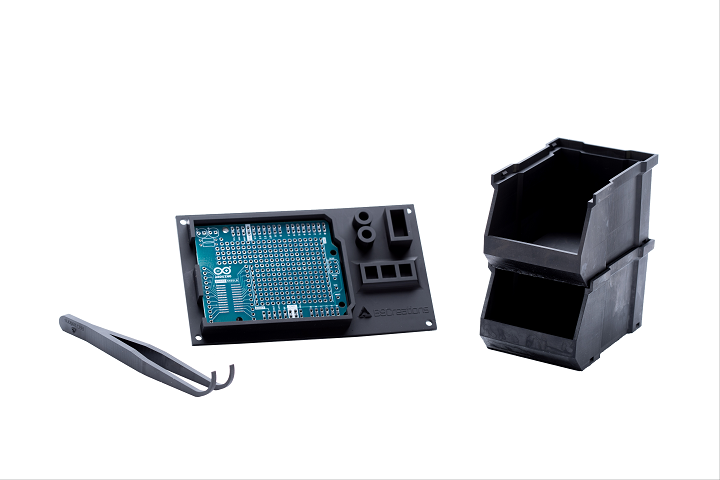
Professional 3D printing solutions provider B9Creations has been keeping its focus on AM materials lately, launching a line of robust resins in October and a silicone for jewelry molds last summer, as well as one for medical applications in January. The company serves dealers, customers, and partners in high-precision applications, such as model making, healthcare, research, manufacturing, and jewelry, and its latest material should be of help with these. B9Creations has just launched ESD – Rigid, a UV curable, ESD-safe engineering resin to be used with its B9 Core Series of 3D printing systems. What’s most interesting is that the resin is powered by Mechnano and its carbon nanotube MechT technology.

Mechnano is an Arizona-based nanoengineering company, and is said to be the first to 3D print parts with carbon nanotubes (CNTs) using vat photopolymerization systems. Its proprietary MechT technology, backed by more than ten years of research and development and protected by over 120 issued and pending patents, can be used to print parts with static-dissipative properties, or majorly improve the tensile performance, as well as impact and tear resistance, of those parts.

“Production-ready additive manufacturing solutions from Mechnano help B9 Core Series systems users move from prototyping to production with ease. ESD – Rigid provides an immense benefit to various industries where damage caused by static buildup is a major concern,” explained B9Creations CEO Shon Anderson in a press release.

Mechnano and B9Creations have actually been partners for several months now, as the two started working together this fall to develop photopolymer engineering materials for additive manufacturing. In order to deliver these high-value materials, like the new ESD – Rigid resin, both B9Creations’ ultra-precision, high-throughput 3D printers and Mechnano’s technology are used. MechT makes it possible to disperse detangled, separated CNTs through a 3D printing material without having to worry about re-clumping, and the “discrete tubes” can be adjusted to elicit certain performance requirements, such as ESD.

“That's the power of MechT. We're able to add desired properties—in this case, ESD—without compromising mechanical performance,” explained Mechnano’s President Bryce Keeler. “ESD – Rigid provides a valuable AM solution to highly technical industries. We're excited MechT is now commercially available for use on the B9 Core Series 3D printers, and we look forward to working with B9Creations to answer the calls of other industries as well.”

The new ESD – Rigid resin features high tensile strength and heat deflection temperature (HDT), which makes it a good choice for printing static-dissipative parts that need to withstand the difficult manufacturing environment, such as jigs and fixtures for electronics manufacturing, SMT pick and place nozzles, electrical connectors and enclosures, and custom trays for handling and storing components. In addition to being static-dissipative, the durable material also offers readable detail and a smooth surface finish; other specs include:

  • 3.8% elongation at break
  • 87 Shore D hardness
  • 97.4 MPa flexural strength
  • 0.9% water absorption
  • 2600 MPa tensile modulus

Paired with the B9 Core 5 Series XL 3D printing platform, ESD – Rigid is said to be “the ultimate solution” for electronics manufacturing in aerospace and defense, industrial, and medical device sectors. You can join the waitlist to receive early access to the new ESD – Rigid resin here.

The post Carbon Nanotubes Powers New ESD 3D Printing Resin by B9Creations appeared first on 3DPrint.com | The Voice of 3D Printing / Additive Manufacturing.

Evolve Additive Moves to Commercialize High-Throughput 3D Printing with New CEO

Posted: 11 Jul 2022 05:00 AM PDT

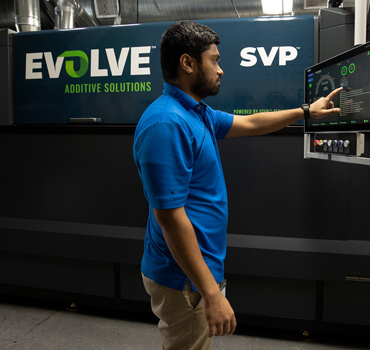
Evolve Additive has been evolving for over 14 years. The firm emerged from stealth in 2018, picked up investors Stanley and LEGO in that same year, and went for more funding in 2020. In 2021, the firm sold its first commercial machine. The company now is looking for further commercialization. To that end it is bringing in Joe Allison as CEO, who will replace founder Steve Chillscyzn. Chillscyzn will transition to CTO.

"This new structure will allow me to focus my energies on accelerating technical developments within our STEP technology. The versatility of the platform is significant, and we are investigating various print engine configurations, new materials qualifications, and precision thermal control.  It is exciting to have someone with Joe's background and leadership skills to accelerate and optimize our existing platform while also pursuing new products and enhancements,” Chillscyzn said.

Joe Allison said in turn, "Our goal is to make EAS the trusted partner for higher volume production of thermoplastic applications within the Additive Manufacturing space. I will bring a user's perspective to EAS and continue to build upon its revolutionary technology."

Chillscyzn was with Evolve from the get-go, developing the technology internally at Stratasys and then spinning out the firm. Allison, meanwhile, was the founder of Solid Concepts, the large service bureau that Stratasys bought in 2014. He then went on to lead Stratasys Direct Manufacturing.

With that in mind, it will be hard to know if this is a move that all parties were on board with or if everyone is throwing things at each other in the boardroom. Regardless, it seems like a good decision to have a leader focus on clients and building out the organization while someone else focuses on R&D. Initially, one CEO could comfortably do both, but now would be a good time to have a road- or Rolodex-warrior and someone to make sure that the company delivers on its promises.

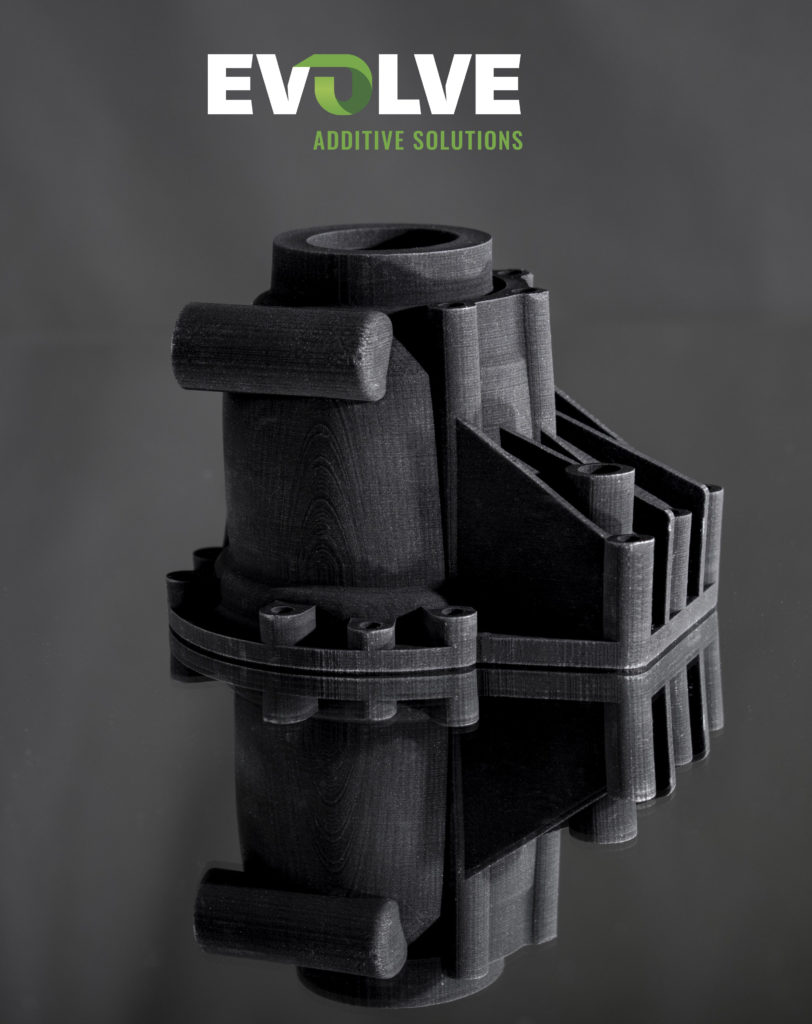
The STEP process. Image courtesy of Evolve Additive Solutions.

Allison seems like an inspired choice. He understands the economics, business drivers, and operational elements of a 3D printing service in a way that few other people do. Over 25 years in service bureaus is close to the theoretical maximum amount of experience that you can have. He has a lot of stature, as well. Solid Concepts was also more hard-charging than most commercially, so that should do the firm a lot of good. Rather than have a sales team work with clients, Joe can meet customers eye-to-eye as a respected peer or even as a supplier, via Stratasys Direct.

Evolve has now raised over $56 million on what is purported to be a true mass manufacturing technology for 3D printed goods. Selective Thermoplastic Electrophotographic Process can make very well defined objects with a great surface finish. But, it will be hard to push an expensive piece of completely new kit into companies in a jittery market amid pressure on margins, costs and investments.

Evolve quotes some very exciting numbers, including one example in which a batch of 768 units were produced at 14 seconds per part in a three-hour build. With a yield of 2,000 parts per day, the cost per item would be under $2. Those are some very exciting figures.

One could really see Evolve fit into some solutions, such as mass customization for vehicles, as well as short run, low volume industrial, or polymer spare parts. It would seem that, for now, leveraging service contracts would be a way in. It is going to be an uphill battle during the upcoming, uncertain months, but Evolve has a fundamentally interesting technology with great economics and potential.

The post Evolve Additive Moves to Commercialize High-Throughput 3D Printing with New CEO appeared first on 3DPrint.com | The Voice of 3D Printing / Additive Manufacturing.

3D Printing Webinar and Event Roundup: July 10, 2022

Posted: 10 Jul 2022 05:30 AM PDT

It’s another busy week of 3D printing-related events and webinars! Markforged and Stratasys are both conducting tours, 3D Systems is holding a webinar on lightweighting structures for NASA, and the ASTM AMCOE will be giving an overview of cold spray technology. Other topics this week include large-format metal 3D printing, regulations for 3D printed medical devices, CAMWorks software, materials for SLA 3D printing, and more.

July 10 – 14: AAPM Trade Show

First up, the AAPM 64th Annual Meeting & Exhibition will be held live and in-person in Washington, D.C. this week from July 10-14; virtual participation is also an option. At the world’s largest program of scientific, educational, and professional presentations and exhibits in the medical physics industry, attendees will have the chance to interact with equipment and service providers and develop relationships with medical physicists and commercial product experts from around the world, as well as attend committee and working group meetings and clinical, professional, and scientific sessions. 3D Systems is just one of several AM-related exhibitors at this medical-focused event.

“Featuring the theme Celebrating Medical Physics: Transforming Human Health, we recognize the importance of coming together to share new ideas, innovative solutions, and the various ways advances in the field of medical physics have improved patient outcomes, changing lives worldwide.”

You can register for the event here.

July 11, 12, 14: The Experience Stratasys Tour Continues
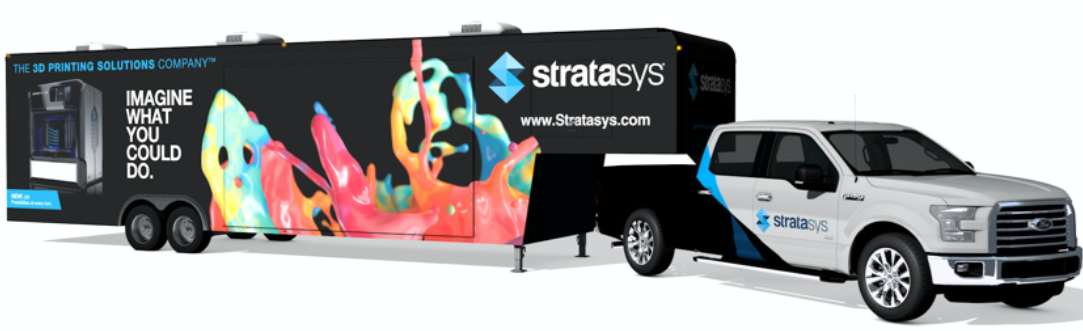
The Experience Stratasys tour continues this week in Ontario, Canada. On July 11th, the tour will make a stop at the Javelin office in Oakville, and then on to Toronto on the 12th, hosted by GoEngineer at the Junction Craft Brewery. Finally, on the 14th, Javelin and Dent-X will host the tour at Bayview Yards in Ottawa.

"Our mobile showroom offers a local, convenient way for you to talk with 3D printing experts and see the latest 3D printers, materials and solutions from Stratasys. Learn about additive manufacturing services from Stratasys Direct and discover how your organization can benefit from 3D printing applications."

You can register for the Stratasys Experience Tour here. Stay tuned for more dates and locations in the future!

July 11: AM Coalition’s Members-Only Roundtable with NEC

This week, the Additive Manufacturing Coalition is holding two Members-only roundtables, and the first one, a White House follow-up, is at 9 am EST on Monday, July 11th. Once you RSVP on the website, you’ll see the place to sign up for a Members-Only Account with your organizational email address. This roundtable is a continued dialogue with the National Economic Council‘s Dr. Elisabeth “Liz” Reynolds, Special Assistant to the President for Manufacturing and Research and Development, and Neal Orringer, Head of the AM Forward initiative. They will listen to members discuss the challenges they are dealing with regarding getting into the federal supply chain. Sessions operate under Chatham House Rule.

“This event is an off the record conversation.  Discussions are not for attribution.  This is intended to be a listening session where the representatives from AM Forward and the National Economic Council will hear from members of the AM Coaliton about the challenges they face trying to enter the federal supply chain as existing AM manufacturers.”

You can RSVP here.

July 12 – 14: Forged Tour Part Deux
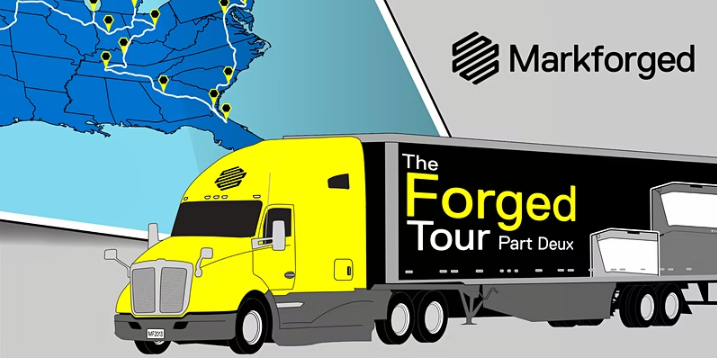
Markforged continues its global Forged Tour Part Deux this week in the U.S. There will be three stops on Tuesday, July 12th, with the first at WISEACRE Brewing Company OG in Memphis, Tennessee with 3DOLOGiE at 10 am EST, the second at Meanwhile Brewing in Austin, Texas with MLC CAD at 5 pm EST, and the third at Holy City Brewing in North Charleston, South Carolina with Phillips at 3:30 pm EST. On Wednesday, July 13th, the tour will be making two stops, one with the EXBuild team at Odell Brewing Company in Ft. Collins, Colorado at 5 pm EST and the other with Access Manufacturing Systems at Bloodhound Brew Pub and Eatery in Orlando, Florida at 4 pm EST. Finally, there will be two tour stops on Thursday the 14th, first with 3DOLOGiE at 10 am EST at Straight to Ale in Huntsville, AL, and second, again in Orlando, at Orange County Brewers & Tin & Taco with Phillips at 3:30 pm EST.

“We invite you to meet the platform that prints industrial parts at the speed of software in person. The Digital Forge is a combination of software, materials, and printers that bring you strong and reliable solutions to your manufacturing pain points.”

Stay tuned for more dates and locations in the future!

July 12 & 14: SOLIDWORKS CAM & CAMWorks Webinar Series
On July 12th and July 14th, CAMWorks, An HCL Technologies Product, is holding a free SOLIDWORKS CAM & CAMWorks webinar series. The first session, “SOLIDWORKS CAM and CAMWorks – Getting Started,” will be held at 11 am EST on the 12th, and “SOLIDWORKS® CAM and CAMWorks – Getting Started with the TechDB,” will be at 2 pm EST on the 12th. The third session, “Technologies to Reduce Machining Cycle Time and Increase Tool Life,” will be at 11 am EST on the 14th, and the final one, “SOLIDWORKS CAM for Designers – A Path to Better Designs,” will be at 2 pm EST on the 14th.

“To serve and provide easily accessible training and educational material to the CAM industry professionals, we are launching FREE CAMWorks webinar series to help you utilize the extra time for gaining an advantage in the future. This webinar series will provide an opportunity to sharpen your CAM skills and possibly learn more advanced features and functionalities that might help you secure additional orders, helping boost your business operations.”

July 12: Formlabs’ Five New SLA Materials

In 2022, Formlabs released five new SLA materials—ESD Resin, PU Rigid 650, PU Rigid 1000, BioMed Black, and BioMed White. If you know want to know more about these materials, and how you can use them with your own printer, tune in to the company’s Office Hours session, “Reviewing Formlabs New SLA Materials in 2022,” at 12 pm EST on Tuesday the 12th. Attendees will receive an overview of each material, the applications each one is suited for, workflow considerations, and more from Formlabs speakers Elena Austras, Product Marketing Manager; Paree Allu, Product Manager – Materials; and Kyle McNulty, Product Lead – SLA.

“Each of these materials open applications for SLA 3D Printing and enable Formlabs users to continue pushing the boundaries of what is possible with their machines.

“In this session, we'll briefly review each new material, and will also set aside around twenty to thirty minutes for questions.”

You can register for the session here.

July 12: Overview of Stratasys H350 SAF System
Stratasys is holding its first of two webinars this week, “Stratasys SAF H350 For Parts Providers,” on Tuesday, July 12th, also at 12 pm EST. In this latest installation of The Stratasys Sessions, attendees will learn how the company’s H350 SAF 3D printer can benefit parts providers. In addition to an overview of the printer, materials, and operating software, you’ll also learn about the basics of powder bed fusion, and have the chance to ask your questions and get them answered by the following Stratasys speakers: Applications Engineer Alec Logeman, Commercial Leader Tim Heller, and Senior Project Engineer Perry Hubbling.

“In this 45-minute webinar, you will learn about how third-party parts providers are saving time and money by leveraging SAF in the production process. We will also discuss the basics of powder bed fusion, SAF Materials and features of the H350 SAF System.”

You can register for the webinar here.

July 13: America Makes Virtual Workshop
At 11 am EST on Wednesday, July 13th, America Makes is having its second members-only, Virtual Workshop focused on its Membership Model. Included on the agenda is coming up with a vision board of what a new membership model might look like for the organization. Attendees will also create concept models for group exploration, and all workshop results will inform the next iteration of the America Makes membership model.

“During this workshop, members will engage with activities that will drive the vision for our membership model. Participants will be focused on questions regarding membership benefits, the annual cost and terms, and the overall value of America Makes membership.”

You can register for the free, members-only event here.

July 13: AM Coalition’s Members-Only Roundtable with NIST

Speaking of members-only, also on the 13th, the AM Coalition is having its second roundtable of the week for its members at 3 pm EST, which will be a briefing with NIST. Once you RSVP on the website, you’ll see where to sign up for a Members-Only Account with your organizational email address, which is required to attend the members-only roundtable on Zoom. Featured speakers will be from the National Institute of Standards and Technology: Dr. Shawn Moylan, Program Manager, Measurement Science for Additive Manufacturing Program, and Dr. Paul Witherell, Associate Program Manager, Measurement Science for Additive Manufacturing Program.

“Come hear directly from the staff of the National Institute of Standards and Technology (NIST) about Additive Manufacturing standards development.”

You can RSVP for the members-only roundtable here.

July 14: 3D Systems on 3D Printing & Generative Design
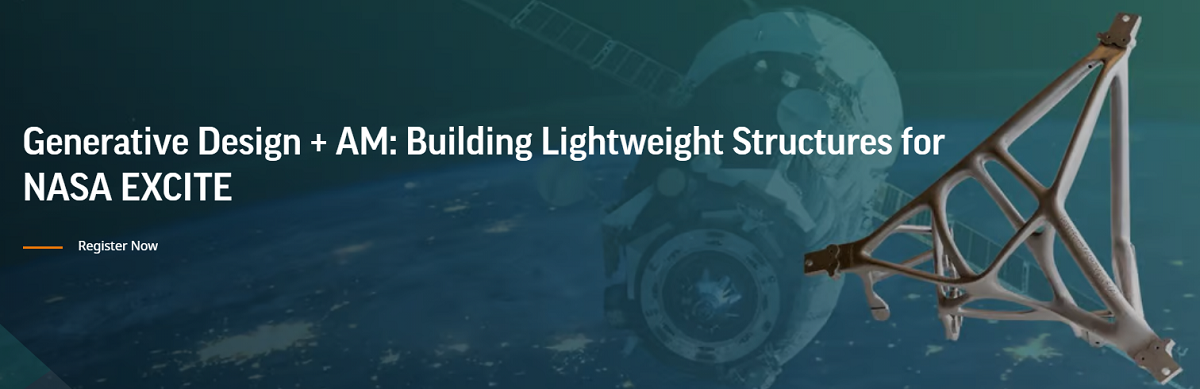
Get ready, because Thursday, July 14th, will be a busy day this week! Things kick off at 5 am EST with a webinar by 3D Systems on “Generative Design + AM: Building Lightweight Structures for NASA EXCITE.” Attendees will hear about the application of generative design and 3D printing within NASA’s EXCITE mission, including the design, analysis, manufacturing, and testing of prototype hardware. Topics will include comparison data between human and AI design, how combining technologies reduced development time from months to days and enabled major mass reduction, future directions to develop efficient, bone-like structures for spacecraft, and more.

“Digital engineering technologies are transforming classical engineering tasks such as design, analysis, and fabrication for space-flight structures. Leveraging Artificial Intelligence (AI) and cloud computing, generative design enables a paradigm shift in the design process, allowing the engineer to define design objectives and requirements while AI explores the design space to generate optimized designs that meet those parameters.

“Digital manufacturing enables these complex and lightweight designs to be robotically manufactured directly from 3D models. This includes both additive manufacturing, such as laser powder bed fusion (LPBF), and subtractive techniques such as automated milling.”

You can register for the webinar here.

July 14: ASTM Presents Overview of Cold Spray Technology

At 10 am EST on the 14th, ASTM International’s AM Center of Excellence (AMCOE) will present a webinar, “Overview of Cold Spray as a Manufacturing Process,” taught by Dan Braley, a Boeing Associate Technical Fellow and the Boeing Global Services Additive Manufacturing Technical Focal & Initiatives Leader. He will teach attendees about the cold spray manufacturing process and how it’s being utilized today, key use cases for the technology for producing and coating parts, potential future uses, and more.

“Cold spray is a manufacturing process whereby metal particles are shot at high pressure through a converging-diverging nozzle in a heated gas stream toward a substrate surface at supersonic speeds. This very high speed gas becomes a carrier of the metallic particles that imbed themselves upon impact to a substrate, forming a strong bond with that surface. This process has emerged as a traditional manufacturing alternative, providing an Additive Manufacturing direct part production, repair, and coating process opportunity.”

You can register for the webinar for $49 here.

July 14: Authentise & nebumind on Process Monitoring
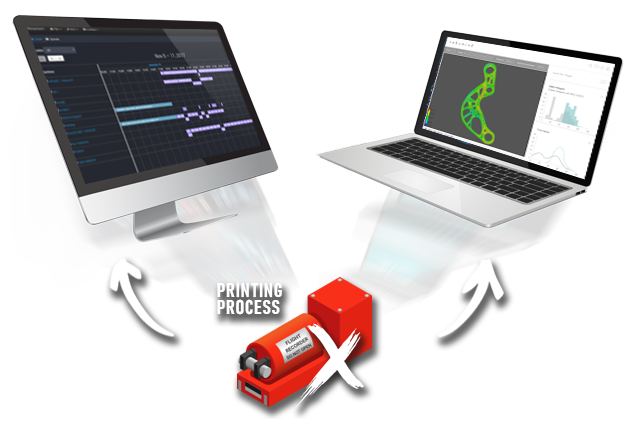
Also at 10 am EST on the 14th, Authentise and nebumind are co-hosting a webinar on “The Future of Process Monitoring.” Nick Parry with Authentise and Christoph Braun with nebumind will discuss the benefits of AM process monitoring, and how the two companies are combining their platforms for this purpose.

“From AM Technician to AM Expert, see how Authentise and nebumind are combining their platforms to enable technicians to act quickly and reduce production costs through to helping advanced Additive Manufacturing engineers improve the quality of future print jobs.”

You can register for the webinar here.

July 14: 3DHEALS on 3D Printing for Veterinary Medicine

3DHEALS will present a webinar about “3D Printing for Veterinary Medicine” at 11 am EST on the 14th. According to data from the AVMA, there was a 50% increase in new pets per week from March to August in 2020, which shows that just like with people, the pet market has ups and downs in its supply chain. An international group of speakers who take care of animals every day using 3D printing and related technologies will discuss their patients, how they provide more efficient care for them using today’s modern manufacturing processes, and how 3D printing can help ensure a more robust supply chain. Moderated by 3DHEALS Detroit Community Manager Richard Doerer, the founder of Modl3D, LLC, the webinar welcomes speakers Alexander Then, a veterinary science 3D printing specialist with NordicVet3D; Andrew Allshorn, the owner of 3D-SQUARED; veterinary surgeon Dr. Johnny Uday; and Dr. Kalman Czeibert, a biomedical engineer at at LimesVet.

“According to American Pet Product Association (APPA), the current pet-related product industry is worth more than 100 billion dollars, where one-third is veterinary-related products based on 2020 data. There is a steady growth of this remarkable industry, but there are definitely more pet owners now than ever after the pandemic. Some interesting veterinary-related data can be found here.”

You can register for the webinar here.

July 14: Velo3D on Large-Format Metal 3D Printers
If you’re interested in metal LPBF 3D printing, you’ll want to tune in to our webinar with Velo3D at 2 pm EST on the 14th, “How Large Format Metal AM Printers are Revolutionizing Mission-Critical Manufacturing.” Attendees will hear about Velo3D’s Sapphire XC 1MZ, the largest metal system available from a top LPBF supplier, which has the capability to print meter-tall parts with standardized, repeatable material properties—perfect for aerospace, defense, and energy applications. Our own Joris Peels will moderate this interactive session, welcoming Velo3D’s Vice President of Global Sales and Business Development, Dr. Zach Murphree, and Director of Technical Sales, Gene Miller, to discuss the benefits and applications of its newest large-scale metal 3D printer, which features 8 1-kilowatt lasers, a faster non-contact recoater, and more.

“The race to space is taking off across the globe. As these companies look to meet their manufacturing milestones, they are increasingly looking to metal 3d printing. However, until recently, the options for large format printing have been limited to lower precision technologies like DED. For detailed and complex turbomachinery and regeneratively cooled combustion chambers, engineers require higher precision. Enter the age of large format Laser Powder Bed Fusion (LPBF).”

You can register for the webinar here.

July 14: HP on 3D Printed Medical Device Regulations
HP will sponsor a webinar at 2 pm EST on the 14th about “What’s Next: Approaching the Regulations Process Around 3D Printed Medical Devices.” Attendees will learn the specific requirements of their medical applications, how medical regulations view prototypes and production parts made with 3D printing, the meaning of biocompatibility and how to plan for testing, and more regarding the regulations of medical devices using end-use 3D printing. The speakers will be Michael Drues, PhD, President of education, training, and consulting company Vascular Sciences; HP Application Engineer David Johnson; and Tom Salemi, Editorial Director of DeviceTalks.

“Michael has worked on the FDA and OEM side of medical device regulation and has helped many customers navigate the growing 3D printing space for end-use applications. He will take us through FDA expectations towards manufacturers, how to navigate the process, and removing the guesswork and unknowns so you can get started and benefit from 3D printing quicker.”

You can register for the webinar here.

July 14: Stratasys on AM in Automotive Applications 

Finally, also at 2 pm EST on the 14th, Stratasys kicks off its four-part webinar series, “The Future of Automotive: Shifting from Traditional to Additive Manufacturing,” which shines a light on the benefits of using AM to support vehicle production and the creation of automotive parts. During this first session, Fadi Abro, Director of Automotive Business at Stratasys, will discuss his insights on transportation 3D printing applications, as well as present three important solutions that optimize cost-efficiency while also shortening time-to-market. Tune in to future sessions this month and next to hear about how the company’s FDM, H350, and Origin One 3D printing solutions can be used for automotive applications.

“Stratasys’ F770, F123, F900, H350™ and Origin® One 3D printers provide manufacturers with control over their production process to create accurate, durable, impact resistant and customizable automotive parts in-house. These printers offer a wide range of materials, suitable for various production-grade parts throughout the automotive industry.”

You can register for the webinar here.

Do you have news to share about any future webinars or virtual and live events? Please let us know!

The post 3D Printing Webinar and Event Roundup: July 10, 2022 appeared first on 3DPrint.com | The Voice of 3D Printing / Additive Manufacturing.