Friday, July 15, 2022

TCT Magazine | Additive Manufacturing & 3D Printing Intelligence | News, Interviews, Features | Additive Manufacturing | Product Development Technology

TCT Magazine | Additive Manufacturing & 3D Printing Intelligence | News, Interviews, Features | Additive Manufacturing | Product Development Technology


AWI targets 3D printing with exotic nickel alloy wire

Posted: 14 Jul 2022 03:57 AM PDT

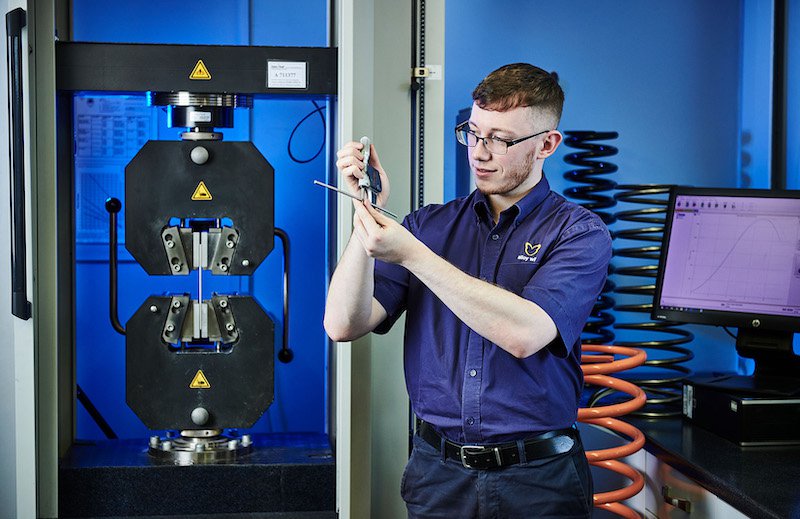
The UK-based company, which specialises in round, flat and profile wire, is set to showcase what it believes to be 'an exciting new offer' for part manufacturers, particularly in aerospace.

This posting includes an audio/video/photo media file: Download Now

Explained: Why Markforged has moved to acquire Digital Metal & Teton Simulation

Posted: 14 Jul 2022 02:45 AM PDT

Markforged has made inorganic moves to build out its metal 3D printing and software offerings. Here's why.

This posting includes an audio/video/photo media file: Download Now

Marle Group teams with Renishaw to improve medical device manufacturing

Posted: 14 Jul 2022 02:34 AM PDT

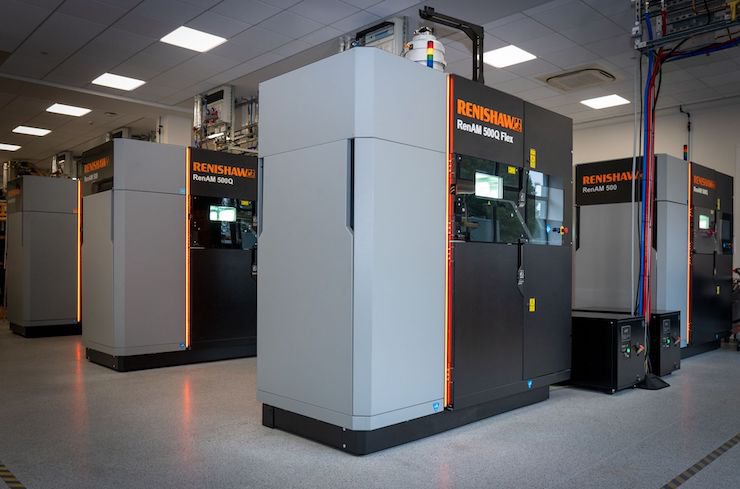
Renishaw has collaborated with medical device manufacturer Marle Group to help improve its powder flexibility for bespoke jobs and overall manufacturing accuracy.

This posting includes an audio/video/photo media file: Download Now

Thursday, July 14, 2022

3D Universe

3D Universe


Culinary 3D Printing with Sugar Lab | 3D Universe Untethered Episode 27

Posted: 14 Jul 2022 10:17 AM PDT

In this episode of 3D Universe Untethered, we sit down with Kyle von Hasseln, Chief Executive Officer at Currant 3D and Sugar Lab. We explore the amazing culinary creations they’re able to produce using their [...]

The post Culinary 3D Printing with Sugar Lab | 3D Universe Untethered Episode 27 appeared first on 3D Universe.

This posting includes an audio/video/photo media file: Download Now

3D Printing Media Network – The Pulse of the AM Industry

3D Printing Media Network – The Pulse of the AM Industry


3D printed Simulare Bilateral Cleft Lip and Palate Simulator debuts in UK

Posted: 14 Jul 2022 09:12 AM PDT

In a European debut at the 14th International Congress of Cleft Lip, Palate & Related Craniofacial (Cleft) 2022, Simulare Medical, a division of Smile Train, will bring together surgeons from …

The post 3D printed Simulare Bilateral Cleft Lip and Palate Simulator debuts in UK appeared first on 3D Printing Media Network - The Pulse of the AM Industry.

Athletics 3D creates first one-piece, printed biathlon stock

Posted: 14 Jul 2022 05:41 AM PDT

Athletics 3D, a French company that designs and manufactures personalized sporting equipment using 3D printing technology, has created the first one-piece biathlon stock – using only metal additive manufacturing. According …

The post Athletics 3D creates first one-piece, printed biathlon stock appeared first on 3D Printing Media Network - The Pulse of the AM Industry.

ANCA and CSIRO are developing technology for tungsten-carbide tools

Posted: 14 Jul 2022 03:30 AM PDT

Australian industry will soon have access to a novel cutting tool manufacturing platform, thanks to a research collaboration (starting back in 2020) between leading tool manufacturer ANCA, and Australia's national …

The post ANCA and CSIRO are developing technology for tungsten-carbide tools appeared first on 3D Printing Media Network - The Pulse of the AM Industry.

AddUp and ECM Group partner to offer heat treatment solutions

Posted: 13 Jul 2022 08:36 AM PDT

AddUp, a major player in the field of metal additive manufacturing, and the ECM Group, the creator of innovative thermal solutions, have signed a partnership to develop high value-added solutions …

The post AddUp and ECM Group partner to offer heat treatment solutions appeared first on 3D Printing Media Network - The Pulse of the AM Industry.

Pratt & Whitney evaluate first in-house Velo3D solution

Posted: 13 Jul 2022 05:00 AM PDT

Pratt & Whitney, a Raytheon Technologies business, has acquired an end-to-end solution from Velo3D, a leading metal additive manufacturing technology company for mission-critical parts, to evaluate the Sapphire XC printer …

The post Pratt & Whitney evaluate first in-house Velo3D solution appeared first on 3D Printing Media Network - The Pulse of the AM Industry.

Divergent Technologies closes $80 million worth of financing

Posted: 13 Jul 2022 03:30 AM PDT

Divergent Technologies Inc., the company that developed the world’s first end-to-end digital production system – revolutionizing industrial-scale manufacturing, has closed a new $60 million venture loan facility led by Horizon …

The post Divergent Technologies closes $80 million worth of financing appeared first on 3D Printing Media Network - The Pulse of the AM Industry.

3dpbm Pulse Podcast Ep. 10: paperless production with AM

Posted: 13 Jul 2022 01:25 AM PDT

Today's episode brings together two companies that represent at the same time, the history and the future of additive manufacturing: the AM workflow automation experts at AM Flow and the …

The post 3dpbm Pulse Podcast Ep. 10: paperless production with AM appeared first on 3D Printing Media Network - The Pulse of the AM Industry.

Desktop Metal and SolidCAM expand to four new countries

Posted: 12 Jul 2022 10:00 AM PDT

Desktop Metal, a global leader in additive manufacturing technologies for mass production, has expanded its relationship with CNC software innovator, SolidCAM – creator of the iMachining toolpath technology and a …

The post Desktop Metal and SolidCAM expand to four new countries appeared first on 3D Printing Media Network - The Pulse of the AM Industry.

Markforged to acquire Digital Metal

Posted: 12 Jul 2022 07:54 AM PDT

Markforged, the creator of the integrated metal and carbon fiber additive manufacturing platform, The Digital Forge, has entered into a definitive agreement with Höganäs AB to acquire Digital Metal, the …

The post Markforged to acquire Digital Metal appeared first on 3D Printing Media Network - The Pulse of the AM Industry.

Carbon and OECHSLER extend partnership

Posted: 12 Jul 2022 06:07 AM PDT

OECHSLER AG, a leading polymers technology group with headquarters in Ansbach/Middle Franconia, and a presence globally, is extending its partnership with the US additive manufacturing pioneer, Carbon, and their production …

The post Carbon and OECHSLER extend partnership appeared first on 3D Printing Media Network - The Pulse of the AM Industry.

3D Printing

3D Printing


India’s AM Rocket Factory Opens its Doors

Posted: 14 Jul 2022 06:14 AM PDT

rocket indiaIndian aerospace engineering company Agnikul Cosmos has opened their first rocket printing factory at IIT Madras Research Park, Chennai. "Rocket Factory-1" is intended to churn out two rocket engines per week with their EOS printers and other machinery. This will allow the production of one complete launch vehicle per month. The factory contains all the […]

New AI-Modeling Printer Creates Models from Photos

Posted: 12 Jul 2022 11:57 PM PDT

KOKONIIt's 2022 and printers are getting cheaper and more complex, largely thanks to a combination of low cost sensors combined with smarter software. This is the case with the latest offering from Hong Kong-based hardware manufacturer KOKONI, who has just launched a crowdfunding campaign for their printer… the KOKONI EC-1. Their cute little new printer […]

US Navy Installs First Metal Printer Onboard Ship

Posted: 12 Jul 2022 12:16 AM PDT

metal printer onboardThe US Navy has installed a new metal printer onboard the USS Essex, a Wasp-class amphibious assault ship ported in Pearl Harbor, US. It's the first time a metal printer has been installed on a US Navy ship. The installation took place at the Rim of the Pacific event (RIMPAC 2022) event, which is a […]

Wednesday, July 13, 2022

TCT Magazine | Additive Manufacturing & 3D Printing Intelligence | News, Interviews, Features | Additive Manufacturing | Product Development Technology

TCT Magazine | Additive Manufacturing & 3D Printing Intelligence | News, Interviews, Features | Additive Manufacturing | Product Development Technology


Feeling ultrasonic: How NASA JPL is deploying Fabrisonic 3D printing for space

Posted: 13 Jul 2022 08:52 AM PDT

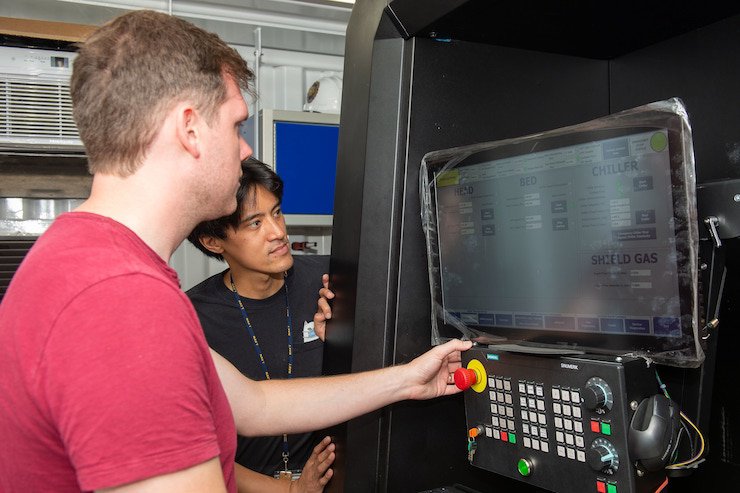
Head of Content Laura Griffiths talks to NASA engineers about the organisation's application of Fabrisonic's metal additive manufacturing technology.

This posting includes an audio/video/photo media file: Download Now

Pratt and Whitney install Velo3D metal 3D printer for mission-critical designs

Posted: 13 Jul 2022 07:28 AM PDT

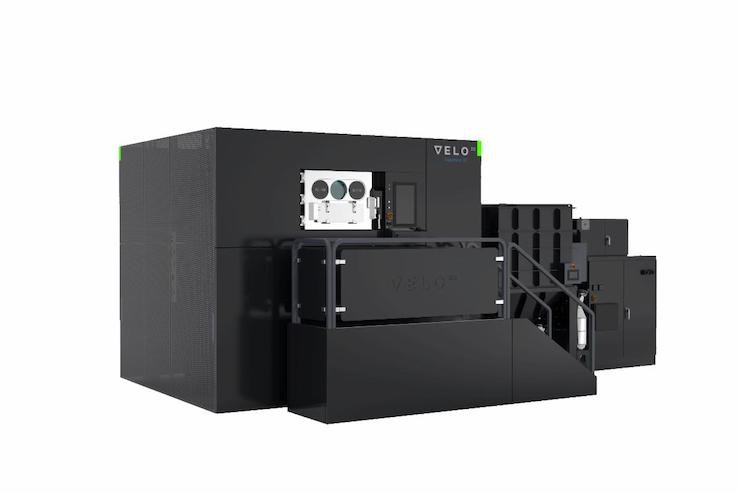
Pratt and Whitney has acquired an end-to-end solution from Velo3D, to evaluate the Sapphire printer for manufacturing production jet engine components. This printer is the first of its type to be installed at the company.

This posting includes an audio/video/photo media file: Download Now

OECHSLER renew partnership with Carbon and announce multi-million investment

Posted: 13 Jul 2022 06:11 AM PDT

Leading polymer technology group OECHSLER is extending its partnership with US additive manufacturing company Carbon as the partners plan to enter into new markets.

This posting includes an audio/video/photo media file: Download Now

Formlabs launches Fuse 1+ 30W SLS 3D printer

Posted: 13 Jul 2022 06:00 AM PDT

Formlabs has launched its second SLS 3D printing platform with laser power and galvanometer system upgrades.

This posting includes an audio/video/photo media file: Download Now

Desktop Metal expands global partnership with SolidCAM to four new countries

Posted: 13 Jul 2022 05:05 AM PDT

Desktop Metal has expanded its global partnership with SolidCAM to four new countries in the Americas, Europe and Asia. SolidCAM are a global leader in innovative CAM software for CNC machining.

This posting includes an audio/video/photo media file: Download Now

TCT Magazine | Additive Manufacturing & 3D Printing Intelligence | News, Interviews, Features | Additive Manufacturing | Product Development Technology

TCT Magazine | Additive Manufacturing & 3D Printing Intelligence | News, Interviews, Features | Additive Manufacturing | Product Development Technology


KOKONI announce new 3D printer with AI 3D modelling

Posted: 13 Jul 2022 12:23 AM PDT

KOKONI has announced the launch of an AI 3D modelling 3D printer, the KOKONI EC-1, which they are claiming to be the world's first to have instant AI 3D modelling.

This posting includes an audio/video/photo media file: Download Now

Tuesday, July 12, 2022

TCT Magazine | Additive Manufacturing & 3D Printing Intelligence | News, Interviews, Features | Additive Manufacturing | Product Development Technology

TCT Magazine | Additive Manufacturing & 3D Printing Intelligence | News, Interviews, Features | Additive Manufacturing | Product Development Technology


U.S. Navy install 3D printer on USS Essex as part of naval research

Posted: 12 Jul 2022 07:23 AM PDT

The USS Essex (LHD 2), a Wasp-class amphibious assault ship in the U.S. Navy, has been equipped with a 3D printer as part of Naval Postgraduate School (NPS) research. Essex is the first ship to participate in the initial testing and evaluation.

This posting includes an audio/video/photo media file: Download Now

Toyota begins partnership with SOLIZE to produce replacement car parts through HP 3D printing

Posted: 12 Jul 2022 06:01 AM PDT

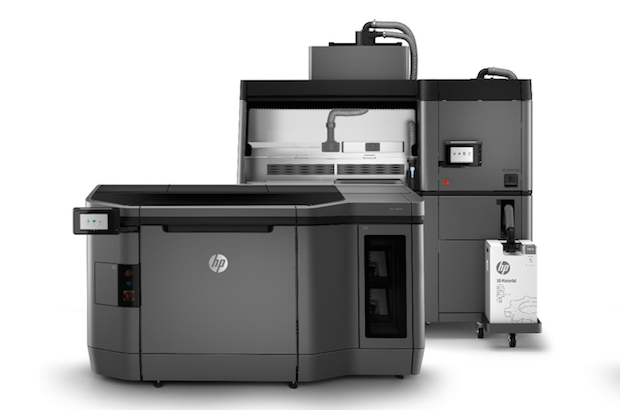
Toyota started an initiative in 2021 to produce replacement parts using 3D printing and sell them as genuine parts, in response to customer demand. Toyota has decided to deploy the HP Fusion Jet 5200 Series.

This posting includes an audio/video/photo media file: Download Now

Markforged set to acquire Digital Metal in mixed offering deal

Posted: 12 Jul 2022 05:31 AM PDT

Markforged is to expand into metal binder jetting after reaching a definitive agreement with Höganäs AB to acquire metal binder jetting firm Digital Metal.

This posting includes an audio/video/photo media file: Download Now

Bosch partners with the Karlsruhe Institute of Technology and BASF to produce 3D printed micro-reactor

Posted: 12 Jul 2022 03:10 AM PDT

Bosch Advanced Ceramics has collaborated with the Karlsruhe Institute of Technology (KIT), and the chemical company BASF to develop a highly complex 3D printed micro-reactor made of technical ceramics for high-temperature reactions.

This posting includes an audio/video/photo media file: Download Now

3DPrint.com | The Voice of 3D Printing / Additive Manufacturing

3DPrint.com | The Voice of 3D Printing / Additive Manufacturing


3D Printed Wheat Bran Combines with UV Printing to Create Colorful Designs

Posted: 12 Jul 2022 06:30 AM PDT

Polish startup GREENFILL3D continues to expand the applications for its wheat bran 3D printing feedstock. To make its GF3D Branfill3d material, the company combines PLA with waste from pasta manufacturing. So far, the company has used the filament to 3D print pop-up Point of Sale stands. Now, GREENFILL3D is working with Deckard Design to add full-color UV labelling to the bran-filled parts to make labels for potted plants.

A Polish, Etsy-driven home decor and gadget shop, Deckard Design will distribute the 3D printed products in North America and Europe. Available in two varieties, the posts can be used to describe a range of plants and herbs that one might seed in their garden. GREENFILL3D suggests that the wheat bran improves the surface finish of its parts, while also making them tough. Using 2D UV printing, which Deckard’s founder first relied on for printing colored inks onto metal, Deckard is able to apply colorful images to the wheat material.

I’m always happy to see innovation related to green products. In this case, we are not told how much wheat bran is in the PLA mix. So, we can’t really see just how advantageous this material is—especially if it were compared to cardboard or other alternatives. The use of UV inks makes the products more colorful, but may negate any environmental benefit in the first place. I’m wondering how ecological sustainable these UV resins are. My guess is that they aren’t. However, the companies say that they are experimenting with environmentally-friendly materials. For now, I want to urge caution before everyone becomes too enthusiastic. We’ve seen eco-friendly materials before, such as 3D printed lignin, 3D printed milk cartons and more.

Both companies use desktop 3D printers to innovate. I’m hearing of more firm that are developing, iterating, and going to production with extremely low-cost devices, such as Creality 3D printers. In this sense, lower cost printers really do democratize innovation more than in the past by making the technology accessible to anyone that with a few hundred dollars to spare. If they can successfully scale up production, then these businesses will also have a very low cost basis from which to operate. Will someone that got started on a desktop machine ever go to a $200,000 printer? I think that there really is a considerable opportunity here to offer scalable low-cost 3D printing and automation solutions for emerging 3D printing startups. If people can get these inexpensive machines to work well long term, then this could be a big market.

The use of low-cost printers can be expanded widely, as can the combination of UV printing on 3D printed parts. This could be a low-cost method to add color and may be an otherwise overlooked opportunity. There may be a number of opportunities in applications such as packaging and point of sale displays that need to be considered, as well. In addition to that, wheat bran is far from the only material that you can mix in with PLA to get interesting properties and possible ecological benefits, as well. I would love to have more data on just how environmentally friendly this is overall, but there is a lot to be inspired by here.

The post 3D Printed Wheat Bran Combines with UV Printing to Create Colorful Designs appeared first on 3DPrint.com | The Voice of 3D Printing / Additive Manufacturing.

New Research Optimizes Weed Pulling with 3D Printing

Posted: 12 Jul 2022 06:00 AM PDT

Backyard gardeners view weeds as a nuisance to be pulled. They may be viewed even more negatively by the agricultural industry. Uncontrolled weeds on a piece of farmland can damage the crop, preventing it from reaching its full yield and negatively impacting the overall sale price at harvest.

Farmers initially pulled weeds by hand, walking up and down the rows on each field, hunting for any invasive species. This method may have been effective for farmers who were only trying to grow enough food to feed their families. However, as the industry expanded, the areas got larger, and hand-weeding was no longer practical.

Modern agriculture has relied heavily on herbicides — chemicals designed to kill the weeds without damaging the crops. Unfortunately, modern science has painted a clearer picture of these chemicals, discovering the long-term impacts that herbicides can have on human health and local ecosystems. The industry needs a new method for weed control.

Introducing Sonora Ortiz

Sonora Ortiz is a native of Southern California and is no stranger to weeds. Before coming to the University of Maine, they worked on farms in California, as well as throughout Europe, developing a passion for sustainable agriculture. A casual observer might think this would lead Ortiz to a career in agriculture, but when they reached Orono, they chose a physics major.

Sonora Ortiz. Image courtesy of University of Maine.

A weed science class taught by Professor Eric Gallandt — a professor of weed ecology for the School of Food and Agriculture — reignited Ortiz's passion for agriculture. Gallandt invited them to work with him on a project focusing on manual weed control. It might seem like this team is taking a step backward, returning to older methods. However, Ortiz combines 3D printing and physics to teach a metaphorical old dog some new tricks.

Pulling Weeds with 3D Printing

3D printing has a growing number of applications in nearly every industry, but the agricultural sector has been slower to adopt. So far, the most prominent use there has been prototyping and producing parts for heavy agricultural equipment. The applications may continue to growth the help of researchers like Ortiz, who is combining additive manufacturing with nanotechnology to assist with weed removal in an agricultural setting.

Understanding weeds in the wild can be a challenge. These plants adapt to their environment, so there can be massive variability even within the same species. Good science needs control to remove some of this from the experiment and make it easier to draw accurate conclusions about weed removal methods.

3D printing is much more efficient for testing methods of physical weed removal. This involves pulling the plants from the ground, roots and all, instead of treating them with herbicide. Previous research techniques relied on rods as weed substitutes, which provided a control in experimentation but didn't behave like a living plant, with a root system. The alternative was the use of actual weeds grown in soil specifically for such testing.

The problem with the latter was that ,once the test was complete, it was unrepeatable. Researchers were stuck waiting for the next batch of weeds to grow, and there was no guarantee that each new plant would be identical to the last.

3D printing, combined with nanotechnology, addresses both of those problems. Researchers like Ortiz can print a test weed with a root system and use that same printed plant repeatedly. Nanocoatings, applied by simply dipping the artificial roots in the coating solution, work to mimic the root hairs that can cling to soil and make it more difficult to remove the entire plant.

The science behind these physical weed removal tests goes back to beam-bending physics. How hard can they pull before the roots snap, leaving plant material in the ground to regrow into a new weed? These "force curves" allow researchers to understand how each plant clings to the soil, making it easier to remove them without the need for harsh herbicides or other chemicals that could damage surrounding plants.

The Future of 3D Printed Weed Pulling

With a new grant, Ortiz will be able to further their research into weed science. Specifically, they will be working with Bashir Khoda, assistant professor of mechanical engineering, to create nanocoatings that actually orient molecules on 3D printed roots to even more accurately replicate the force of hairs on roots. The grant will also allow Ortiz to attend the Weed Society of America annual conference to present their findings. In the long run, Ortiz aims to apply 3D printing techniques to a wide variety of crops to optimize weed control such that weed removal doesn't damage surrounding crops.

Feature image courtesy of Mississippi Watershed Management Organization

The post New Research Optimizes Weed Pulling with 3D Printing appeared first on 3DPrint.com | The Voice of 3D Printing / Additive Manufacturing.

Aussie Transport Companies Adopt Cold Spray Metal 3D Printing

Posted: 12 Jul 2022 05:30 AM PDT

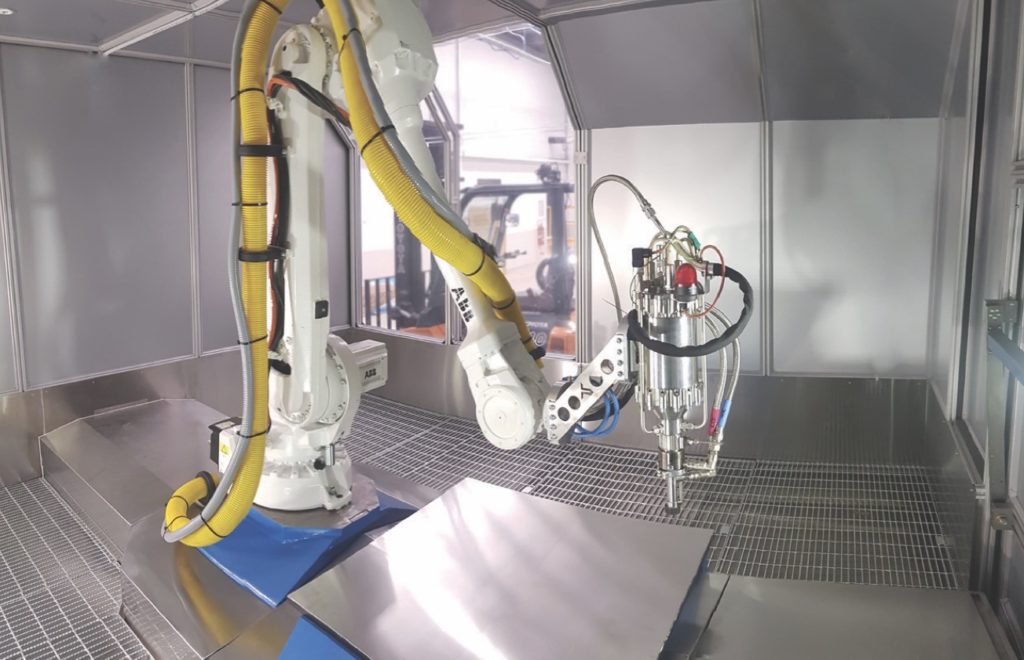
Titomic (ASX: TTT) has previously sold its Kinetic Fusion technology to the marine, defense, and aerospace sectors for a variety of applications, including drones. Now, the Aussie company reports that it has sold four low-pressure cold spray systems, dubbed D523s, to the transport industry—its first foray into this sector.

Kinetic Fusion is a cold spray process that prints near-net-shape titanium parts which are then machined to size. The company has very large systems attached to robot arms, but also much simpler systems such as the D523 of which it has now sold four to the “engine remanufacturing and rail transport sectors.” All systems will be used for maintenance, repair, and overhaul (MRO) in either repairing, rejuvenating, or replacing parts. Previously, the D523 had been sold to such clients as boilermaker Brauntell and oil and gas company DNC Coatings.

Titomic says that it has a focus on coatings and repairs, which is logical since the part cost is low with cold spray. It is also possible to rejuvenate parts by applying new material over worn areas. Additionally, users can use the process to harden components, apply corrosion-resistant coatings to them, and repair larger objects fairly quickly. The largest Titomic systems can cost over $1 million, but you’d probably be surprised at just how accessible their low-cost systems are. The company mentions that all four in total represented revenue to the tune of $314,900. So that’s a surprisingly affordable unit price.

"The sale of these four D523 systems into the Australian transport industry expands the reach and highlights the universal need for the in-the-field servicing capability provided by these systems. The D523 system's capability of making parts, repairing damaged or corroded parts, and general maintenance on-site in a quick turnaround time, ultimately leads to higher profitability for users and secures their supply chains. The sales of the D523 systems follow on from the Dycomet acquisition in December last year, enabling Titomic to be the only global supplier of low, medium, and high-pressure cold spray systems. With this ability, Titomic can partner with businesses across multiple regions in the engine remanufacturing and rail transport sectors by offering technology which compliments those existing manufacturers. These D523 sales also validate our market orientation, as we're beginning to fulfil the strong and growing demand for efficient and effective repairs and servicing – a need that has long existed in the market. These four system sales prove that we're building and growing our commercial network, which we expect will lead to exponential sales growth,” said Titomic Managing Director Herbert Koeck.

It is a good sign that the firm can offer these affordable systems as seen above but can also then upsell customers on much larger machines, such as the TKF mounted on ABB robot arms. The same system can also be mounted on a gantry to increase its build volume even more.

Australia may be far away, both in distance and in the imagination, for the broader 3D printing industry. However, this local firm can sell four of these systems within its own national borders. It may be nice to chase Airbus, Lockheed, and Volkswagen, but there are many smaller firms that could really use additive manufacturing in production. Our industry really should focus more on the right companies in the right niches, including smaller businesses. MRO, rejuvenation of engines, industrial coatings, and transport generally are much bigger markets together than the large automotive companies. Titomic is showing us that there is a lot more territory to be explored in 3D printing.

The post Aussie Transport Companies Adopt Cold Spray Metal 3D Printing appeared first on 3DPrint.com | The Voice of 3D Printing / Additive Manufacturing.

ARPA-E Funds Hempcrete for Construction 3D Printing via Texas A&M Grant

Posted: 12 Jul 2022 05:00 AM PDT

Last month, the U.S. Department of Energy (DOE) awarded a $3.74 million grant to researchers at Texas A&M University, for a plan to research applications for additive construction (AC) using hempcrete. Specifically, the DOE's funding comes from the Advanced Research Projects Agency- Energy (ARPA-E), via its Harnessing Emissions into Structures Taking Inputs from the Atmosphere (HESTIA) program. Hempcrete is any building material made from a mixture of hemp with lime and water.

The research team is led by Petros Sideris, an assistant professor at Texas A&M's Zachry Department of Civil and Environmental Engineering. The five other members include three professors that also come from the Zachry Department, as well as two professors from Texas A&M's College of Architecture. The plan centers around exploring the potential for using hempcrete to accentuate the emissions reductions achievable by AC, while also creating affordable residential, and possibly commercial, buildings.

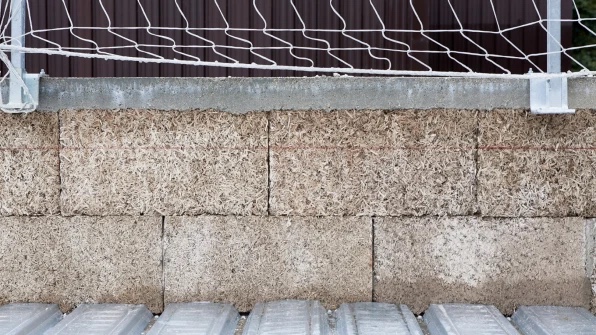
Hempcrete bricks produced with additive construction. Image courtesy of Elodie Dupuis and Lemoal Lemoal Architecture.

In a university press release, Dr. Sideris pointed out, "While production of conventional construction materials such as concrete requires large amounts of energy and releases large amounts of CO2, hempcrete is a net-carbon negative material, which can provide major environmental benefits. …Resilience to natural hazards is [also] intertwined with environmental sustainability because building damage and subsequent repairs due to extreme events such as hurricanes result in major environmental impacts."

Regarding resilience, Dr. Sideris is referring to the capabilities of AC to produce unique shapes, as a way to create structures that are more resistant to natural disasters than those produced by conventional construction methods. As for its being net-carbon negative, this is what accounts for its receiving the HESTIA grant, which was created in 2021 specifically for encouraging the use of net carbon negative building materials.

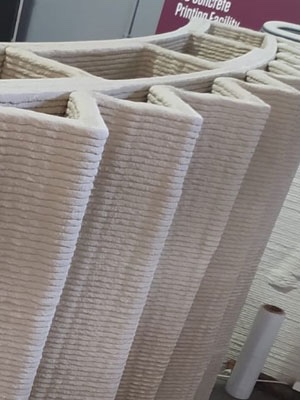
Image courtesy of Texas A&M

Although hemp has been used as a building material for centuries, and European companies have been relying on it for modern construction projects for decades, the plant was banned in the U.S. in 1937. It was not until the passage of the 2018 Farm Bill by the U.S. Congress, that American hemp production was once again permitted at the federal level. Since then, scattered amounts of interest in using hemp as a building material have surfaced in news cycles from time to time.

Still, there has been little progress in using the material for AC until now, so hempcrete's future incorporation with the technology could be accelerated if the Texas A&M project is successful. Moreover, it would seem that the use of hempcrete in general would itself be accelerated long-term, were cannabis to be legalized at the federal level in the U.S. Federal legalization would facilitate larger supply chains for both cannabis in general, and hempcrete in particular. Its use in production of hempcrete would be a logical way to upcycle large amounts of cannabis industry waste. Finally, the relative independence of AC from existing construction supply chains means that it could be far easier for the material to take off with AC than with companies using conventional building methods.

The post ARPA-E Funds Hempcrete for Construction 3D Printing via Texas A&M Grant appeared first on 3DPrint.com | The Voice of 3D Printing / Additive Manufacturing.