Tuesday, June 14, 2022

3DPrint.com | The Voice of 3D Printing / Additive Manufacturing

3DPrint.com | The Voice of 3D Printing / Additive Manufacturing


3DPOD Episode 109: Part Costing and Optimization with Omer Blaier, CASTOR CEO & Founder

Posted: 14 Jun 2022 06:30 AM PDT

Israeli firm CASTOR analyses parts. It can then tell you if the part is printable, how much it would cost in different 3D printing technologies, on which part you can save money through mass reduction and much more. CASTOR´s software is a gateway to 3D Printing. Companies can use it to jumpstart their 3D Printing projects or do an analysis of the potential for 3D Printing in their organization. We talk to CEO and founder Omer Blaier about the startup, its abilities and goals.

The post 3DPOD Episode 109: Part Costing and Optimization with Omer Blaier, CASTOR CEO & Founder appeared first on 3DPrint.com | The Voice of 3D Printing / Additive Manufacturing.

Circular Economies in Space: Airbus Plans to Send Metal 3D Printer to ISS in 2023

Posted: 14 Jun 2022 06:00 AM PDT

Global aerospace and defense giant Airbus has announced that next year, it will launch into space what the company says will be the first metal 3D printer in use aboard the International Space Station (ISS). Airbus developed the plainly-named Metal3D machine on behalf of the European Space Agency (ESA), and envisions it as a first step in a long-term process towards creating entire circular economies in orbit.
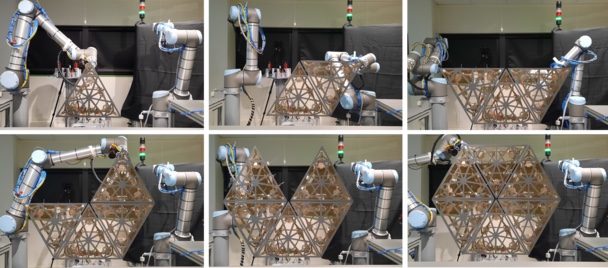
Brick# 3: kit assembly for huge reflectors

According to Anthony Lecossais, part of the team that developed the Metal3D for Airbus, "…the best material to use in space is the one that's already up there. Before we can recycle satellites or even turn debris back into sustainable resources, we need first to learn how to melt metal in space without any gravity. To learn how we can print metal parts in space and validate the technology in microgravity, Airbus and its partner are delivering to ESA the first in orbit metal 3D printer."

As Lecossais points out, it's of course not yet clear exactly how different a manufacturing process in space will be from that same manufacturing process at ground level, until it actually happens. On the other hand, the company Made in Space had, by 2014, already sent a polymer 3D printer to the ISS, and it sent a ceramic 3D printer there in 2020. It isn't unrealistic to think, then, that the initial step of 3D printing the first metal objects in space will be successful.
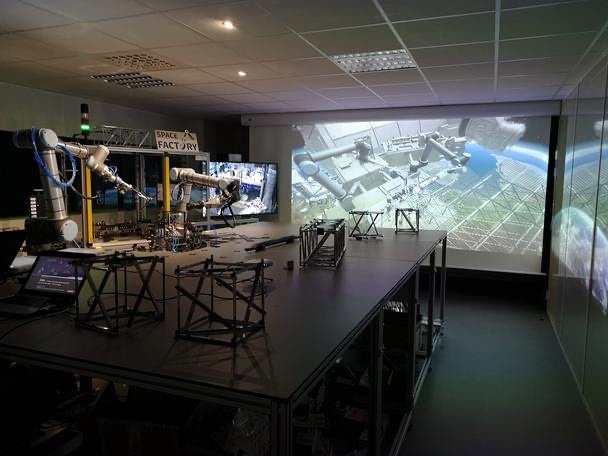
All the other potentialities that Airbus envisions, in the press release the company issued announcing this project, are far more up in the air. This is at least true in terms of some of the dates Airbus throws out: that "3D printers could also be used on the moon" as early as 2029, for instance. Or, that by the middle of this decade, entire satellites could be manufactured in space, possibly from recycled space junk. And that a Space Assembly Line is an inevitable, fairly near-term future reality, where robotic arms will work together to build new robotic arms.

Sure, why not! But, also, Airbus says that all of this will be the sustainable way of doing things, and I'm not sure about that. The logic is that by building things in space—since you can recycle the space junk, you see—far less energy will be used than would've been the case if you'd launched the equivalent number of new things into space.

Based on how things have played out so far terrestrially, though, are we really going to recycle the space junk? Maybe astronauts will turn out to be far more conscientious and competent recyclers than the average earthling. At the very least, I feel like I need to see a successful metal AM circular economy emerge on the planetary level before I can get behind the idea of one happening in space.

Nevertheless, it does seem like humanity is committed to creating more and more space junk, so at least Airbus is thinking ahead. Perhaps, if it can be figured out how to be made profitable, recycling space junk into new satellites will be commonplace in 20 years. Even so, at this point I can't see how this isn't more likely to be part of a first step on a path towards significantly increasing the amount of garbage in space, rather than a move in the direction of a sustainable space sector.

Images courtesy of Airbus

The post Circular Economies in Space: Airbus Plans to Send Metal 3D Printer to ISS in 2023 appeared first on 3DPrint.com | The Voice of 3D Printing / Additive Manufacturing.

3D Printing for GM SUV Opens Doors for GKN Additive’s Flexible Manufacturing

Posted: 14 Jun 2022 05:30 AM PDT

While at RAPID+TCT, we learned that the world of automotive 3D printing had taken a major step forward. To address an immediate supply chain issue, General Motors Company (GM) turned to 3D printing. To produce 60,000 parts over the span of five weeks for use on approximately 30,000 vehicles, GKN Additive, through its Forecast 3D operation, leveraged HP's Multi Jet Fusion (MJF) polymer additive manufacturing (AM) technology.

That is an impressive feat, to say the least. It also marks an historic moment in the history of additive. To learn more about the project, as well as GKN's 3D printing division as a whole, we spoke to John Dulchinos, President of GKN Additive.

3D Printing for GM's New Vehicles

So far, HP's MJF process has been used to produce over 100 million parts. Much of that work is performed by service bureaus and digital manufacturers that rely on the technology for its predictable serial 3D printing capabilities. And among those digital manufacturers is GKN Additive, one of the largest users of MJF in the world. Dulchinos pointed out that, before it was purchased by GKN in 2019, Forecast 3D was actually one of the earliest adopters of MJF.

Some five years later, and we now know that MJF is one of the few polymer 3D printing processes capable of delivering end parts in large batches. Proving this point is the work that HP has done with GM so far. The largest automaker in the U.S. and second largest in the world, GM has used MJF to 3D print heating, ventilation, and air conditioning (HVAC) ducts for its Cadillac V-Series and cooling ducts for the Corvette C8.

These were planned additions, however. For all intents and purposes, GM had no initial intention of squeezing 60,000 3D printed parts into 30,000 vehicles. However, when its design team made a late change to the spoiler of one of its most popular full-size SUVs, it turned to GKN Additive to produce some necessary components with 3D printing.
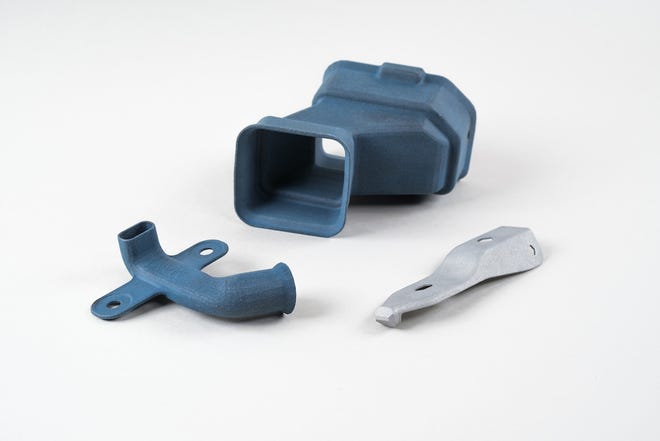
HVAC ducts and electrical harness bracket 3D printed for the V-series. Image courtesy of GM.

First the GM team designed and validated the 3D printed spoiler closeout seals, before ramping production. The digital manufacturer tested and validated the parts, while also implementing a new drying process that cut the time it would have taken GM to surface finish the part in half.

"GM had to make a design change for the spoiler to update it for new standards on fuel efficiency," Dulchinos told a group at RAPID+TCT. "The vehicle was already on the production line when they realized they had to make a change to this tiny seal, but that seal reduced the drag enough that it affected the emissions and fuel economy of the vehicle. So, they had 30,000 of these SUVs sitting in parking lots waiting for this seal. And the tooling for the injection mold was going to take 12 weeks to deliver. So they came to us and we worked with HP, GM, AMT, and BASF to create a solution and deliver 60,000 of these seals in six weeks. That allowed them to get the cars off the lots and to their customers. The 3D printed part was pennies of the total cost, but without it, they couldn’t ship the product."

In particular, I was concerned about the safety implications of implementing a design change to a vehicle so late in the game. Dulchinos assured me that this wasn't an issue for the minor component.

"Well, this wasn't a safety-critical component and it was engineered from a very similar material [to the injection molded counterpart], which was a TPU, and went through very similar post-processing to get to the finished state. From a chemistry standpoint it was all very similar," Dulchinos said.

One issue to the production process was scaling up a TPU part quickly, given the difficulty of dealing with such an elastomeric material, as well as how to post-process the part.

3D printed rear spoiler closeout seal for General Motors.

3D printed rear spoiler closeout seal for General Motors, before (left) and after (right) undergoing the finishing process. Image courtesy of GKN Forecast 3D.

Rapid Response 3D Printing

With the ability to turn around a part so quickly for a key manufacturing giant bodes well for GKN and automotive 3D printing going forward. With an "emergency" component now on 30,000 vehicles that will be hitting the roads with consumers behind the wheel, GKN can likely move onto other end parts for the sector. The business now has preliminary workflows in place for just such situations.

"What we’re building now is a discipline around agility with quality. That’s really what we’re trying to get to," Dulchinos said.

Founded in 1759, GKN has a history in metal production that dates back to the birth of the industrial revolution. In the 1990s, it built up its powder metallurgy business substantially, laying the groundwork for adopting metal 3D printing over the past decade.
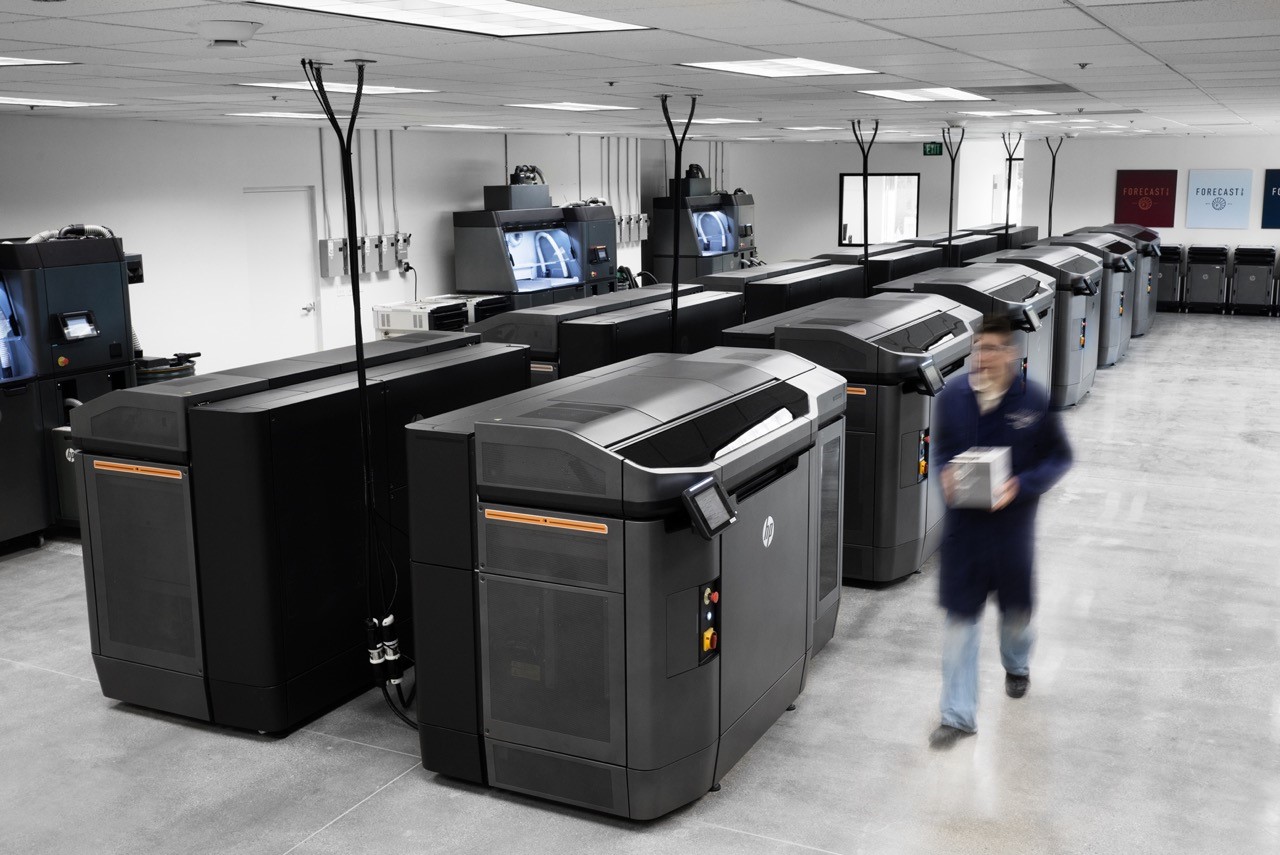
Forecast3D’s early MJF fleet. Image courtesy of GKN Additive.

As a foundational partner for HP's MetalJet metal binder jetting technology, the company has a fleet of four MetalJet machines, which will be scaled up as HP releases the product commercially. It will ultimately be a process for making tens of thousands or hundreds of thousands of metal parts. Additionally, GKN is a leading provider of laser powder bed fusion (LPBF) technology. However, to be a key player in additive services, the company needed a polymer printing business.

"In our traditional business, we make metal powders and then we take that powder, and we make over 12.5 million parts per day. So, it aligns really well with laser- and binder-based metal 3D printing, Dulchinos said. “We also understand serial production super well. What we didn't have initially was a rapid response, digital prototyping service. So, in 2019, we acquired Forecast3D."

Dulchinos went on to explain that every day, he receives a report that lists the current orders, which range anywhere from $25 to $50,000+, but are all processed by GKN Additive daily. This high-mix, high-volume production is the future of additive, according to the company's president. In order to become the agile manufacturer that GKN aims to be, Dulchinos envisions a blend of traditional prototyping jobs with mass production, so that customers can be served across the lifecycle.

"The key is having the digital infrastructure and quality management systems to make this work. When I make a plastic prototyping part, the quality requirements are pretty basic. No one’s asking me to make sure that this is down to a 10th of a micron in precision. They’re really not concerned with, say, how flat it is or what the texture is. They just want it fast. But we do that at scale. In Carlsbad, we run a highly disciplined manufacturing process with over 40 HP MJF printers, making prototyping parts at scale. Then we've got a host of other applications where we’re in production, using the same manufacturing discipline but to a much higher level of quality," Dulchinos said. "I think the future state of 3D printing is going to be a blend of the two. It’s going to require digital agility but at scale. We have to deliver that with quality systems and the process rigor that comes from  GKN's proven, agile processes."

From Parts to Solutions

Dulchinos joined GKN Additive in 2022 by way of Jabil, another manufacturing solutions provider that, in many ways, overlaps with GKN's own additive activities, down to the use of MJF printers. Having previously served as Vice President of Digital Manufacturing at Jabil, Dulchinos was a prime candidate to lead the AM division of GKN.
"They’re both world-class manufacturing companies. So, structurally at the end of the day, both have over long, long periods of time—decades in the case of Jabil and centuries in the case of GKN—building a business around delivering products to customers to solve problems, with very exact standards and consistent quality," Dulchinos said.

"I think the fundamental difference between the two is that Jabil is more of a systems provider whereas GKN is more of a components provider. Ultimately, Jabil could make or buy a part based on the value around the solution. In some cases, it may make sense to go down to the component level, but Jabil's core competency around supply chain management encompasses the broad set of components. GKN's core competency is in actually manufacturing parts."

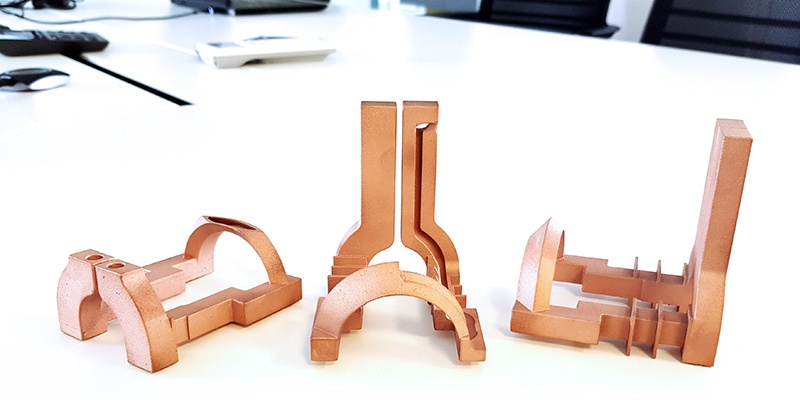
3D-printed copper induction coils from GKN Additive. Image courtesy of GKN Additive.

Dulchinos says that now, GKN is in the process of transitioning from being a parts business to a solutions business dedicated to specific verticals, applications, and customers. This is demonstrated by the fact that GKN offers additive solutions for such unique applications as copper inductors and heat exchangers. Explaining his philosophy to the business, Dulchinos concluded:

"3D printing has been around for a long time. The problem I see with it is that we need to move beyond selling technology to enabling solutions. Everyone's got the latest technology they want to showcase, but for this to move to the kind of growth numbers that have been modeled, it needs to move from a technology to a manufacturing solution. To do that, there needs to be a thought process about enterprise-level solutions, not just making parts. I think it’s great to have companies like HP in the game. We need Fortune 100 companies in this space thinking about enterprise-level solutions. That’s really what GKN offers. We’re the enterprise-level solution for manufacturing. Ultimately, that is what the large OEMs are going to want to see. They want a real supply chain and real supply chains require companies with really deep manufacturing pedigrees and healthy balance sheets so that we can support that kind of growth."

Feature image courtesy of GKN Additive.

The post 3D Printing for GM SUV Opens Doors for GKN Additive’s Flexible Manufacturing appeared first on 3DPrint.com | The Voice of 3D Printing / Additive Manufacturing.

Rocket Labs to Provide Solar Cells for NASA’s 2025 GLIDE Mission

Posted: 14 Jun 2022 05:00 AM PDT

Next-generation launcher manufacturer Rocket Lab (NASDAQ: RKLB) will manufacture the solar array panel (SAP) to power NASA’s GLIDE (Global Lyman-alpha Imagers of the Dynamic Exosphere) mission that will study the area where Earth’s atmosphere meets space. The spacecraft for GLIDE is being built by space and defense technologies innovator Ball Aerospace and is expected to launch in 2025.

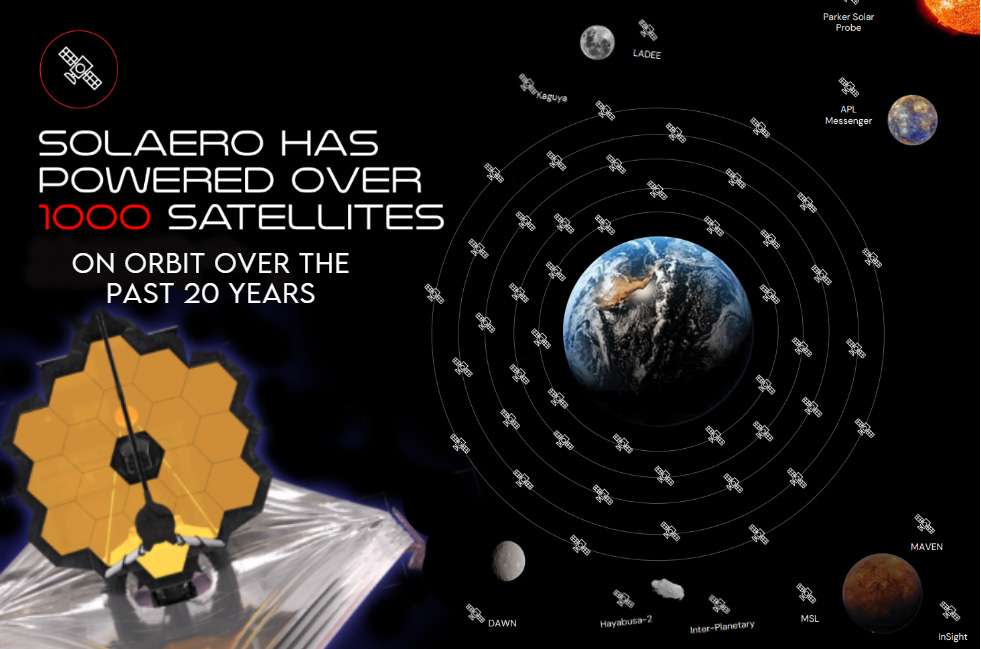
SAP will use technology from Rocket Lab’s newest subsidiary, the recently acquired SolAero, an Albuquerque, New Mexico supplier of satellite solar array panels. SolAero technologies already power over 1000 satellites and has worked in at least 30 missions with NASA over the past 20 years, including the James Webb Space Telescope and the flower-like solar array that powers NASA’s InSight Mars Lander.

For the upcoming GLIDE spacecraft, Rocket Lab will provide SolAero’s newest space solar cell technology, the Z4J quadruple junction solar cell, designed specifically for space applications. These high-efficiency, radiation-hardened solar cells laid down on carbon composite facesheet panels are fully qualified for space.

Illustration shows how NASA's GLIDE will image ultraviolet emission from Earth's vast outer atmosphere and thereby reveal its response to solar drivers and atmospheric evolution.

NASA’s GLIDE will image ultraviolet emissions from Earth's vast outer atmosphere. Image courtesy of University of Illinois Urbana Champaign.

The GLIDE spacecraft will launch with another Rocket Lab-powered spacecraft, also built by Ball Aerospace, the National Oceanic and Atmospheric Administration’s (NOAA’s) Space Weather Follow On-Lagrange 1 (SWFO-L1). SWFO-L1 is a heliophysics mission that will collect solar wind data and coronal imagery to meet NOAA’s operational requirements to monitor and forecast solar storm activity.
“Rocket Lab has become the ‘go-to’ provider of space solar power and space systems products throughout the space industry, including for ambitious heliophysics missions like GLIDE,” said founder and CEO Peter Beck.

SolAero illustration that shows how many satellites are powered by its solar technology.

SolAero has powered over 1,000 satellites. Image courtesy of SolAero by Rocket Lab.

Rocket Lab has become one of the leading space systems companies in the nascent private sector. It aims to provide end-to-end mission services for rapid, frequent, and reliable access to space, including complete satellite build and launch solutions.

In the 3D printing industry, Rocket Lab is known for its almost entirely 3D printed rocket engine, the Rutherford, which relies on an electric motor rather than gas and features prop valves, injectors, pumps, and engine chambers that are all 3D printed with electron beam melting technology. Although this engine has powered the company’s small satellite Electron launch vehicle, Rocket Lab has been shifting focus to developing the reusable eight-ton payload class Neutron rocket, which also leverages 3D printing for part production.

Since its foundation in 2006, the pioneering rocket maker has become a multinational company with a rich history of developing propulsion systems and launching vehicles for many government and commercial customers.

After turning into the first private firm to reach space from the Southern Hemisphere, Rocket Lab has gone on to deliver over 105 satellites to orbit for more than 20 public- and private-sector organizations and completed 21 missions for a wide range of customers, including government agencies like NASA and Defense Advanced Research Projects Agency (DARPA), branches of the military like the U.S. Air Force, and commercial businesses, such as Capella Space. However, the addition of SolAero to its portfolio of space offerings has opened new doors for the business.

Now that Ball Aerospace has tapped SolAero to build GLIDE’s SAP, the company has yet another opportunity to prove that its space technology is one of the leading forces in the space-based solar power market, which is expected to reach almost one billion dollars by 2030.

Led by principal investigator Lara Waldrop, an Assistant Professor at the University of Illinois Urbana-Champaign, GLIDE will study variability in Earth’s outermost atmospheric layer, known as the exosphere. Budgeted at $75 million, the mission will make unprecedented measurements of the far ultraviolet light emitted by hydrogen atoms in the exosphere, extending more than 100,000 miles above Earth’s surface, about halfway to the moon. This emission serves as a tracer of exospheric density, knowledge of which is needed to advance understanding of upper atmospheric physics, particularly regarding Earth’s recovery from solar-driven disturbances known as space weather.

Illustration showing the layers and their distance from Earth.

NASA’s GLIDE will survey the exosphere, the outermost layer of Earth's atmosphere. The exosphere is seen here in this illustration that shows the layers and their distance from Earth. Image courtesy of NASA's Goddard Space Flight Center/Mary Pat Hrybyk-Keith.

Historically, only a few observations of Earth’s exosphere have been made at large enough distances to capture its structure and behavior on a global scale. GLIDE would fill this long-standing measurement gap by acquiring wide-field images of Earth’s global exospheric emission from its orbital angle. On Earth, the data collected by GLIDE will provide researchers with better ways to forecast and ultimately mitigate how space weather can disrupt modern technology, such as satellite electronics, radio communication, electric power distribution, and even air travel.

The post Rocket Labs to Provide Solar Cells for NASA’s 2025 GLIDE Mission appeared first on 3DPrint.com | The Voice of 3D Printing / Additive Manufacturing.

Desktop Metal to Lay Off 12% of Workforce & Consolidate Operations

Posted: 14 Jun 2022 04:30 AM PDT

Massachusetts-based additive manufacturing (AM) startup, Desktop Metal, announced on Monday, June 13, that the company will lay off 12% of its employees. This comes alongside a general consolidation of its operations following a string of acquisitions last year, the company stated in a press release.

Calling it a "strategic integration and cost optimization initiative," Desktop Metals' CEO and founder, Ric Fulop, explained, "While the acquisitions we completed in 2021 contributed to [significant] growth and to our total market opportunity as we focused initially on harvesting product and go-to-market synergies, they also increased our cost base and global facilities footprint. …[Today's announcement] is the result of a comprehensive portfolio and business operations review conducted across all functions at Desktop Metal."

The company said that it envisions the changes associated with the the plan, along with the layoffs, will save as much $100 million over the next two years. On the two largest of the five takeovers Desktop Metal made last year, ExOne ($575 million) and EnvisionTEC ($300 million), the company spent almost $900 million. When these acquisitions originally went through, the S&P 500 was approaching its all time-high, and the Federal Reserve was still months away from announcing it planned to make a total of seven interest rate hikes in 2022. Now, the company's current market cap is significantly less than the total it paid for ExOne and EnvisionTEC.

Whether or not Desktop Metal still would have made every one of those acquisitions under current financial conditions, it's safe to assume that, at the very least, it could've gotten a better price tag for all its purchases. On the other hand, a 12% reduction in workforce when you've taken in that many additional companies under your umbrella seems, if anything, minimal, and the company's financial outlook could easily improve in the short term from the announcement. That of course also largely depends on how financial markets, in general, are doing.

Beyond that, it will be necessary to see what exactly its "strategic integration" entails. Desktop Metal's biggest issues to tackle are all related to what the company presumably also sees as its greatest strength: the diversity of its portfolio. This certainly could become a real asset. Once more, however, it depends on factors largely outside of its immediate control—in this case, the strength of the overall AM industry.

Basically, if a sector within the industry in which Desktop Metal has a stake is doing well, then it will be an advantage to be positioned within that sector, and if it's not, then it won't be an advantage. Interestingly then, the diversity of the company’s portfolio is at the moment functioning more as a source of risk than as an insurance policy. By not choosing to just focus on one thing, the company is risking spreading itself far too thin.

At the same time, narrowing its focus could very well be part of Desktop Metal's strategic shift. Moreover, there's significant positive momentum in AM's favor right now, including in multiple sectors in which Desktop has a foothold. To reiterate yet again, many variables are at play in determining the direction the company takes, so it's difficult to interpret exactly how the moves Desktop Metal has just announced will turn out.

Images courtesy of Desktop Metal

The post Desktop Metal to Lay Off 12% of Workforce & Consolidate Operations appeared first on 3DPrint.com | The Voice of 3D Printing / Additive Manufacturing.

TCT Magazine | Additive Manufacturing & 3D Printing Intelligence | News, Interviews, Features | Additive Manufacturing | Product Development Technology

TCT Magazine | Additive Manufacturing & 3D Printing Intelligence | News, Interviews, Features | Additive Manufacturing | Product Development Technology


Lufthansa Technik certifies metal 3D printed spare part in partnership with Premium AEROTEC

Posted: 14 Jun 2022 01:41 AM PDT

Lufthansa Technik and Premium AEROTEC have announced a 3D printed metal component for the IAE-V2500 engine's anti-icing system has received its official aviation certification from EASA.

This posting includes an audio/video/photo media file: Download Now

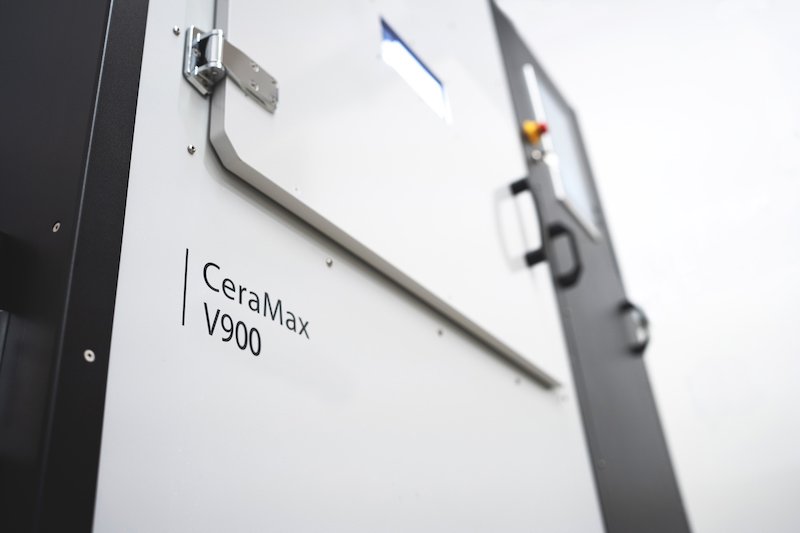
Lithoz unveils Laser-Induced Slipcasting 3D printing for large ceramic parts

Posted: 13 Jun 2022 09:09 AM PDT

Based on the ceramic 3D printing expert's new Laser-Induced Slipcasting (LIS) technology, the machine has been built for the production of large parts with thick walls and full densities.

This posting includes an audio/video/photo media file: Download Now

Desktop Metal to lay off 12% of staff and consolidate facilities footprint

Posted: 13 Jun 2022 06:29 AM PDT

Desktop Metal has announced workforce reductions of 12% and a consolidation of its global facilities footprint to 'simplify its operational structure, reduce expenses and support continued revenue growth.'

This posting includes an audio/video/photo media file: Download Now

Axle Box Innovations uses Essentium high-performance materials to 3D print fire management drone components

Posted: 13 Jun 2022 03:45 AM PDT

Public safety technology firm Axle Box Innovations is using Essentium's High Speed Extrusion 3D printing technology to produce parts for a fire management and protection drone.

This posting includes an audio/video/photo media file: Download Now

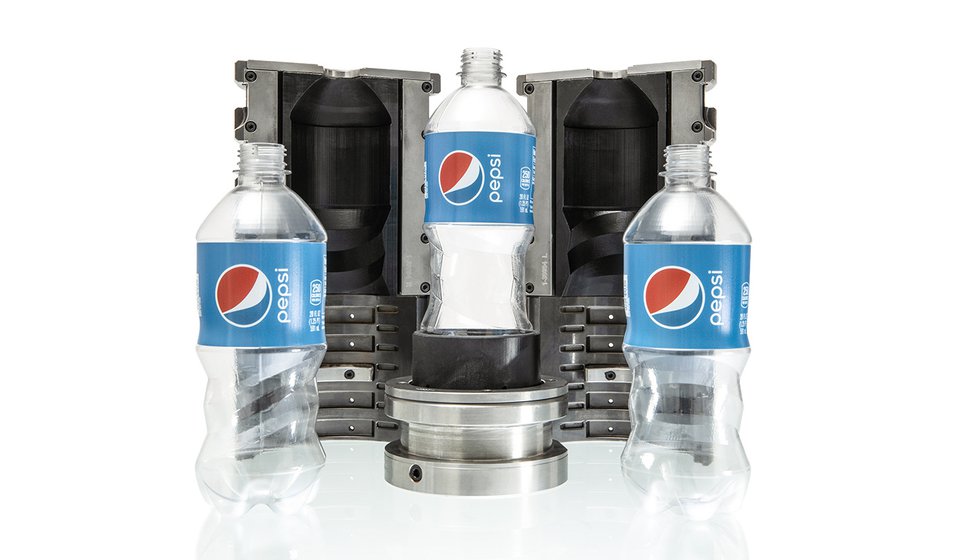
3D printing hits the spot: How PepsiCo is using AM to produce drink bottle tooling

Posted: 13 Jun 2022 01:35 AM PDT

Engineers from PepsiCo's R&D Packaging Engineering division talk to TCT about their use of 3D printing in the manufacture of plastic bottle tooling.

This posting includes an audio/video/photo media file: Download Now

The 3D printing industry responds to Biden Administration's AM Forward initiative

Posted: 27 May 2022 02:51 AM PDT

Leading industry personnel share their thoughts on the recently announced AM Forward initiative, which will see large manufacturers support SME adoption of 3D printing technology.

This posting includes an audio/video/photo media file: Download Now

3D Universe

3D Universe


Creating Product Casings with 3D Printing and the Mayku FormBox

Posted: 13 Jun 2022 12:12 PM PDT

The Mayku FormBox gives you end-to-end product development on your desktop. To prove this, Mayku asked one of their internal design team members to prototype and create a working synthesizer from scratch. In this blog, [...]

The post Creating Product Casings with 3D Printing and the Mayku FormBox appeared first on 3D Universe.

3D Printing

3D Printing


AM Saves GM From Parts Shortage Pickle

Posted: 13 Jun 2022 06:33 AM PDT

general motors 3d printingLast minute design changes are a royal pain in the butt, especially when the product release is looming on the horizon. This is why engineers have a concept known as a "design freeze". It means once the design is signed off on, no further changes can be made, as it will upset operations downstream. General […]

Monday, June 13, 2022

3DPrint.com | The Voice of 3D Printing / Additive Manufacturing

3DPrint.com | The Voice of 3D Printing / Additive Manufacturing


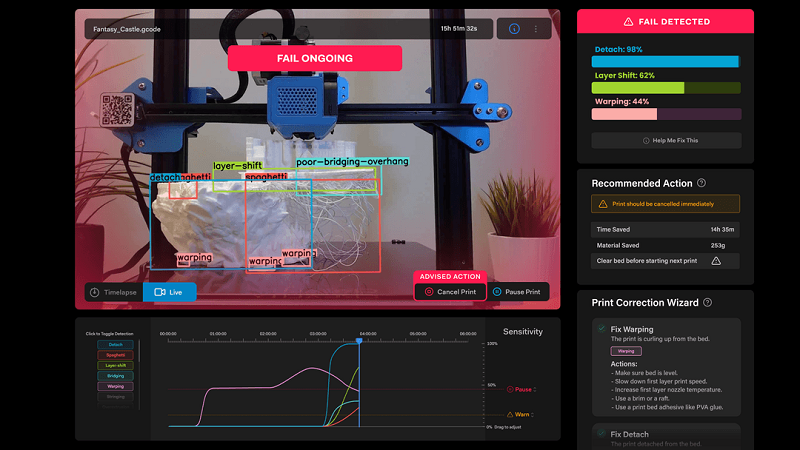
3DQue’s QuinlyVision Automates 3D Print Failure Detection

Posted: 13 Jun 2022 06:00 AM PDT

According to Canadian technology startup 3DQue, between 3 and 20% of all print jobs will have defects, or even fail. 3DQue has long been focused on automating 3D printing through its Quinly solution, which combines hardware and software to enable the automation of tasks such as applying adhesives, removing parts, and cleaning the print bed. This allows 3D printers to be capable of continuous, high-volume production without a human operator. Now, the startup is tackling 3D print failures with the launch of its QuinlyVision smart failure detection system.

Driven by artificial intelligence, QuinlyVision has all kinds of cool features, like a built-in troubleshooting guide and customizable automated responses for printing fails. In addition, the system can not only detect, but also correct, 14 different kinds of print failures. The system basically allows 3D printers to be their own supervisors and self-correct their errors, which could enable scalability with very little human input required for reliable printing.

“The excitement of bringing an innovation to life is tempered by fear that the print will fail. Existing technology focuses on detection, not correction,” explained Steph Sharp, the CEO and Co-Founder of 3DQue. “Our goal is to provide an elegant solution to simplify failure correction by having QuinlyVision do the legwork – pinpointing the problem, automatically taking action, and providing suggestions to prevent future failures.”

If you want to pump out high-quality 3D prints time after time, it requires what 3DQue describes as “a delicate interplay of design, calibration and slicing.” Errors are time-consuming, and a waste of money—just think of the filament waste! But it can take even longer to figure out what exactly went wrong, why it happened, and how to fix it; that’s why the “fixmyprint” subreddit has more than 90,000 members. Maybe the bed was too hot, or not hot enough, or maybe your filament took on some moisture, or maybe you just need to change the infill.

QuinlyVision has a built-in Correction Wizard that quickly classifies failures and how they develop, whether it’s an issue with the hardware, the model, or slicing. With this powerful algorithm, users can get detailed 3D print troubleshooting information right away, which will suggest corrections and allow you to set custom automated responses, such as Ignore, Pause, or Notify, for each type of failure you encounter. This enables your 3D printer to self-correct very quickly once it realizes there’s an issue.

“No more guessing,” the website states. “QuinlyVision™ shows where the defect is, what it is called, when it happened, and what action was taken. Whether one print has 5 defects or 5 prints have one defect, QuinlyVision gives you the data you need to correct the problem.”
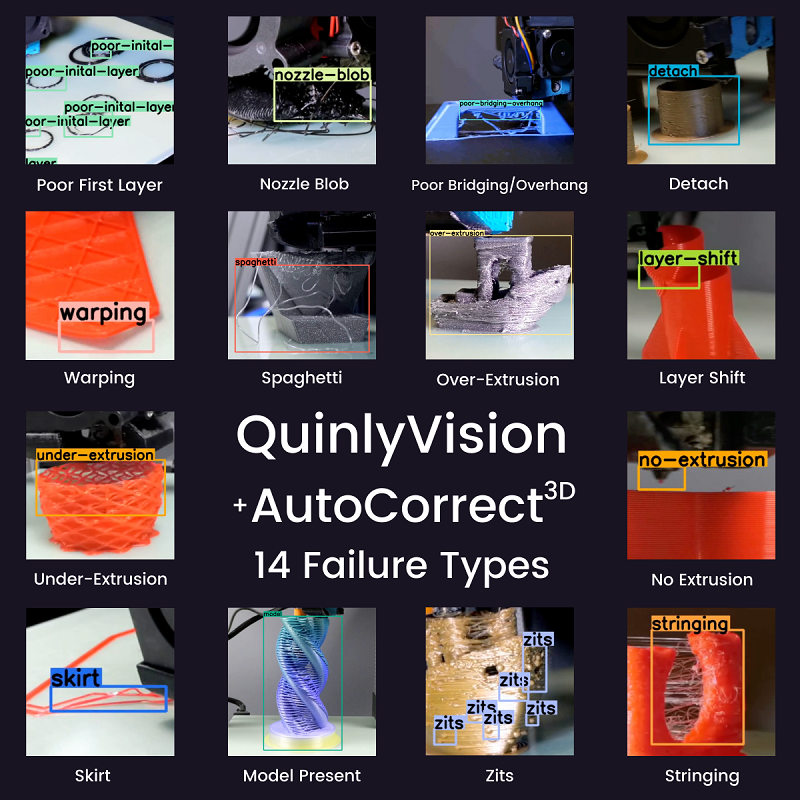
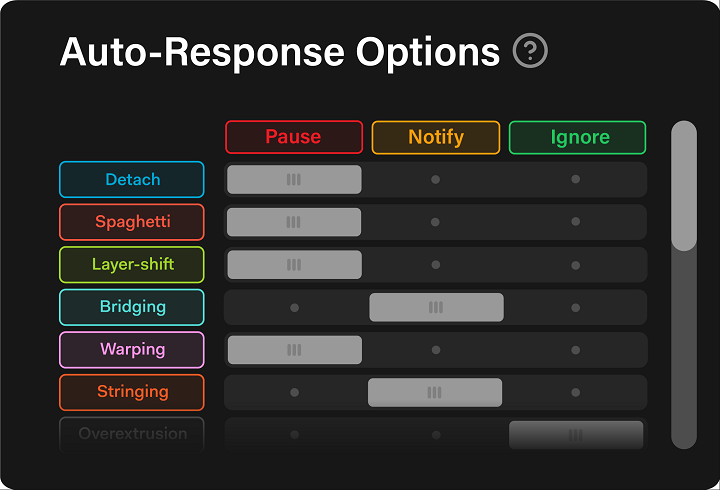
QuinlyVision recognizes, and can offer auto-corrections, for 14 different print failures, such as under- and over-extrusion, no extrusion, spaghetti, warping, and stringing, and layer shifts. It also knows detach (when your print doesn’t stay put on the bed), nozzle-blob, zits, skirt issues, poor bridging and poor first layer, and if the model is present. Its Subpixel QuinlyVision Technology, or SQUINT, combines object tracking, photogrammetry, AI failure recognition, and subpixel analysis to detect these issues within five seconds.

In addition to its AutoCorrect feature for detecting, responding, and suggesting solutions for those 14 common failures, 3DQue’s new QuinlyVision system has several other great features as well, including:

  • 24/7 unlimited live supervision
  • Secure remote access
  • Open source, meaning compatibility with any 3D printer/camera
  • Easy installation
  • Low light detection

On June 10th, the 3DQue Discord channel showed live testing of the startup’s new QuinlyVision 3D printing failure detection system.

The post 3DQue’s QuinlyVision Automates 3D Print Failure Detection appeared first on 3DPrint.com | The Voice of 3D Printing / Additive Manufacturing.

ORNL to Support Siemens’ CATCH 3D Printing Lab

Posted: 13 Jun 2022 05:30 AM PDT

German technology giant Siemens already uses 3D printing extensively on its turbine blades and through its service bureau, while also developing depowdering hardware, modeling and simulation software, and much more. Most recently, it opened the Charlotte Advanced Technology Collaboration Hub (CATCH) in Charlotte, NC, where the industrial giant will work with clients to advance additive manufacturing (AM) for production. It really seems like the industrial giant is circling the additive sector swooping in where the opportunities lie.

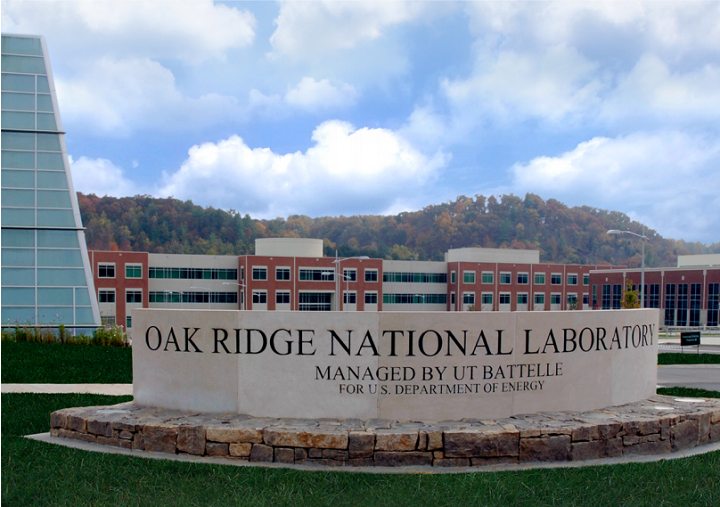
Now, Siemens has announced that it will work with the U.S. Department of Energy's (DOE) Manufacturing Demonstration Facility (MDF) at Oak Ridge National Laboratory (ORNL). The new partnership is an extension of previous collaborations between Siemens and ORNL dedicated to materials and advanced manufacturing methods. This time, ORNL will assist the CATCH facility in its work to industrialize AM.

"The joint collaborative research done at MDF to address industrial problems demonstrates the success of the DOE's MDF model and clearly shows the need for a path to industrialization through similar hubs in industry focusing on higher technology readiness levels. Siemens launched its Charlotte Advanced Technology Collaboration Hub (CATCH) to fill this void,” stated Dr. Anand Kulkarni, Senior Principal Key Expert at Siemens Technology.

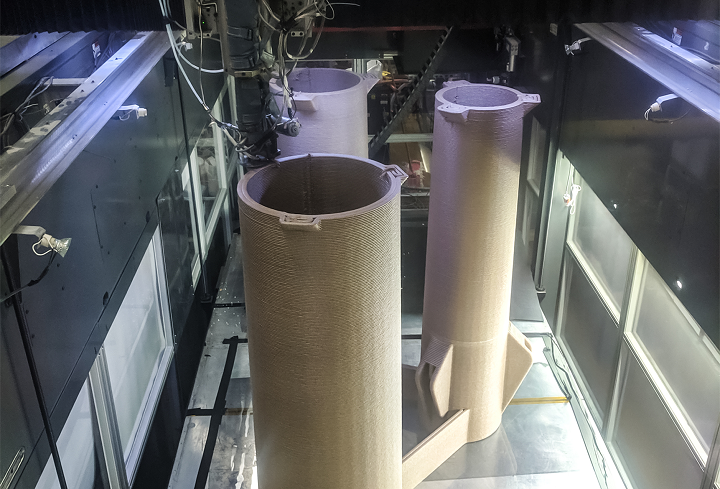
Ultra Safe Nuclear Corporation has licensed a novel method to 3D print highly resistant components for use in nuclear reactor designs. USNC Executive Vice President Kurt Terrani, formerly of ORNL, said the novel method will allow the company to make parts with desired complex shapes more efficiently. Credit: Carlos Jones/ORNL, U.S. Dept. of Energy

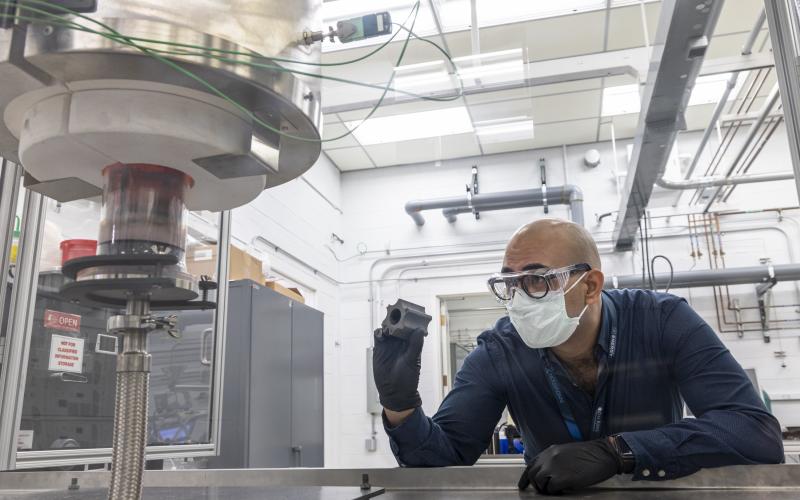
Ultra Safe Nuclear Corporation has licensed a novel method to 3D print highly resistant components for use in nuclear reactor designs. USNC Executive Vice President Kurt Terrani, formerly of ORNL, said the novel method will allow the company to make parts with desired complex shapes more efficiently. Credit: Carlos Jones/ORNL, U.S. Dept. of Energy

With $62 billion in revenues and over 300,000 employees, Siemens makes wind turbines, trains, industrial automation, lighting, medical scanners, just to name a few product lines. Along with similarly diverse and complex engineering groups, it can use 3D printing and serve the market in many ways. Meanwhile, ORNL has already made a lot of progress in 3D printing through work on EBM, 3D printing for nuclear reactors, real time AI print assessment, large-scale 3D printing technologies such as BAAM, among many other things.

"ORNL and the researchers at MDF are proud to collaborate with innovative industrial partners like Siemens to help advance and revitalize the U.S. manufacturing sector. We recognize that our DOE-funded research is often best leveraged through regional and national collaborations like CATCH and the MDF, helping to advance additive manufacturing technology, drive workforce development and create a more efficient and de-carbonized manufacturing base," said Bill Peter, Advanced Manufacturing Program Manager of ORNL.

ORNL researchers demonstrated a 3D-printed power pole made of bioderived and recycled materials could be easily manufactured, transported and assembled, enabling the quick restoration of power after natural disasters. Credit: ORNL, U.S. Dept. of Energy

Siemens is the default controls software for a lot of manufacturing technologies. It also has strong positions in machine displays, product lifecycle management, and design software. It has a lot to lose if the future of 3D printing does not include Siemens components and software. In fact, its hardware is already featured in a large number of 3D printers. Additionally it can gain a lot by using its 3D printing prowess internally.

For companies such as Siemens and Bosch, significant investment in 3D printing can easily be offset through gains made by deploying the technology internally. Any kind of savings in mass reduction, time to market, and higher performing shapes will also compound any revenue made from selling the technology or selling ancillary things such as NX licenses. Siemens could easily swallow Materialise and SLM Solutions and become the default 3D printing company if it wanted to. However, an SLM acquisition could alienate other OEMs and cause them to turn elsewhere for automation and integration software and tools. Buying Materialise, if it ever was for sale, is the most obvious move for the company. But, again, this could perhaps alienate 3D Systems or Stratasys, who  are increasingly turning to software themselves.

"We are excited to launch this new additive manufacturing hub and begin inviting customers in to collaborate and find ways to accelerate the industrialization of this technology using our machine-agnostic solutions. The benefits of additive manufacturing are clear — from faster time-to-market to better design through digital prototypes, to localized manufacturing helping to reduce supply chain constraints. We believe that future of manufacturing is additive,” said Tim Bell, Additive Manufacturing Business Manager of  Siemens Digital Industries, with whom 3DPrint.com recently spoke about the new CATCH facility.

Ever seen an elephant dance? This is what Siemens is doing now. It is tip-toe, cha-cha-cha-ing around our industry trying to get us to dance with it. It hopes we approach it and, in its shadow, will feel the warmth of a giant embrace without worrying if we’re all going to get crushed.

The post ORNL to Support Siemens’ CATCH 3D Printing Lab appeared first on 3DPrint.com | The Voice of 3D Printing / Additive Manufacturing.

JEOL’s Electron Beam Metal 3D Printer Enters U.S. Market

Posted: 13 Jun 2022 05:00 AM PDT

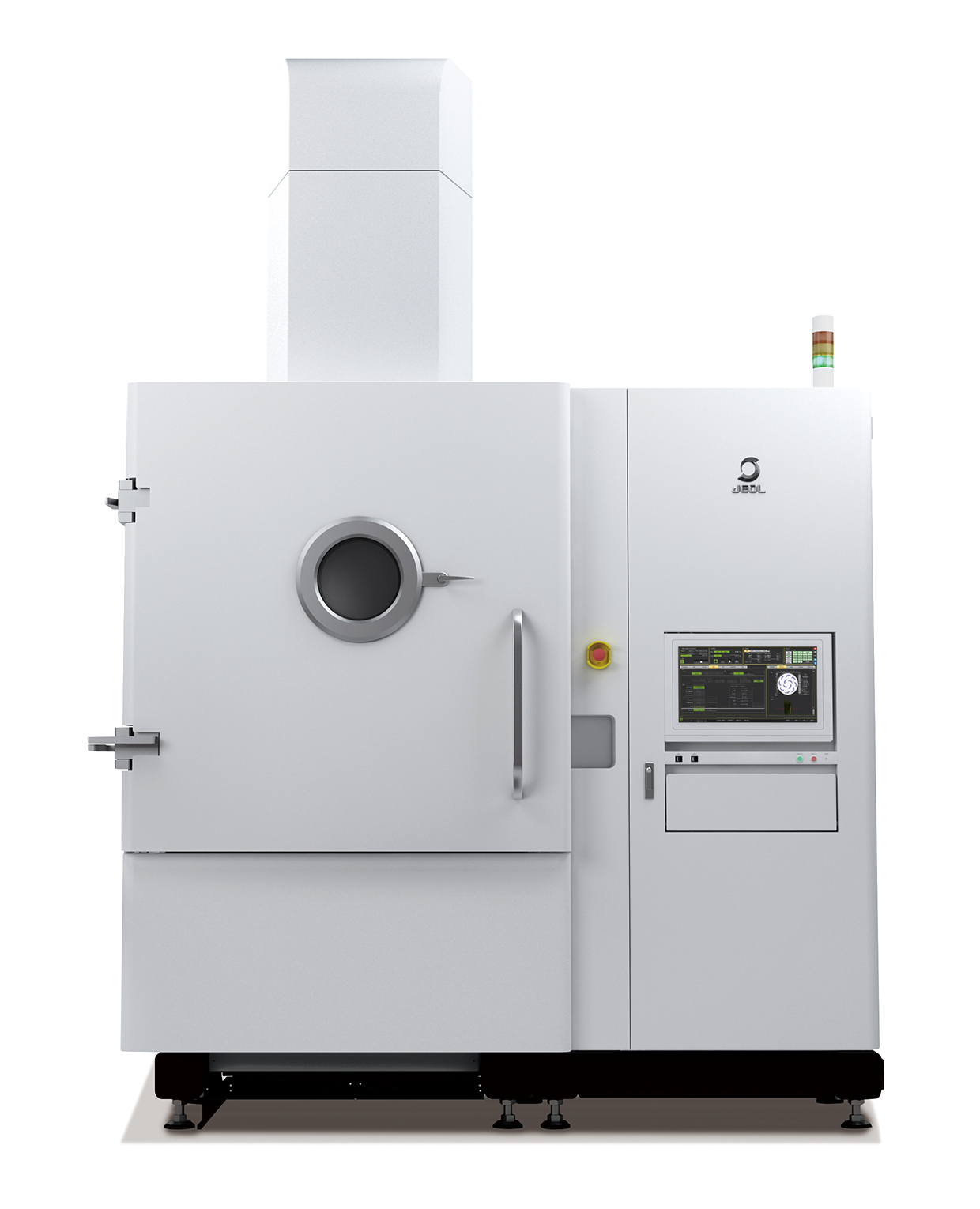
The dam that once separated the additive manufacturing (AM) industry from mainstream manufacturing has finally broken. As the waters merge, numerous companies that previously existed outside of 3D printing are finding entry points into the sector. This includes Japan's JEOL Ltd. (TYO: 6951), which debuted its JAM-5200EBM electron beam metal 3D printer to a North American audience at RAPID + TCT 2022.

The JAM-5200EBM from JEOL.

With a market cap of roughly USD$2.4 billion, JEOL is a leading maker of electron microscopes and other scientific, industrial, and medical equipment. Its expertise in electron beams and expertise in industrial manufacturing were the perfect combination to send the company into the electron beam powder bed fusion (E-PBF) space. There, as one of just a handful of players, JEOL is primed to lead a new generation of E-PBF systems to disrupt a subsegment previously monopolized by GE Additive's Arcam.

At RAPID, we spoke to Robert Pohorenec, President of JEOL USA, along with Zane Marek, Product Manager at JEOL USA. The team was able to tell us about how exactly the company and its product set JEOL apart from others in this cozy space.

A History in Electron Beams

“We got into this sideways,” Pohorenec said. “We’ve been making electron microscopes for 72 years now, with the company making transmission electron microscopes in Japan. We added other instrumentation to that portfolio—some of it electron beam-based, some of it made up of analytical chemistry instruments, like nuclear magnetic resonances. We make mass spectrometers and medical equipment. Then, in 2014, the JEOL factory joined a consortium in Japan to help establish a stronger additive manufacturing industry in the country—many different techniques, not just electron beam. This instrument that we’re bringing to market was generated as a result of that government-funded initiative to bring an e-beam powder bed manufacturer to Japan.”

According to the JEOL USA president, it's the company's extensive experience in both electron beam and manufacturing that gives it a leg up in the additive industry. This includes not just imaging and metrology tools, but industrial equipment, such as electron beam lithography equipment for the mass production of semiconductors.

“Those are very demanding customers. We’re used to living with that kind of demand—the customer demand on time to repair, uptime, and availability of instrumentation. We’re very familiar with the expectations that industry has on cost of ownership and managing cost of ownership. For us, this is not our first foray into getting into something that’s a few degrees of separation away from our bread and butter,” Pohorenec said.

Included in its long period of manufacturing is what is now a broad service network and the ability to handle customers. JEOL has sales bases in over 30 countries around the world, including 17 overseas corporations located in the USA, Europe, Australasia and Asia. This means that it can not only introduce its E-PBF system around the world quickly, but it can also service those customers when necessary.

Improvements to Electron Beam 3D Printing

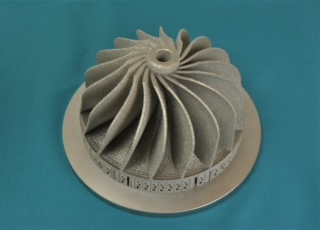
Not only does the JEOL's E-PBF carry with it the weight of a large corporation, but it also introduces some technological advances over legacy E-PBF machines. For instance, the JAM-5200EBM includes the "World's Longest Life Cathode," according to JEOL. This allows the cathode to operate for 1,500 hours or more, thus cutting downtime between cathode replacement.

“We guarantee 1,500 hours of lifetime, which is double what anyone else can do,” Marek said. “That’s only because we know the vacuum system, just having developed so much of it in the past seven decades. So, we’re able to use all of that and combine it with our electron beam lithography for the scanning. It’s a very stable proven system, because we have to please the people that make the chips in our phones. They’re very demanding. So, we use all of that and we incorporate all of that inside the EBM system.”

Additionally, it doesn't require the use of helium gas, maintaining print quality over time and reducing costs. Instead, the machine's e-Shield system prevents the scattering of powder during printing, further ensuring print quality and overcoming a general issue with legacy E-PBF processes. The electron beam can also be focused automatically to ensure consistent quality and repeatability. Finally, the JAM-5200EBM can be monitored remotely.

“We have the e-Shield, which prevents smoke events and other issues from happening to the powder that are undesirable,” Marek elaborated. “Then, we combine that with the unique pre-scan strategy. We can heat up the print bed and also heat up localized areas. We give the user about seven or eight different parameters that they can adjust. There’s no black box—as in, either scan on or scan off. We give them the recipe. We give them the freedom to explore and to adjust the parameters on their own.”

Titanium metal gear fabricated by the JEOL JAM-5200EBM 3D printer.

JEOL in the 3D Printing Market

The company officially introduced the JAM-5200EBM to the European market in November 2021 at Formnext. It already has a beta machine installed in the lab of Professor Akihiko Chiba at the Institute for Materials Research at Tohoku University. With its foray into the North American market, it won't be alone.

GE's Arcam is the legacy manufacturer of E-PBF machines and could very well be working on improving its process as new competitors enter the field. In addition to JEOL, there's FreeMelt, which has an open architecture machine, as well as Xi'an Sailong Metals in China, and Wayland Additive in the U.K. Wayland claims to overcome some of the same issues that JEOL does and has a similar background in semiconductors. In addition to overcoming the need for inert gases, Wayland suggests that its electron beam system produces parts that do not experience residual stress.

Moving forward, JEOL aims to develop a research-level machine for materials development, as well as in-situ monitoring, in the next five to 10 years. This will be performed with funding from the Japanese government. Ultimately, the company plans to sell 10 units annually at a price of ¥180,000,000 (about USD$1.6 million). While this may not be JEOL's main source of revenue for the time being, it would be interesting to see the business chip away at Arcam's market share and ultimately used for mass production in the same way that Arcam machines are.

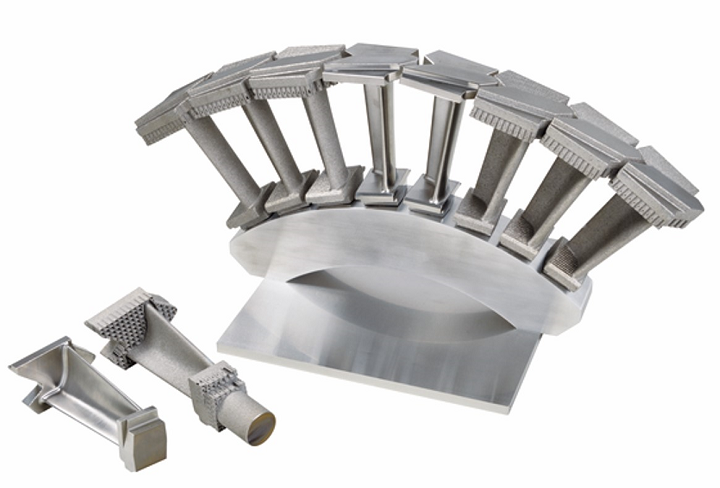
Turbine blades

Images courtesy of JEOL.

The post JEOL's Electron Beam Metal 3D Printer Enters U.S. Market appeared first on 3DPrint.com | The Voice of 3D Printing / Additive Manufacturing.

Addressing the Gap in DEI in the 3D Printing Workplace

Posted: 13 Jun 2022 04:30 AM PDT

DEI, or rather 'Diversity, Equity and Inclusion', is a term that has been growing in popularity across the globe, as can be seen in the Google Trends data in the image below. Over the past 5 years, we have seen an explosion in the attention being paid to DEI – whether in workplaces, social situations, schools, or other formal settings – it has become almost unavoidable as a topic of conversation.

In the additive manufacturing industry, we have seen a lot of attention being paid to this topic. With women historically being largely under-represented in STEM fields, the birth of organizations such as Women in 3D Printing advocating for and promoting the position of women in the 3D printing industry, brought the topic of DEI to the attention of the wider AM population.

With the appointment of Sarah Goehrke as the Head of DEI on the board of Directors at WI3DP one year ago, we saw the organization starting to take a firmer stance on the issue. Where they initially were born from a desire to increase the proportion of women in the industry, they have now moved to bring attention to the wider community under the DEI umbrella.

With all these mentions of Diversity, Equity and Inclusion in the industry over the last year, Alexander Daniels Global were inspired to include a spotlight on the topic in their annual salary survey report – capturing the sentiments of both AM employers and professionals on the topic. The findings from the data showed the extent to which DEI is a topic of conversation in the industry, the ways in which it benefits and challenges the workplace as an initiative and the steps employers are taking to improve their approaches to it.

Sentiments of Employees

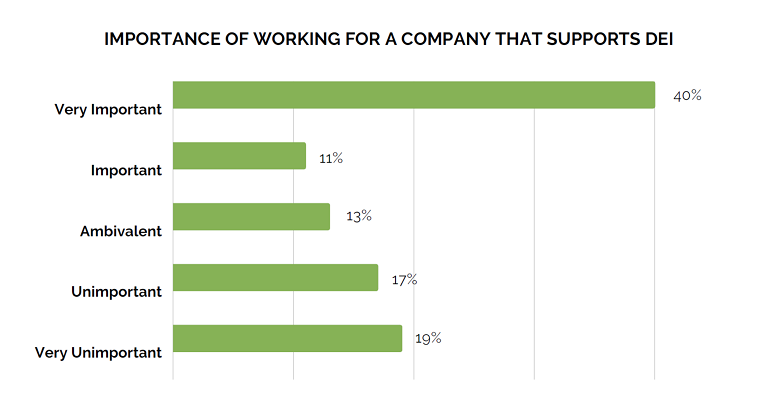
The sentiment of the professionals that were surveyed reflects the extent to which diversity and inclusion is valued by employees in the industry. To give you an idea, 51% of respondents to the survey declared that it is ‘very important’ or ‘important’ for them to work for an organization that supports DEI in the workplace. Despite DEI not being a topic of attention in 60% of respondents' workplaces, the initiative is still valued by the majority of professionals.

For the most part, the data showed that professionals were 'satisfied' or 'very satisfied' with the way their organizations were approaching the topic of DEI. Whether their employers were successfully creating opportunities for and implementing feedback from employees, promoting diversity in leadership, pay equity or encouraging cross department collaboration, it seems employers are giving Diversity, Equity and Inclusion the time and attention it deserves – perhaps even without directly realizing it.

However, as was mentioned by Sarah Goehkre in her comments on the DEI data in this year's AM Salary Survey Report, the thing that stood out the most from this year's data was the ambivalence of the Employer respondents to the survey:

"Employer feedback this year, though, is much more ambivalent. By far the largest responses to questions about DEI as a priority, as a successfully implemented strategy, and as a recruitment focus are "neither successful nor unsuccessful".

“That's often a nice way of saying "not a priority" while trying to save face. The time has come to listen to employees, to make the workplace an environment for workers to bring their whole selves – that's how to drive change. That's how to drive innovation. That's how to drive different ways of thinking."

Furthermore, the most notable difference between the employer respondents and professionals was in fact the idea that the majority of employer respondents to the salary survey reported that diversity was not, or did not know if it was, a topic of discussion in the workplace, with only 40% of employer respondents reporting that DEI is in fact a topic of discussion. Meanwhile, more than 40% of employer respondents answered questions on what they are doing to support DEI in the workplace, giving the impression that even if organizations are not proactively implementing DEI strategies, they are making steps to make workplaces more inclusive, fostering a better workplace environment and culture.

In addition, perhaps a less known, or less considered, fact of the positive impacts on businesses of promoting DEI in the workplace, is that it accounts for up to a 33% increase in productivity and 87% increase in the quality of decision making when compared with businesses that do not consciously promote DEI in the workplace.

Upcoming Webinar – Addressing the Gap in DEI in the AM Workplace

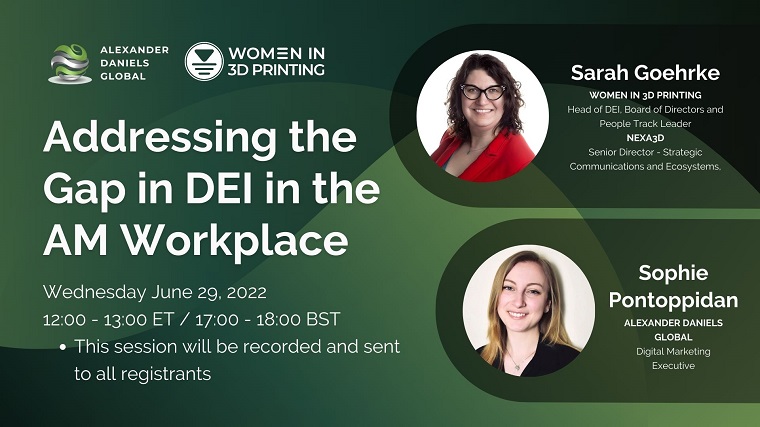
Coming up on June 29 at 12:00pm – 1:00pm ET / 5:00pm – 6:00pm BST, Sophie Pontoppidan of Alexander Daniels Global will be joined by Sarah Goehrke, Head of DEI, Board of Directors and People Track Leader at Women in 3D Printing, for a discussion on all things DEI in the additive manufacturing workplace.

Having featured as a spotlight in the 2022 AM Salary Survey Report, with expert comment from Sarah, this upcoming event will feature a live discussion between Sophie and Sarah on the following:

  • To What Extent Does DEI Play a Role in Today’s Workplace?
    How Diversity, Equity and Inclusion became a topic of discussion in the AM industry and to what extent companies are incorporating this into the workplace.
  • Perceptions of AM Talent & Employers on DEI
    The gap between Employer and Talent perceptions on DEI strategies and insight into what % of companies don’t have any strategies in place.
  • How DEI Strategies Support & Challenge the AM Workplace
    The benefits of employing DEI practices in the workplace and the challenges that this may cause to organizations.
  • Tips for Improving Diverse Hiring Strategies and DEI in the Workplace
    The benefits of implementing or improving diverse hiring strategies and what true diverse hiring looks like. Plus, tips on how diverse hiring practices can be improved.

The webinar will be recorded and sent to all registrants – sign up to join the event live by visiting the Alexander Daniels Global website.

The post Addressing the Gap in DEI in the 3D Printing Workplace appeared first on 3DPrint.com | The Voice of 3D Printing / Additive Manufacturing.

3D Printing Media Network – The Pulse of the AM Industry

3D Printing Media Network – The Pulse of the AM Industry


Living in the fast lane with Lisa X

Posted: 13 Jun 2022 07:27 AM PDT

Visiting Sinterit, the leader in compact SLS 3D printers, is always fun. Cracow, where the company is based, is a beautiful city and even the recent global tensions can ruin …

The post Living in the fast lane with Lisa X appeared first on 3D Printing Media Network - The Pulse of the AM Industry.

Alliance University and Wipro 3D sign MoU for collaborative MBA degree

Posted: 13 Jun 2022 06:44 AM PDT

The Alliance University, in Bengaluru, India, has signed a Memorandum of Understanding with Wipro 3D, the metal additive manufacturing branch of Wipro Infrastructure Engineering, for the creation of a collaborative …

The post Alliance University and Wipro 3D sign MoU for collaborative MBA degree appeared first on 3D Printing Media Network - The Pulse of the AM Industry.

Titomic Kinetic Fusion to provide radiation shielding for Alpha satellites

Posted: 13 Jun 2022 02:28 AM PDT

Titomic is set to create radiation shielding for Fleet Space’s first Alpha satellites in 2023. The South Australian company’s satellites are expected to be the world's first fully additively manufactured …

The post Titomic Kinetic Fusion to provide radiation shielding for Alpha satellites appeared first on 3D Printing Media Network - The Pulse of the AM Industry.

Sunday, June 12, 2022

3D Printing Media Network – The Pulse of the AM Industry

3D Printing Media Network – The Pulse of the AM Industry


Palari and SML to build 3D printed, net-zero energy community

Posted: 12 Jun 2022 05:00 AM PDT

Palari Group, a Beverly Hills-based technology-driven developer of sustainable master-planned communities, and SML (Sinarmas Land) Limited, the largest property developer in Indonesia, have entered into a strategic partnership in the …

The post Palari and SML to build 3D printed, net-zero energy community appeared first on 3D Printing Media Network - The Pulse of the AM Industry.