Monday, April 18, 2022

3DPrint.com | The Voice of 3D Printing / Additive Manufacturing

3DPrint.com | The Voice of 3D Printing / Additive Manufacturing


3D Printed Lab-On-Chip Breakthrough Achieved by USC Researchers

Posted: 18 Apr 2022 06:30 AM PDT

The 3D printing sector has obviously gone through a drastic evolution in the past several years. Nevertheless, there's still ample reason to believe that neither the technology nor the industry will start to reach their full potential until additional, similarly significant progress is made in automation. One of the best examples bearing this out is the shift in strategic focus from hardware to software, which some of the industry's most important companies are currently making. More and better automation is the main underlying goal of improving the software platforms used for operating 3D printers.

The size of the object produced is probably the key factor determining how urgent of a priority it is, to automate the processes involved in 3D printing that object. As is also true of conventional manufacturing, this is simply because the most expensive and time-consuming items to produce tend to be those that are extremely large — or extremely small. One area in which 3D printing may inherently have the edge over conventional manufacturing, both in general as well as specifically in terms of automation, is in 3D nanoprinting.

In the field of microfluidics — especially concerning any object referred to as a "lab on a chip" (LOC) — manufacturing the end-product requires a precision that should make 3D printing the ideal solution. Yet, at least with regards to vat polymerization, low-cost versions of the technology aren’t precise enough at this point to build layers of liquid resin at the 10-micron level required for microfluidic medical testing devices. A recent article published in the journal Nature Communications, however, documents a potential solution to this problem, developed by a research team at the University of Southern California's (USC's) Viterbi School of Engineering.

LOC devices depend on tiny networks of internal channels, designed for the minuscule amounts of liquid that they collect to flow through. During the production process, while the surrounding surfaces harden into solids, the center — the internal channels — need to be left in the liquid state, so they can be flushed and left hollow during the post-processing phase. The primary issue with using vat polymerization for these devices is that the resin used in printing them is usually transparent, since the devices and their contents (blood or some other human bodily fluid) are generally meant to be looked at through microscopes. Although some opaque resins can be kept liquid at this scale, the clear liquids used for LOCs allow more light to pass through, leading to narrower than desired channels, which would become clogged if used.

The solution developed by the research team at USC, led by Professor of Aerospace and Mechanical Engineering and Industrial and Systems Engineering Yong Chen, is ingenious in its simplicity. At the stage of the printing process in which the layers have to remain liquid, an auxiliary platform moves to momentarily block the light from solidifying the channels. The standard commercially available vat polymerization 3D printer, according to Professor Chen, can, at best, print at the 100-micron level with poor accuracy.
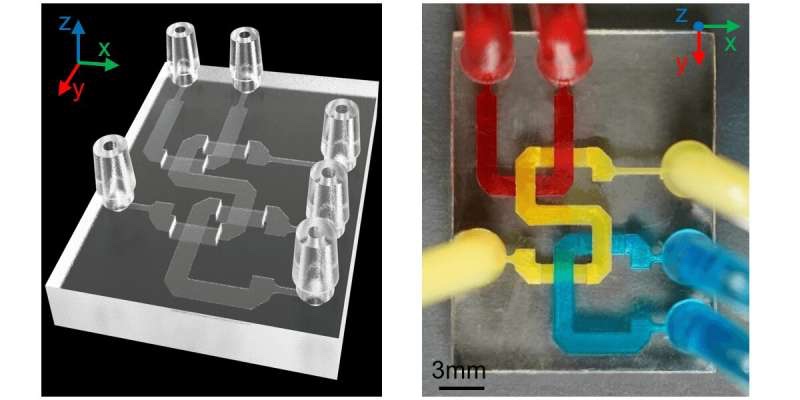
Professor Chen said that the solution his team developed allowed them to print their end-product within 10-micron ranges, "…and we can control it really accurately, to an error of plus or minus one micron. This is something that has never been done before, so this is a breakthrough in the 3D printing of small channels." Professor Chen said the team is currently filing a patent application for the method written about in Nature Communications, in addition to its seeking partners for commercializing the technique.

If this technique leads to automated 3D-printing of LOCs, it's easy to imagine that the market it creates would almost certainly lead to the development of entire end-to-end platforms designed for the process. The most noteworthy thing about the USC team's solution, though, is that it wasn't created by developing an entirely new 3D printer, but rather by coming up with a slight modification that could work for many different printers. In this sense, it illustrates how much the potential for automating 3D printing processes — and thereby, contemporary industrial processes in general — will be opened up, simply by an increasing number of users adopting the technology.

The post 3D Printed Lab-On-Chip Breakthrough Achieved by USC Researchers appeared first on 3DPrint.com | The Voice of 3D Printing / Additive Manufacturing.

$23M Funding Round to Expand 3D Printed Surgical Solutions from restor3d

Posted: 18 Apr 2022 06:00 AM PDT

A Research Triangle Park-based medical device company that is looking to reconstruct and repair the human body with 3D printing technology has raised $23 million in its fifth venture round. restor3d, a Duke University spinoff that designs and manufactures biomedical implants using its 3D printing technology platform, has now raised a total of $42 million in funding from over 100 investors.

Known for giving surgeons the tools to reconstruct and repair portions of the human body with patient-specific 3D printed implants, restor3d merges 3D printing, biomaterials, biomechanics, and artificial intelligence. It specializes in custom implants used for trauma and oncology cases, as well as off-the-shelf, 3D-printed implants that have been cleared by the Food and Drug Administration (FDA) for foot and ankle, as well as spinal applications.

Although the identity of the backers for this investment round was not revealed, restor3d did say it would use the funds to expand the delivery of 3D printed personalized surgical solutions across multiple musculoskeletal specialties, including the upper and lower extremity joints, spine, and trauma from musculoskeletal injuries. Additionally, the startup will develop machine learning software tools to assist engineers with patient-specific implant design; engage in fundamental research for preclinical and clinical studies and expand the commercial team to sustain its market traction.
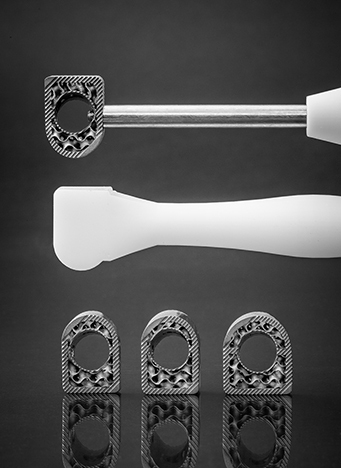
3D printed subtalar wedge system

Subtalar wedge system. Image courtesy of restor3d.

To support the company's growth, in early 2023, restor3d will move into a new facility less than an hour away from its current Durham, North Carolina location. The new site at the top high technology Research Triangle Park will expand its capabilities for patient-specific digital design, in-house manufacturing of implants and instruments, as well as surgeon training and education labs. Sharing the location with other 3D printing companies in the area, restor3d will be immersed in a unique community, with the potential for upcoming collaborations and partnerships. Other up-and-coming startups at the park include 3D software company Geomagic – now part of 3D Systems –, and 3D printing service provider Plastibot.

Engineering professor at Duke University Pratt School of Engineering and restor3d Co-Founder and Chief Technology Officer (CTO) Ken Gall said he is "looking forward to entering our next phase of development" and appreciates the investors for "supporting our growth and the hard work of all our employees, surgeons, and distributors in helping to advance patient care."

Implants for the future of surgery

Founded in 2017, restor3d came out of stealth mode after 2018, and its products and technology are based on Gall's scientific research and development in 3D metal printing at Duke. restor3d has since used laser powder bed fusion of medical-grade polymers and metals to create proprietary implants, like its osteotomy wedges and cervical fusion cages. It also aims to update the implant industry by luring surgeons to deliver 3D printed personalized surgical solutions across multiple musculoskeletal specialties.

During a recent presentation, Gall said orthopedic reconstructions have been done through a "brute force solution," even though it has always been a patient-specific need. Instead, restor3d hopes pre-surgical planning and 3D printed patient-specific instruments and implants become part of all orthopedic surgeries in the future.

Thinking primarily about the patient, Gall is a firm believer in leveraging 3D printing technology for surgical procedures, even to avoid amputation. A few years ago, Gall was charged with designing and printing a custom titanium implant for a young patient who had suffered critical damage to a bone in her lower leg during a vehicle accident.

"There was a lot of bone loss, but it was definitely worth salvaging her leg even though many centers would have probably amputated," explained Duke orthopedic surgeon Samuel Adams. "I immediately thought of implanting a 3D printed cage to replace the lost bone."

Working with Adams, Gall’s group used the patient’s CT scans to inform the fabrication and design of a scaffold to support the patient’s weight while healing and growing new bone around the titanium structure. The result was a large, four-inch piece of porous and solid titanium that would replace the patient's damaged distal tibia.

The challenge with leg or ankle implants, says Gall, is that they must be designed to be weight-bearing during the healing process, but must also promote bone growth; other complex factors include focusing careful attention not only on designing the anatomical external shape of the implant but considering how each patient's bones might grow based on their anatomy. Hopefully, what Gall is suggesting will become the bread and butter of the implant industry in the future.
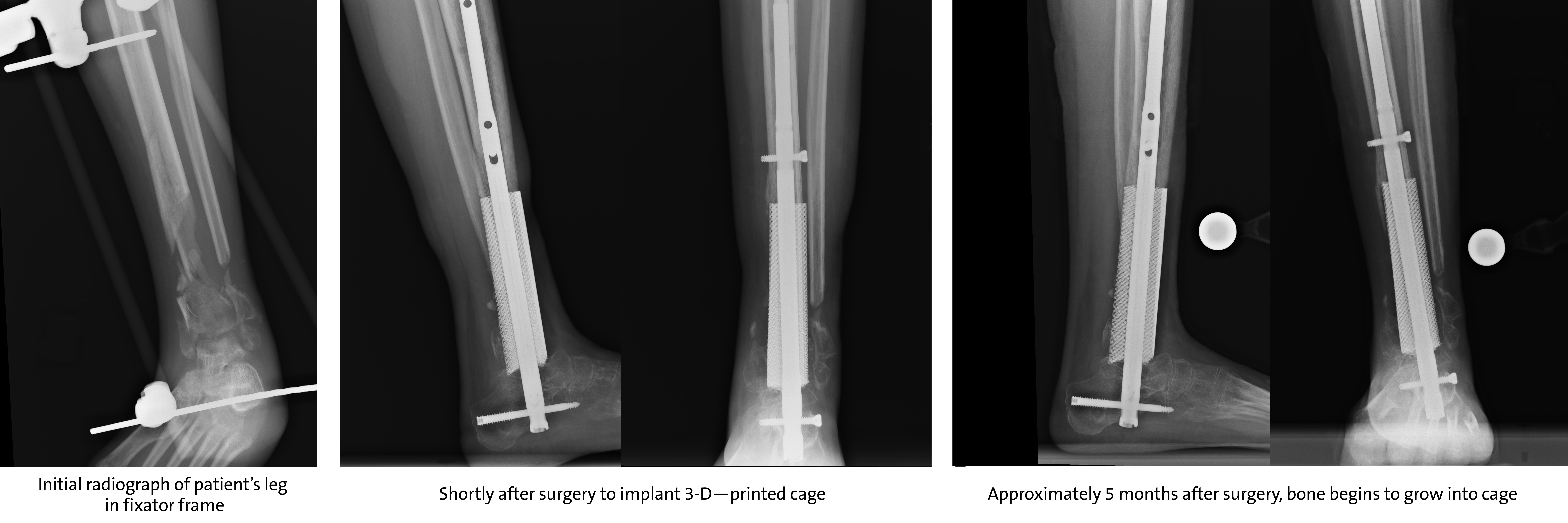
restor3d’s 3D printed implant replaces distal tibia bone after a serious accident. Image courtesy of DukeHealth.

Nearing 100 employees, restor3d has actively patented six products, including custom surgical devices and implants that promote osseointegration (that is, bone ingrowth into a metal implant).  The startup has been 3D printing implants with biomaterials such as titanium and cobalt chrome as well as biocompatible polymers and has worked closely with surgeons in the US to aid patients with severe orthopedic needs.

For example, with Dr. Amiethab Aiyer, an orthopedic surgeon at the University of Miami (UM) in Florida, restor3d helped create a total talus replacement using a prosthetic metal bone 3D printed out of cobalt chrome, for a patient that suffers from a debilitating sickle cell disease, a genetic disorder that blocks blood flow and, in her case, caused avascular necrosis in her talus bones. Described by the institution as a "Terminator-style, 21st Century approach," the procedure, which took place in 2019, was successful and enough to put the Miller School of Medicine at the forefront of using 3D printing technology to create orthopedic solutions.
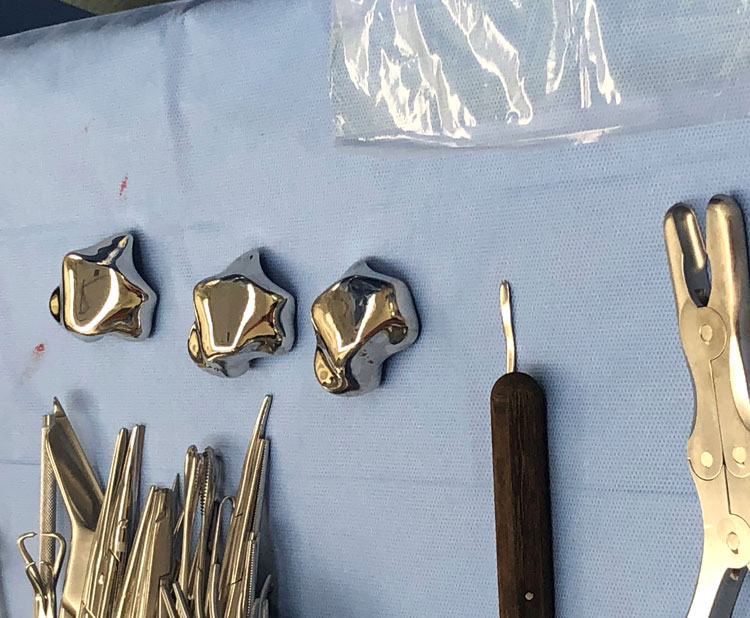
3D printed metallic ankle bone implants

3D printed metallic ankle bone implants. Image courtesy of the University of Miami.

In one of its most recent moves, restor3d announced a merger with Kinos Medical, a leading total ankle replacement company, which helped accelerate restor3d's expansion into the high-growth extremity arthroplasty markets in the U.S. One of its most well-known products is the proprietary Kinos Axiom Total Ankle System, which is described by the company as the first biomechanically accurate ankle system that mimics a patient's healthy range of motion while walking.

restor3d has multiple FDA product clearances as well as collaborations and partnerships that make the company one of the most innovative in the sector. With the new funding and its 3D printed implant and disposable instrument model, restor3d will enable simultaneous expansion across these diverse markets to provide innovative solutions for pressing clinical needs.

The post $23M Funding Round to Expand 3D Printed Surgical Solutions from restor3d appeared first on 3DPrint.com | The Voice of 3D Printing / Additive Manufacturing.

House 3D Printing Startup COBOD Builds Distribution Partnership PERI Group

Posted: 18 Apr 2022 05:30 AM PDT

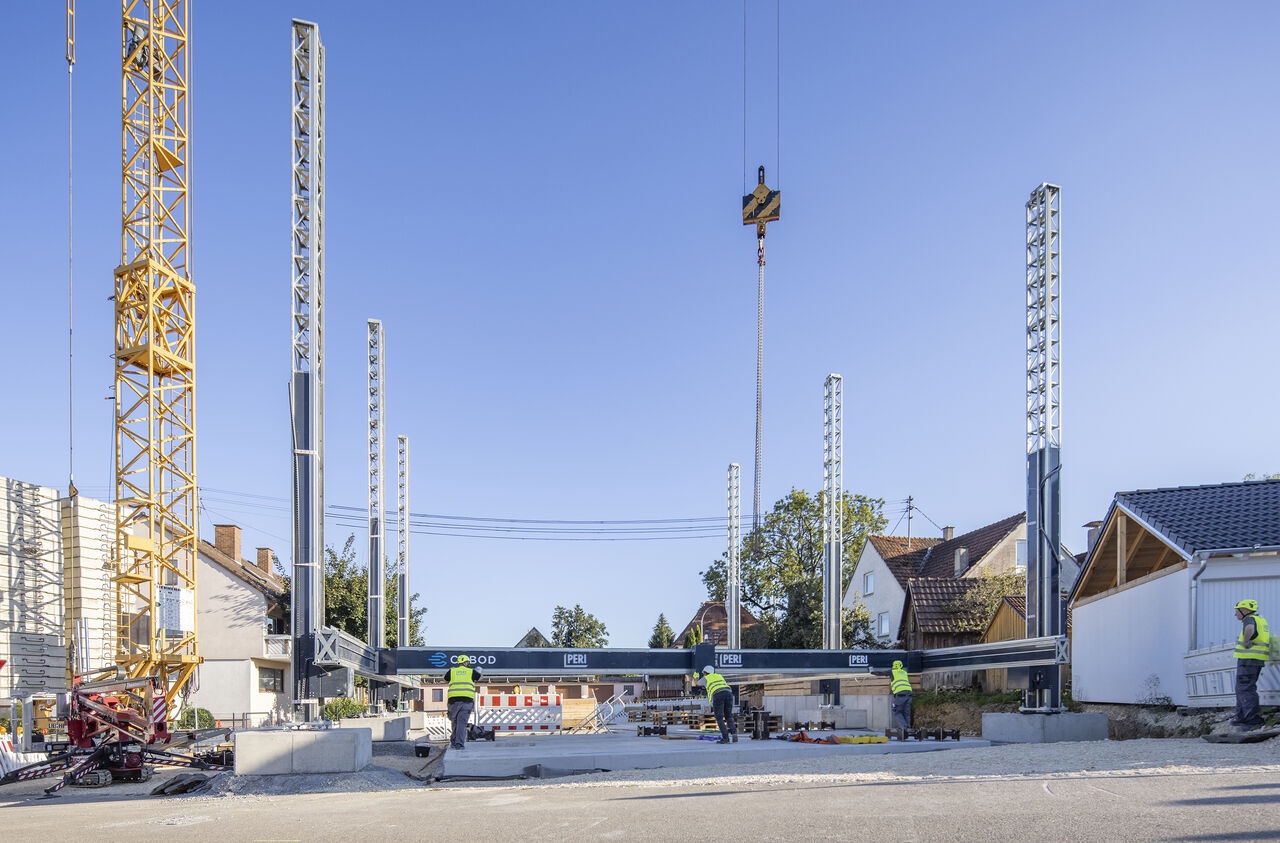
Towards the end of 2021, the Danish additive construction (AC) company, COBOD International, made headlines thanks to a handful of projects that were completed by multiple COBOD customers in the U.S. Notably, on two of the projects — one in Tempe, Arizona, another in Williamsburg, Virginia — COBOD's customers partnered with the nonprofit Habitat for Humanity. On the Arizona project, the COBOD customer was in fact also one of COBOD's minority investors, PERI Group.

PERI Group, a leading global manufacturer and supplier of formwork and scaffolding materials, was founded in Germany in 1969. In 2018, the company acquired its stake in COBOD. The next year, PERI began distributing COBOD's BOD2 printer to a small number of customers in Europe and the United States. Now, COBOD and PERI have announced that they will be building on their existing partnership.

PERI will be the official distributor of COBOD printers in eight U.S. states: Washington, Oregon, Nevada, Arizona, Illinois, Indiana, Michigan, and Texas. In addition, PERI, which already distributes COBOD printers in Germany, will expand its European distribution, entering the markets of Poland, the Benelux countries (Belgium, the Netherlands, and Luxembourg), and France. Possessing a longstanding, far-flung network of clients in the construction sector, PERI represents an ideal partner to find a foothold for a company with a technology that has proven its value, but which has also still largely not been adopted by relevant potential customers.

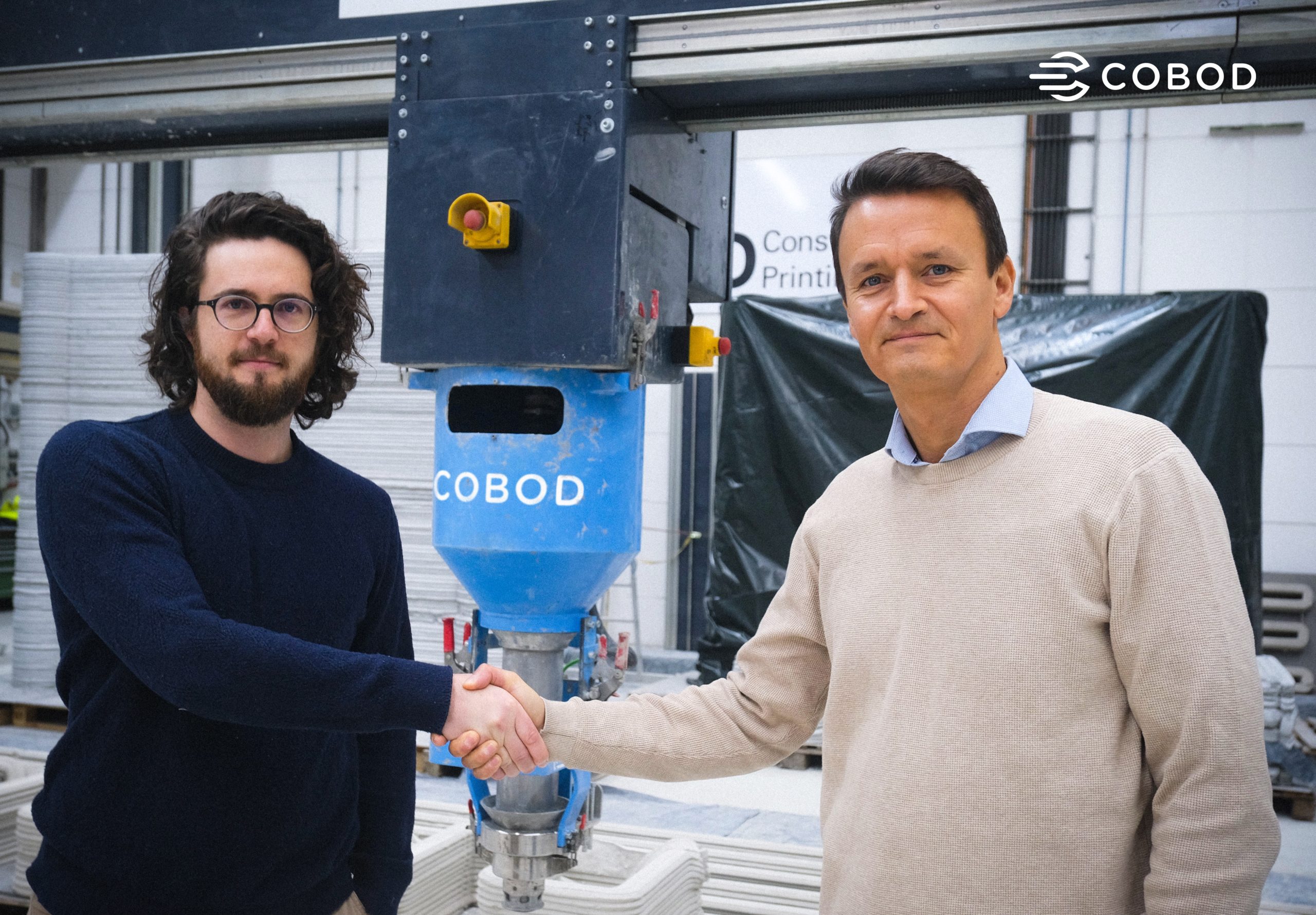
In a press release, the head of 3D printing at PERI, Fabian Meyer-Brötz, said, "Our cooperation with COBOD has been highly successful and the development since our first involvement has gone much faster than expected. …[COBOD has quickly] become the globally leading provider of 3D construction printing technology." The founder and general manager of COBOD, Henrik Lund-Nielsen, added, "We are thrilled that PERI is now investing further in securing the rollout of our technology to more markets. PERI has proven to be a perfect partner for us, and we would not be where we are today without PERI."

This news is yet another reminder that the AC sector has entered a new phase in its history, one in which it's being treated less as a novelty, and more as a serious possibility for helping to solve the multi-pronged global housing crisis that continues to worsen at a faster rate. Moreover, PERI's investment in COBOD, and the strategic partnership between the two companies, are useful examples to follow for both additive manufacturing (AM) startups, as well as legacy companies looking to adopt AM. It feels increasingly likely, the further that AM technologies advance, in general, that strategic partnerships between AM startups and legacy companies will be the key to the mainstreaming of the former, and, for the latter, the answer to staying relevant in an evermore-rapidly transforming global business environment.

Images courtesy of PERI Group and COBOD International

The post House 3D Printing Startup COBOD Builds Distribution Partnership PERI Group appeared first on 3DPrint.com | The Voice of 3D Printing / Additive Manufacturing.

BMW Buys Wire Arc Metal 3D Printer from MX3D

Posted: 18 Apr 2022 05:00 AM PDT

Dutch wire arc additive manufacturing (WAAM) developer MX3D is perhaps most known for its 3D printing of a metal bridge spanning a canal in the Netherlands. However, the company is in the process of growing into an established 3D printer manufacturer. MX3D announced the sale of an M1 DED 3D printer to the BMW Group.

While MX3D has delivered several projects, including some for high-profile customers like the Takenaka Corporation, it only began commercializing its WAAM technology in earnest in 2021. The first system on the market was the M1. This includes an 8-axis ABB robot with Fronius GMAW/CMT welding machine and MX3D's MetalXL WAAM workflow with MX3D Control System. Among the M1's most unique features is the use of an industrial robotic arm to perform WAAM 3D printing. This allows for a great deal of flexibility in deposition area, enabling the deposition of low-cost metal feedstock as high speed almost in mid-air.

Now, the company has begun to move out of the service and demonstration phase and is making printers for clients. After selling an M1 to Shimoda Iron Works Co Ltd, BMW Group is now going to be installing one at its Additive Manufacturing Campus in Munich, Germany. The deal is the result of "a series of successful R&D projects" between BMW and MX3D.

"The BMW Group's M1 acquisition shows that the founding mission of MX3D – to scale up and industrialize 3D metal printing, in order to make it available to high impact industries – is becoming a reality. Exciting!" said Gijs Van Der Velden, CEO of MX3D.

This is the latest 3D printing technology invested in by BMW, which has been a pioneer in automotive AM. After using AM in-house for years for prototyping and other applications, the company was the first to produce metal end parts for its racing car series Deutsche Tourenwagen Masters in 2010. The auto giant went on to manufacture custom name plates for MINIs, roof brackets for the i8, and more than 10,000 components for the Rolls Royce Phantom—ultimately 3D printing over one million parts by 2018.
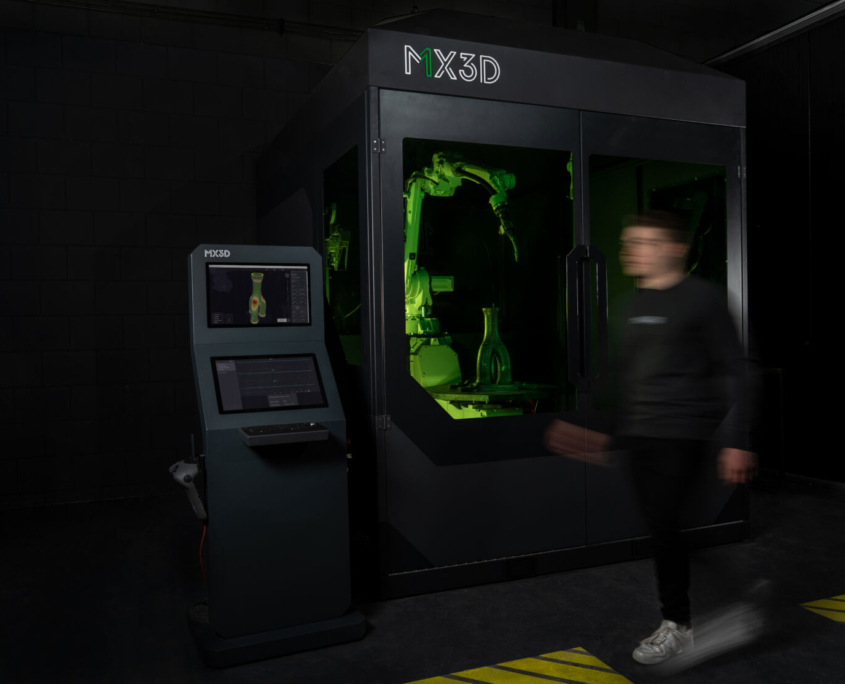
The M1 metal 3D printer from MX3D. Image courtesy of MX3D.

This bullish attitude toward AM drove the company to establish its AM Campus and explore a variety of emerging technologies, from HP's MultiJet Fusion and Metal Jet to a novel liquid 3D printing technology from Rapid Liquid Print. So, it's no surprise, then, that BMW is exploring the use of WAAM as it attempts to industrialize 3D printing.

It's possible that it could be a useful tool for prototyping large metal parts or it could serve some exotic application at the moment. BMW could even see the possibility of developing some sort of Divergent-style cell for robotic printing and assembly of WAAM metal parts. Whatever it is, we may not see the results of its M1 usage for years to come.

Images courtesy of MX3D.

The post BMW Buys Wire Arc Metal 3D Printer from MX3D appeared first on 3DPrint.com | The Voice of 3D Printing / Additive Manufacturing.

3D Printing Webinar and Event Roundup: April 17, 2022

Posted: 17 Apr 2022 05:30 AM PDT

Stratasys and Velo3D are both continuing their 3D printing tours for this week’s webinar and event roundup. There will also be a Space Showcase, a course on metal powder bed fusion, an overview of end-to-end AM solutions, a medical 3D printing course, and more.

The Experience Stratasys Tour Continues

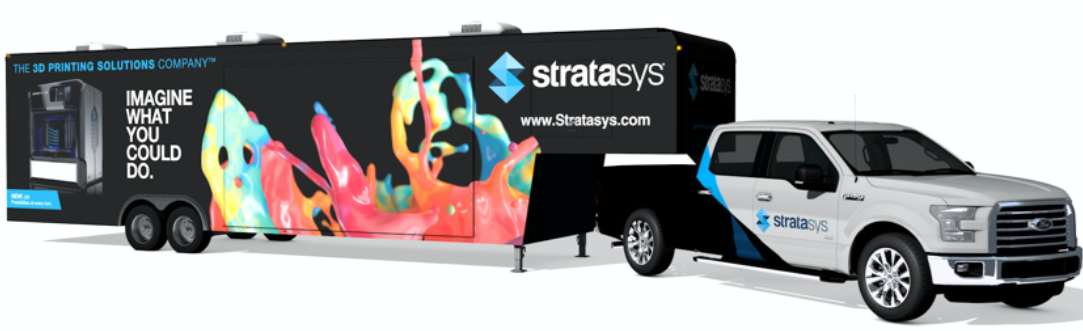
Stratasys continues its Experience Tour this week in Arizona, starting with a stop in Flagstaff on Monday, April 18th. PADT is hosting this stop at Northern Arizona University, along with the stop on Wednesday the 20th at Arizona State University. There will be an additional stop at Arizona State University on the 20th, but this second one will be hosted by Purple Platypus.

“Our mobile showroom offers a local, convenient way for you to talk with 3D printing experts and see the latest 3D printers, materials and solutions from Stratasys. Learn about additive manufacturing services from Stratasys Direct and discover how your organization can benefit from 3D printing applications.”

You can register for the Stratasys Experience Tour here. Stay tuned for more dates and locations in the future!

Velo3D Continues "Seeing is Believing" Roadshow

On Tuesday, April 19th, Velo3D will continue its "Seeing is Believing" AM roadshow in Pittsburgh, Pennsylvania. From 9 am until 3 pm EST at The Westin Pittsburgh, attendees will get the chance to see examples of parts printed by the company’s customers, and learn how Velo3D can help them create complex designs, achieve a more flexible supply chain and greater part performance, and help provide greater part repeatability. The Velo3D experts at this event will be Zach Murphfree, VP, Global Sales & Business Development; Matt Karesh, Technical Business Development Manager; and Will Hasting, PE, Director of Solutions Engineering.

“Whether you're new to metal additive manufacturing (AM) or have some experience with conventional AM technologies, our upcoming "Seeing is Believing" roadshow in Pittsburgh, PA is the perfect opportunity to learn how Velo3D's end-to-end solution is pushing the boundaries of what AM can achieve.”

You can register for the Pittsburgh roadshow event here, or email info@velo3d.com to request a ticket.

TriMech on 3D Printing Production-Grade End-Use Parts

To learn about P3 and SAF 3D printing technologies by Stratasys, tune in at 10 am EST on the 20th for TriMech’s webinar, “The Future Is Now: Production Grade 3D Printed End-Use Parts.” The company’s AM Solutions Consultant Rich Annino will discuss these two leading AM processes for production-grade parts. He will cover the types of parts that are good candidates for transitioning to AM, how 3D printing is reducing reliance on injection mold tooling, which of these two production 3D printing processes are right for your product, and more.

“Not familiar with SAF and P3 technology? No worries, Rich will guide everyone through what makes these technologies unique to the field and more importantly, how they are being used to manufacture end-use parts and how that is positively impacting manufacturers and consumers alike.”

You can register for the webinar here.

MakerBot’s Virtual Summit on 3D Printing in Education

On Wednesday, April 20th, MakerBot is holding its third annual virtual summit, “Igniting Student Innovation,” on 3D printing in education. There will be eight speakers during the summit, including educators and professionals across various industries, who will discuss the career paths they’re currently on because of 3D printing. Everything kicks off at 11 am EST with welcome remarks from MakerBot’s Education Manager Andrea Zermeño, and then there will be a few sessions, along with workshops for attendees interested in a deeper understanding of designing for and prototyping with 3D printing. The summit will conclude at 2:30 pm EST.

“This year we're taking a different approach and focusing not just on career paths with 3D printing but how students and teachers can really take advantage of 3D printing – from 3D design for beginners and advanced users to live prototyping and problem-solving with 3D printing.”

You can register for the free summit here.

3D Systems Space Showcase

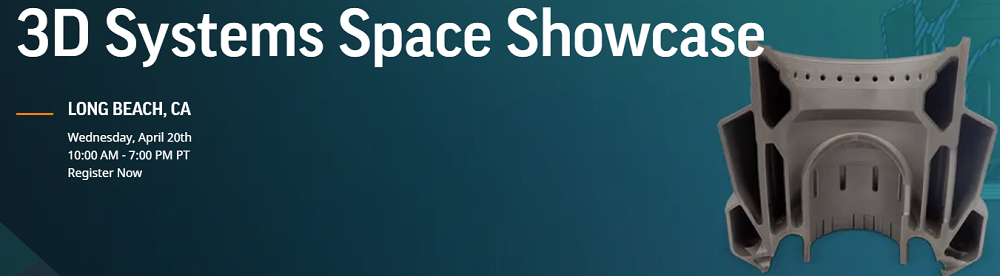
At the Long Beach Marriott hotel in California, 3D Systems is holding a Space Showcase on the 20th from 1 to 10 pm EST. A team of industry experts will demonstrate the company’s solutions, discuss applications, and show large and small sample parts, such as heat exchangers, a hypersonic nacelle, an investment casting pattern, and more. There will be food and drinks available all day, along with brief presentations on topics like generative design, material allowables, and more.

“Stop in anytime during the day to see 3D Systems' Additive Manufacturing solutions that optimize performance and manufacturing of components for the Space Industry.”

You can register for the event here.

Smart Manufacturing Experience April Webinar

The last webinar on Wednesday, April 20th, from 3 to 4 pm EST, is by SME, focused on “Workforce Development Support for Smart Manufacturing.” It’s one of the nonprofit’s monthly webinar offerings leading up to the Smart Manufacturing Experience event in Pittsburgh this June. Moderated by Dan Sloan, Strategic Partnerships Director for Tooling U-SME, panelists Conrad Leiva, Director of Ecosystem and Workforce Development for CESMII, and Lisa Masciantonio Chief, Workforce Officer at the Advanced Robotics for Manufacturing (ARM) Institute, will have a live discussion on some of the unique workforce challenges for the Smart Manufacturing workforce transformation, the tools and programs available to help upskill the incumbent workforce, and more.

“As the manufacturing industry continues to evolve, employers will need to recruit, hire, and develop a smart manufacturing workforce capable of working with modern cyber-physical systems and embrace data-driven business models. Previous workforce investments with community partners and internal incumbent employee programs will now need to address a new spectrum of emerging Smart and Cyber job roles. Understanding the important advantages of a Smart Manufacturing business model and the emerging skills and competencies that will be valued by the Smart Manufacturing industry will help employers build the necessary programs and produce the skills for their organization.”

You can register for this free webinar here.

ASTM: Build Orientation & Supports for PBF-LB

At 10 am EST on Thursday, April 21st, ASTM’s AM Center of Excellence (AMCOE) is holding a webinar on “Metal PBF-LB Build Orientation and Supports Considerations.” Instructor Mark Kirby, with the University of Waterloo's Multi-Scale Additive Manufacturing (MSAM) lab, will teach attendees about the importance of supports, evaluating build layouts, and decision-making workflows, all in terms of metal PBF-LB technology. Topics will include support strategies for medical devices, the interaction between supports and orientation, support removal, neglected parameters, and more.

“Love them or loathe them, supports are literally the foundation of most LPBF builds. Getting this part of the process right is critical to success.  Unfortunately it seems that recipes for good supports are often learnt the hard way, and may not be formally documented. This is the definition of art vs science.  The webinar will attempt to shed light on the science of supports, by exploring many practical examples of both success and failure.”

You can register for the webinar for $49 here.

Stratasys on the Holistic Approach to AM

Continuing its webinar series, Stratasys will present “A Holistic Approach to Additive Manufacturing” on Thursday at 12 pm EST. During this brief webinar, attendees will hear live customer testimonials of the company’s products from James Page, CTO of Riven; Oqton Application Engineer Robin Huizing; and Mark McGarry, Oqton Senior Sales Director. These speakers will explain what value they’re bringing to the Stratasys platform.

“As the rise in additive manufacturing and its uses become more apparent, the need for a trusted, end-to-end solution becomes increasingly necessary for early adopters. The GRABCAD additive manufacturing platform and its software partners offer just that.”

You can register for the webinar here.

Improving Engineering Efficiency with ASME & Onshape

ASME is holding a webinar on “Improving Engineering Efficiency: Top 5 Improvements Teams are Making Now” at 1 pm EST on the 21st. Mike LaFleche, Principal Technical Services Engineer for Onshape, will present the “top five” critical steps that product teams are taking to improve their performance in the future. Attendees will learn how to maximize their productivity by getting rid of CAD crashes and file corruption, version control confusion, and more.

“In today's competitive environment, small process improvements in product development processes can improve productivity and drive innovation. Whether a small startup or a multi-national, process optimization can often yield long term benefits in efficiency, time to market and profitability.

“So, how do you begin to review your current tools, workflows and data management capabilities?”

You can register for the webinar here.

3D Printing in Prosthetics with 3DHEALS

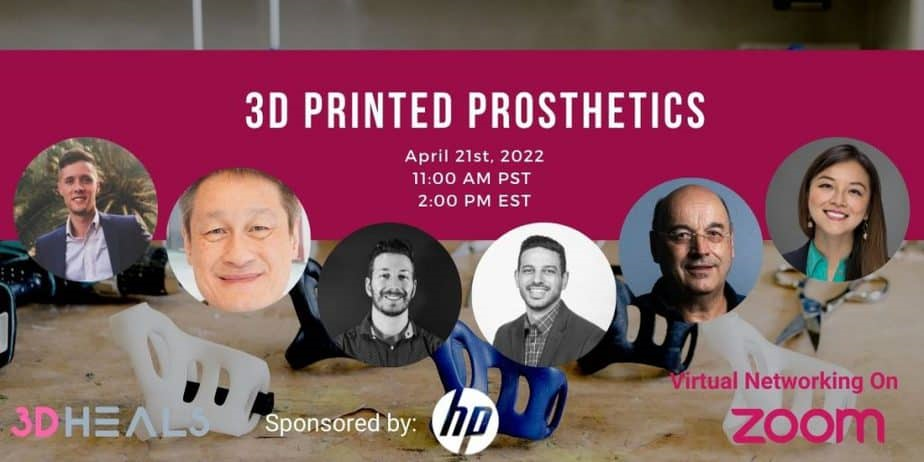
3DHEALS will focus on “3D Printed Prosthetics” in its latest webinar, at 2 pm EST this Thursday the 21st. Sponsored by HP, the webinar will be moderated by Dr. Jenny Chen, the Founder and CEO of 3DHEALS, and panelists will be Founder of PPprint GmbH Professor Hans-Werner Schmidt, with the Universität Bayreuth; Samer Moussa, MS, CPO, Product Manager – Strategy & Incubation, 3D Printing, for HP; CEO of the Victoria Hand Project Michael Peirone; Albert Shih, Professor in Mechanical Engineering, Biomedical Engineering, and the Institute of Gerontology at the University of Michigan; and Bryan Craft, Application Specialist with Spentys.

“Over the years, the images of disabled children with colorful prosthetic limbs inspired impactful movements like the ENABLE community and Victoria Hand Project, as well as enumerable passionate innovators who have pushed the boundaries to increase accessibility and lower the cost of orthotics and prosthetics. However, the field of 3D printed prosthetics has advanced significantly since the days of ENABLE hands. These advancements include not just hardware, materials, but also software, designs, 3D scanning, and lately completely digitalized workflow at the point of care, often leveraging machine learning and artificial intelligence. More importantly, technologists are now working more closely with clinicians to create a more efficient and more evidence-based patient-centered clinical solution. In this highly anticipated webinar, we invited experts with decades of technical, business, and clinical experiences and diverse perspectives to give the attendees a 360-degree view of the current and future status of the industry.”

You can register for the webinar here.

End-to-End AM Solutions by NAMIC & SMF

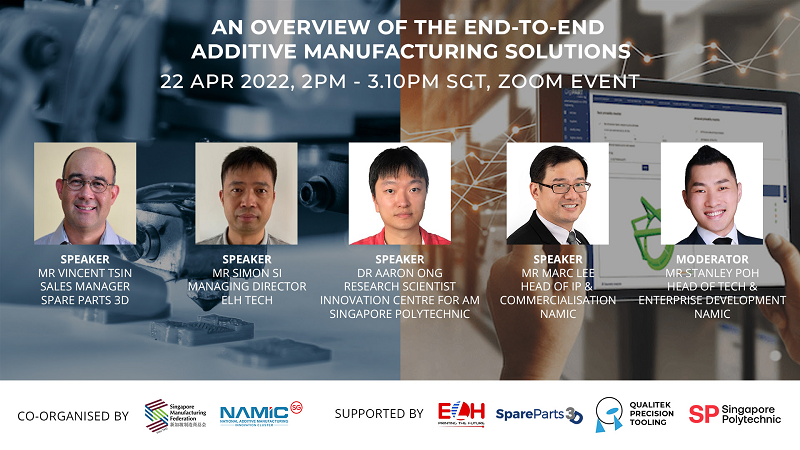
At 2 am EST, which is 2 pm SGT, “An Overview of the End-to-End Additive Manufacturing Solutions” will be presented in a webinar co-organized by NAMIC and the Singapore Manufacturing Federation (SMF). Spare Parts 3D will share how manufacturers can digitize their parts inventory and identify parts for 3D printing, while AM service bureau ELH Tech will present successful case studies to show the feasibility of adopting technology like AM. Attendees will also learn what kinds of support are offered to lower the barriers to AM adoption, including funding from NAMIC and training programs from Singapore Polytechnic.

“The adoption of additive manufacturing is seeing continuous growth in Singapore and the government has invested significantly into public additive manufacturing (AM) infrastructure in the recent years.

“Discover with AM experts the end-to-end solutions that AM can provide, from design to fabrication and post-processing, and how the technology can be utilised to improve your business workflow.”

You can register for the webinar here.

RSNA Medical 3D Printing Course

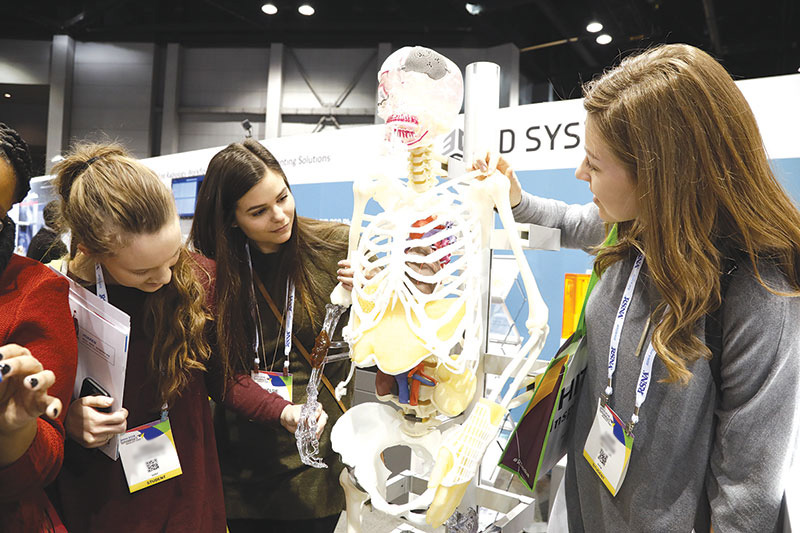
The final event in this week’s roundup is the “RSNA Medical 3D Printing in Practice” course, sponsored by 3D Systems and held at the Westin on Michigan Avenue in Chicago from April 22-24. The three-day course will feature lectures covering the clinical applications of 3D printing in several subspecialties, as well as panel discussions, abstract presentations, and software demonstrations. Attendees will also have the chance to network with exhibitors, including 3D Systems, who will showcase the latest 3D printing technology.

“Take advantage of a unique opportunity to learn more about the value of 3D printing at RSNA Medical 3D Printing in Practice. Collaborate with leading group physicians, technologists and engineers and engage with 3D printing technology to learn how it can advance medical care at your institution.”

You can register for the course here, and schedule a meeting with 3D Systems here.

Do you have news to share about any future webinars or virtual and live events? Please let us know!

The post 3D Printing Webinar and Event Roundup: April 17, 2022 appeared first on 3DPrint.com | The Voice of 3D Printing / Additive Manufacturing.

TCT Magazine | Additive Manufacturing & 3D Printing Intelligence | News, Interviews, Features | Additive Manufacturing | Product Development Technology

TCT Magazine | Additive Manufacturing & 3D Printing Intelligence | News, Interviews, Features | Additive Manufacturing | Product Development Technology


Printing smart

Posted: 18 Apr 2022 02:00 AM PDT

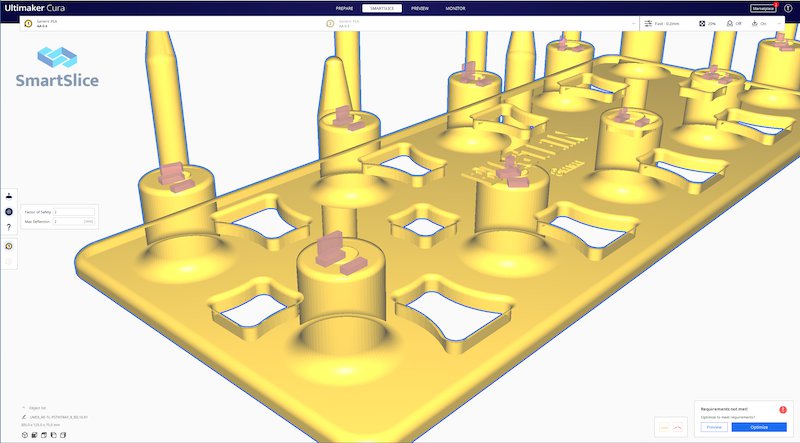
Teton Simulation CEO Doug Kenik speaks to TCT's Senior Content Producer Sam Davies about RE Suspension's application of its SmartSlice software.

This posting includes an audio/video/photo media file: Download Now

TCT Magazine | Additive Manufacturing & 3D Printing Intelligence | News, Interviews, Features | Additive Manufacturing | Product Development Technology

TCT Magazine | Additive Manufacturing & 3D Printing Intelligence | News, Interviews, Features | Additive Manufacturing | Product Development Technology


Design's new dawn

Posted: 15 Apr 2022 02:00 AM PDT

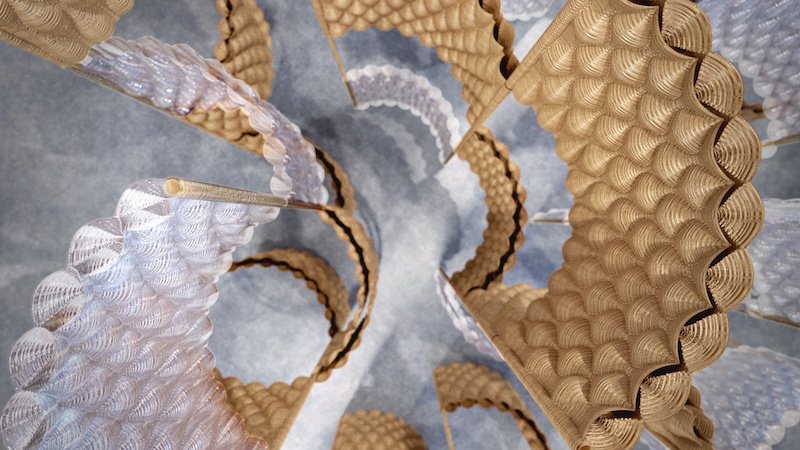
Head of Content Laura Griffiths speaks to the collaborators behind a new art installation created using sustainable resources and 3D printing.

This posting includes an audio/video/photo media file: Download Now

Sunday, April 17, 2022

3D Printing Media Network – The Pulse of the AM Industry

3D Printing Media Network – The Pulse of the AM Industry


Il Sentiero International Campus targets key AM adoption segments

Posted: 17 Apr 2022 08:43 AM PDT

Il Sentiero International Campus is an industrial research center in the field of surface and reliability engineering, additive manufacturing and joining technologies. Its services target advanced mechanics markets such as, …

The post Il Sentiero International Campus targets key AM adoption segments appeared first on 3D Printing Media Network - The Pulse of the AM Industry.

Honda reportedly had 3D models removed from Printables marketplace

Posted: 17 Apr 2022 01:30 AM PDT

According to a story first published by TheDrive, “all models referencing the word Honda posted prior to March 30, 2022, were seemingly removed from Printables without warning. These included speaker …

The post Honda reportedly had 3D models removed from Printables marketplace appeared first on 3D Printing Media Network - The Pulse of the AM Industry.

Ourobionics participates in €450 million NEXTGENHIGHTECH initiative

Posted: 17 Apr 2022 12:00 AM PDT

Ourobionics, a deep technology and regenerative medicine start-up, is a partner in the NextGenHighTech initiative that has been granted an amount of €450 million by the Dutch National Growth Fund. …

The post Ourobionics participates in €450 million NEXTGENHIGHTECH initiative appeared first on 3D Printing Media Network - The Pulse of the AM Industry.

Whale bones replicated using 3D printing and used in museum exhibits

Posted: 16 Apr 2022 07:30 AM PDT

Using an Artec Eva 3D scanner and the large-format Stratasys F900 3D printer, the team at Camosun Innovates is creating replica whale bones to fill in missing pieces of massive displays in museums …

The post Whale bones replicated using 3D printing and used in museum exhibits appeared first on 3D Printing Media Network - The Pulse of the AM Industry.

3D printed heat exchanger is estimated to be 50% more effective

Posted: 16 Apr 2022 04:00 AM PDT

A new type of lightweight, 3D printed heat exchanger with a maze-like, repeating gyroid architecture design is more compact and efficient than its conventional counterparts, its developers say. A team …

The post 3D printed heat exchanger is estimated to be 50% more effective appeared first on 3D Printing Media Network - The Pulse of the AM Industry.

Saturday, April 16, 2022

3D Printing

3D Printing


US Army to get HUGE AM Barracks

Posted: 15 Apr 2022 06:31 AM PDT

military contour craftingConstruction additive manufacturing is still seeking new ways to demonstrate its value, and as we saw a few weeks ago with the printed flood relief housing, it is finding more and more use in transient housing applications. Well, it could be said that there are none more transient than soldiers in training, and so the […]

3DPrint.com | The Voice of 3D Printing / Additive Manufacturing

3DPrint.com | The Voice of 3D Printing / Additive Manufacturing


3D Printing News Briefs, April 16, 2022: Business, Medicine, & More

Posted: 16 Apr 2022 05:30 AM PDT

We’re starting with business in today’s 3D Printing News Briefs, as Mantle recently announced three collaborations, Stratasys is strengthening its infrastructure in France with a partnership and e-store, and the Kimura Foundry Group has purchased its 10th Desktop Metal sand binder jetting system. Moving on, a European research team reports they can 3D print medicine in less than ten seconds, and the Dubai RTA is using 3D printing to maintain facilities and roads. Finally, a design studio is 3D printing handboards using plastic waste.

Mantle’s Three Collaborations Based on TrueShape 3D Printed Tooling Inserts

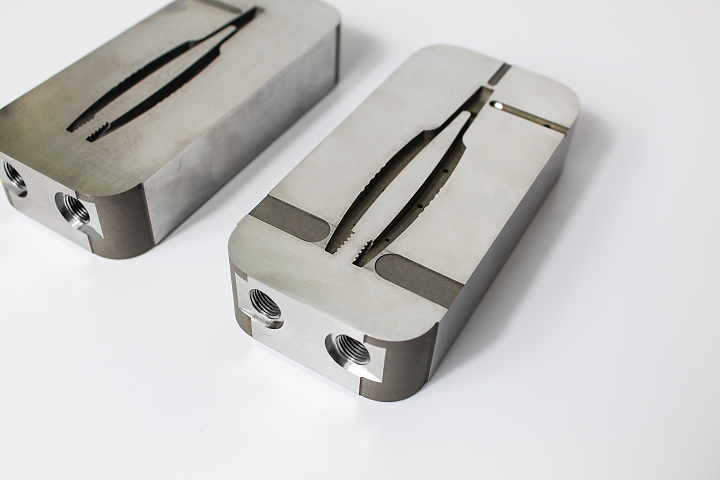
Medical forceps tooling inserts with conformal cooling were printed by Mantle via TrueShape technology using H13 Flowable Metal Paste. (Mantle’s 3D printed inserts were accurate within 0.0015″.)

At the recent AMUG Conference and Plastics Technology Expo in Illinois, metal 3D printing technology company Mantle Inc. exhibited the results of three successful tooling collaborations, each of which used its patented TrueShape hybrid metal AM and H13 Flowable Metal Paste. First was Connecticut-based Westminster Tool, which needed to make both cavity and core tooling inserts in order to quickly mold sample parts for medical forceps. The company wanted to mold the forceps from Arkema’s bio-based, glass-filled Rilsan FKZM 65 O TD MED, supplied by Foster Compounds and used for surgical device applications. Mantle’s TrueShape was used to 3D print the tool inserts—designed with conformal cooling channels—in just 86 hours, holding a tolerance of +/- 0.0015".

Another Connecticut company, Wepco Plastics, designed inserts and conformal cooling channels with Mantle’s TrueShape while molding a stand for a cell phone. After Mantle 3D printed them in 80 hours, the parts were molded in blue and black ABS plastic. Amanda Wiriya, Wepco’s Manufacturing Support Director, reports that they had smooth surface finishes, and came very easily off the tool. Finally, New York-based Precision Laser Technology (PLT) offers laser welding, engraving, texturing, and direct part marking for injection molds and molded plastics, and participated in a study with Mantle to verify that its H13 materials could hold up under machining and welding without having to change these processes. Mantle 3D printed four test bars out of H13, and after precision milling and grinding, the results were, according to the press release, “indistinguishable from traditional H13 tool steel.”

Stratasys Announces New Partnerships, E-Store in France

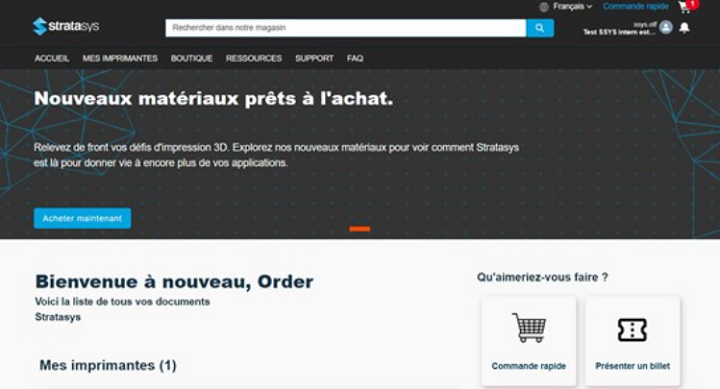
Stratasys' new dedicated e-store allows French customers to quickly and easily order from a continually expanding materials and consumables range

Stratasys (NASDAQ: SSYS) has added to its network of partners in France in order to strengthen its sales, service, and support infrastructure in the country. Joining existing partner Seido Systèmes as authorized Stratasys resellers for France are specialist AM solutions resellers Cylaos, Dome Technic Dentaire (DTD), and Halbronn. They will offer customers the necessary industry knowledge and consultation expertise needed to find the best Stratasys solution for their specific application. Stratasys also signed a partnership agreement with Fives, which works in the industrial maintenance sector, for the purposes of improving its ability to offer customers important technical support from its 600-person nationwide team of maintenance technicians. The company also launched a dedicated e-store to give its customers easier, faster ordering of consumables and materials. French customers can choose what they want and place a direct order in just a few clicks, and will also benefit from regular promotions.

Andy Langfeld, President, Stratasys EMEA, said, “We continue to see more and more manufacturers identify AM as an integral solution to their production operations, and this has further intensified over the last two years with supply chain issues deriving from COVID-19.

“The new collaborations announced today, as well as the provision of easier access to our ever-expanding material options, demonstrates our commitment to ensuring that the depth and breadth of our sales, service and support mechanism continues to expand to meet this market need and growth.”

Kimura Foundry Group Buys 10th ExOne Sand 3D Printer from Desktop Metal

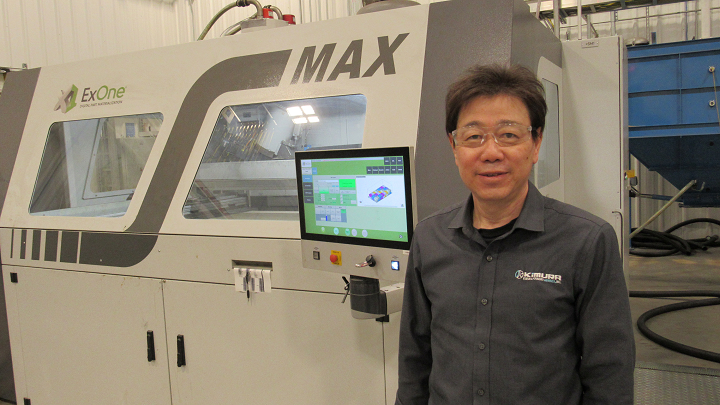
Dr. Yoya Fukuda, President of Kimura Foundry America, with an S-Max at the company's facility in Shelbyville, Indiana.

Japan-headquartered Kimura Foundry Group, which is a worldwide network of foundries that delivers high-quality castings, now owns the largest number of ExOne 3D printers in the world with the purchase of its 10th digital sand 3D printer from Desktop Metal. Traditional casting means waiting nearly 40 days for tooling, but Kimura is a major AM adopter, which allows it to 3D print cores and molds in ceramic sand and create prototype castings in just five days. Kimura invested in its first ExOne sand binder jetting systems in 2013, which caused its revenue to skyrocket because of the design freedom and speed its customers were enjoying. It launched a Direct Molding Process with six ExOne binder jetting printers across multiple Japanese facilities, set up Kimura Foundry America in 2018, and is building a new foundry in Indiana around ExOne’s sand binder jetting. Now, with its recent purchase, Kimura will install its third S-Max platform printer in the US.

“We are honored that Kimura, a foundry company with such high-quality standards, continues to make us their choice for digital casting solutions. Kimura Foundry Group is truly leading the way in production use of additive manufacturing, and they are an important partner in our mission to demonstrate the benefits of Additive Manufacturing 2.0 across all industries,” said Ric Fulop, Co-Founder and CEO of Desktop Metal.

European Researchers 3D Printing Medicines in Seven Seconds

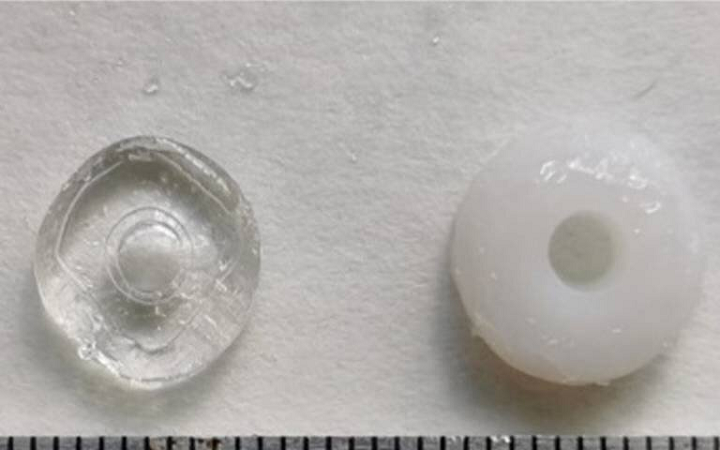
A team comprised of researchers from the University College London (UCL), FabRx Ltd., Universidade de Santiago de Compostela, and Maastricht University’s MERLN Institute for Technology-Inspired Regenerative Medicine published a study on their work developing a new vat polymerization technique for 3D printing medicines in just seven seconds. Vat photopolymerization has a very high resolution for microscale printing, and also doesn’t require high heat, but it’s not very fast. The team figured out a way to print an entire object all at once by shining multiple images of the object, viewed at different angles, onto the resin, resulting in much faster print speed. The amount of light shining down gradually builds up until polymerization occurs, and all points of the 3D object in the resin can be reached at the same time by adjusting the intensity of the light at different overlaps and angles. They demonstrated their work by 3D printing paracetamol-loaded printlets.

The abstract states, “In this work, for the first time, a volumetric printer was used to fabricate drug-loaded 3D printed tablets (Printlets™) within seconds. Six resin formulations were evaluated using this printer, each composed of poly(ethylene glycol) diacrylate (PEGDA) as the crosslinking monomer, lithium phenyl-2,4,6-trimethylbenzoylphosphinate (LAP) as the photoinitiator, and paracetamol as the model drug. Water or PEG300 were included as diluents in varying concentrations to facilitate drug release. Paracetamol-loaded Printlets were successfully fabricated within 17 s. Drug release rates could be tuned by altering the monomer-to-diluent ratio of the photosensitive resin, with a lower ratio releasing drug faster. The present work confirms the suitability of volumetric 3DP for printing drug products in a matter of seconds. Upon further optimization, this novel technology can enable rapid, on-demand fabrication of medicines and medical devices.”

Dubai’s RTA 3D Printing Spare Parts to Maintain Roads & Facilities

The Dubai Roads and Transport Authority (RTA) has a new solution to maintain its roads and road facilities. The agency is using 3D printing to fabricate needed spare parts for cladding materials and electromechanical systems used for this maintenance. The CEO of Traffic and Roads Agency for the RTA, Eng Maitha bin Adai, recently reiterated how important it is to keep up with innovative systems and technologies, and using 3D printing to manufacture these spare parts will also help Dubai RTA realize the government’s overall 3D printing objectives. The Traffic and Roads Agency worked with three 3D printing companies for this initiative.

bin Adai said, “During the past few months, RTA developed a new initiative and conducted various studies and experiments to increase the availability of spare parts for roads maintenance systems, in cooperation with specialist 3D printing companies. The initiative has proved to be successful in extending the sources of spare parts such as propeller fans, control equipment, and cladding for tunnel walls in Dubai's road facilities.

“As part of the initiative selected types of spare parts were chosen to be 3D printed; based on specific criteria, such as the lack of spare parts in local markets and taking into consideration safety measures. The initial results of implementing the technology revealed a 50% saving in the operational cost of purchasing spare parts. Additional improvements were introduced on the factory-based spare parts on account of historical data analysis, which reduced breakdown rates to record-low levels. 3D printing technology also contributed to reducing the cost of transportation and the time needed to import spare parts to Dubai.”

3D Printed Handboards from Plastic Waste

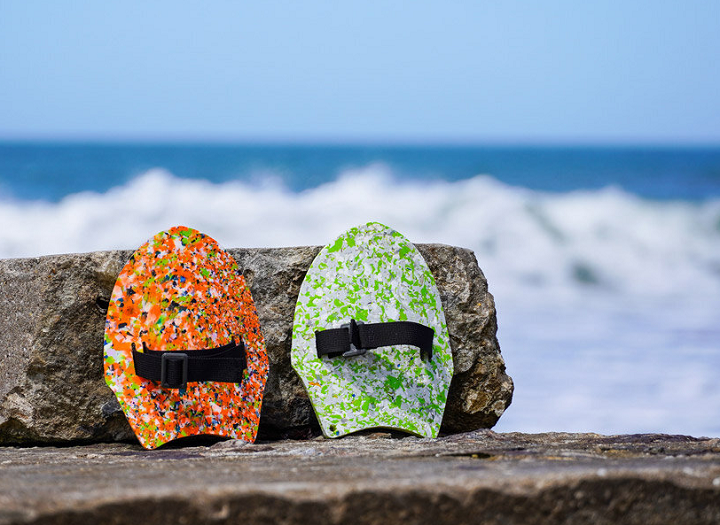
Finally, multidisciplinary design studio Uido has come out with a line of waterboards 3D printed out of plastic waste and old prototypes. The two designers, Lautaro Lucero and Tadeo Lucero, drafted a blueprint of their idea, and after a couple iterations, came up with a fin-like look for the Wabo Handboards. In an effort to reduce waste and create a more green product, they shredded the plastic of discarded prototypes, made 6 mm plates to cut, pressed the plastic into a mold, and attached the handboard’s elastic leash at the top.

“At Uido, each time we do a product design project, it is an essential part of the process to make 3d printed prototypes. so, throughout the year, we fill tons of boxes with those prototypes of different colors and sizes. Our commitment to the planet is serious, and our only waste as a company is those prototypes, so we started thinking about what we can do with them and how we can transform them into a new and fun product. that is how the idea of making handboards for surfing waves was born,” Lautaro Lucero said.

The post 3D Printing News Briefs, April 16, 2022: Business, Medicine, & More appeared first on 3DPrint.com | The Voice of 3D Printing / Additive Manufacturing.

Friday, April 15, 2022

3DPrint.com | The Voice of 3D Printing / Additive Manufacturing

3DPrint.com | The Voice of 3D Printing / Additive Manufacturing


Stealth CT Startup Lumafield Could Aid 3D Printing Quality Assurance

Posted: 15 Apr 2022 06:30 AM PDT

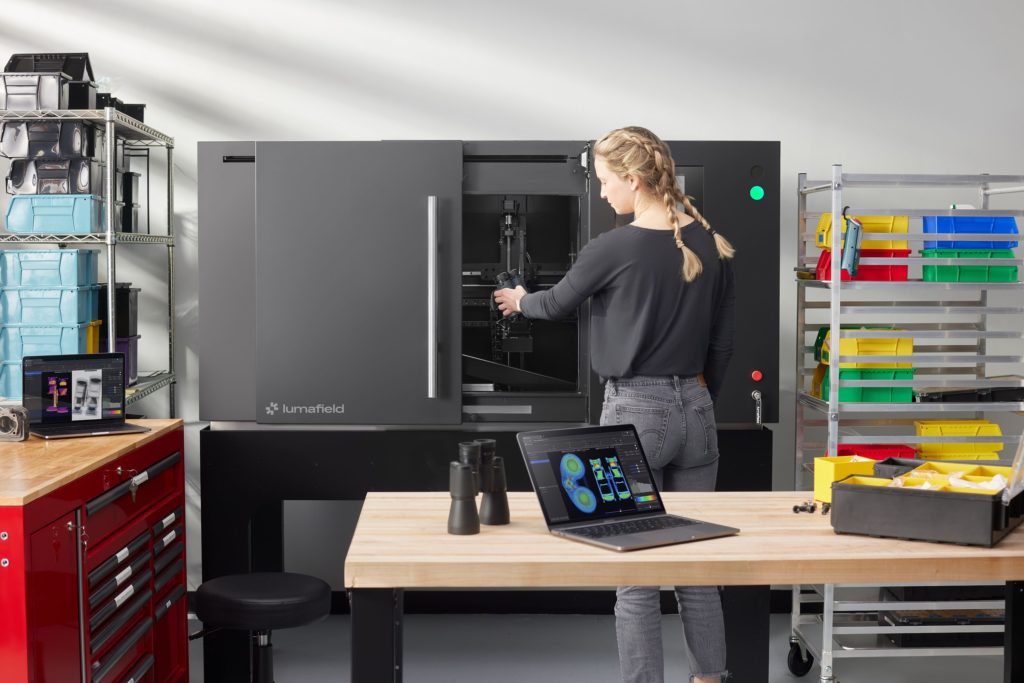
Startup Lumafield emerged from stealth mode and announced that is has over $32 million in funding from Kleiner Perkins, DCVC, Tony Fadell, Jason Calacanis´ Launch and Lux for its computed tomography (CT) and 3D scanning tool. Currently, CT tools are very expensive, but Lumafield will lease you its kit for $3,000 a month. The company claims that the tool can be operated in an office environment and is easy to use.
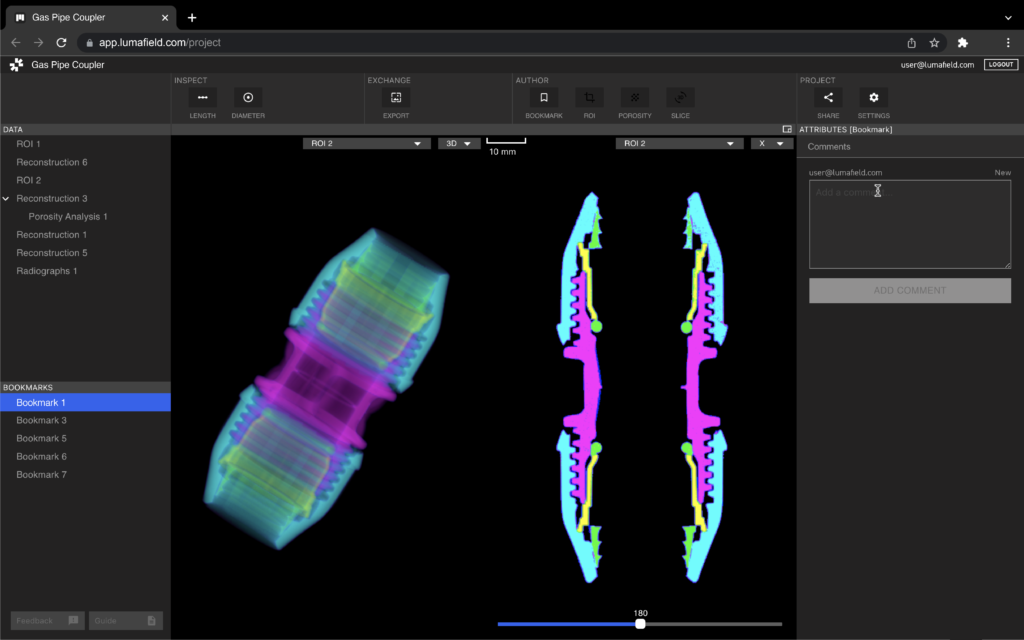
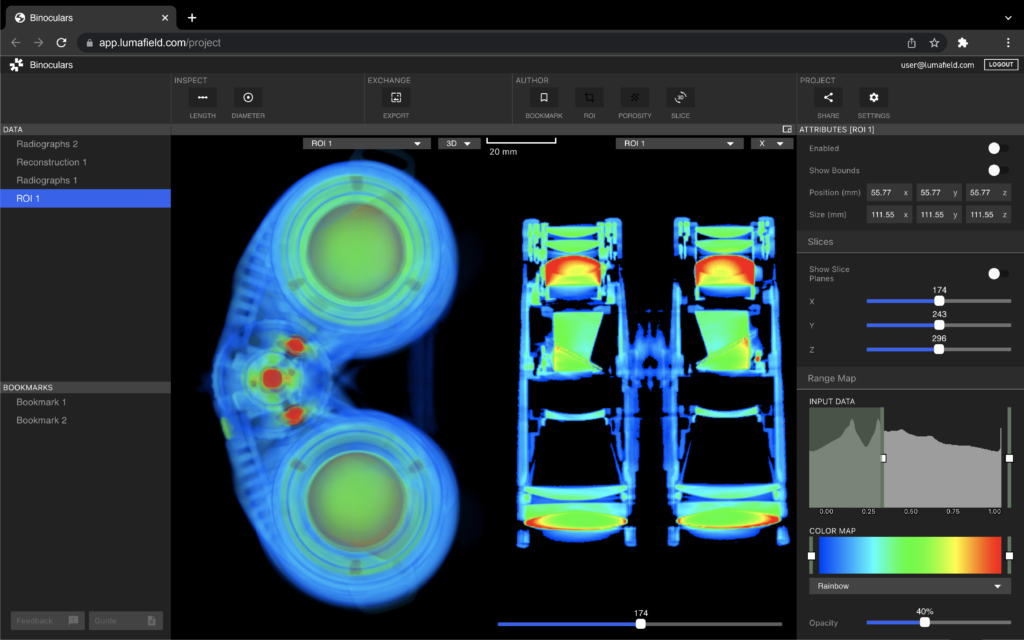
Lumafield’s platform combines software, 3D scanning, and CT to allow engineers to map and understand internal features of products in an accessible way. Using the firm’s Voyager software, the tool will also segment a part by combining CTs automatically and making them easy to decipher.

Tony Fadell, co-inventor of the iPod and iPhone, gave the company props, saying, "When we were developing the iPod and iPhone, we relied on X-ray CT scanning. In those days we had to use outside services to get these expensive scans and wait days for results. Even today this critical tool is only accessible to giant companies. But that's going to change quickly: Lumafield puts these insanely powerful tools on engineers' work benches around the world.”

Moreover, Lumafield’s “powerful automated analysis engine that pinpoints voids, pores, and cracks before they turn into critical problems.” Desktop Metal is reportedly already a user. For many 3D printed parts, quality assurance (QA) is problematic. So far, if it has to be critical, then a CT step is necessary for QA.

Only with CT can you really make sure that your metal 3D printed part does not have any voids or cracks. It would be very valuable to be able to CT scan every single part coming out of a service bureau in a cost effective manner. As a result, it would be possible to have a better handle on QA issues earlier on, even for non-critical components. A company can learn faster and more quickly discover a print or post-processing error somewhere. This could really allow a firm to master its existing processes much more rapidly than otherwise possible.

So far, however CT has been beyond the means of most service bureaus. Lumafield could change this by making CT accessible to smaller players and more parts. With Lumafield, one could perform more QA on more parts and do so more inexpensively. Now, of course, QA costs will go up due to increased part handling. So, it may not make sense for everyone. However, in a market where individual parts can cost $3,000 and the economic impact of those components can far exceed that, this could be a huge help for the 3D printing industry.

I’ve said before that we need to do individual QA for every 3D printed part that we make. I’m pretty alone on having this opinion, but I’ll keep repeating it none the less. We make each component differently with a different orientation, tool path, and residual heat all on a different area of the build platform. Therefore, we should 3D scan and CT scan every single part we put out. Yes, I know that this will be expensive, but every component is made uniquely.

We are not cutting away from a known block of material with a tool. We’re building something up in an entirely different way. In order to make sure that this item does what it should, we need to scan and CT that item. So far, this has been cost prohibitive, aside from the aerospace, defense, and medical markets. However, with an automated Lumafield package, this could become a reality.

Now, I know what you’re thinking. They’re a startup, Joris. They’re going to move fast and break things, namely me. They’re going to get their growth hacker hats on, sling these things out the door, and we’ll all get cancer. In these, very well made, videos they explain the safety of the device saying that they’ve met FDA requirements. They also say that the “machine has extensive lead shielding to block stray X-Rays.” The equipment also has a number of features that mean that the machine only works when the door is closed. I still remember when people used to photocopy their butts at office parties so lets hope that everyone uses this thing correctly.

The post Stealth CT Startup Lumafield Could Aid 3D Printing Quality Assurance appeared first on 3DPrint.com | The Voice of 3D Printing / Additive Manufacturing.

Medieval Italian Tower Reborn as Hotel Suite with 3D Printed Furniture and Decor

Posted: 15 Apr 2022 06:00 AM PDT

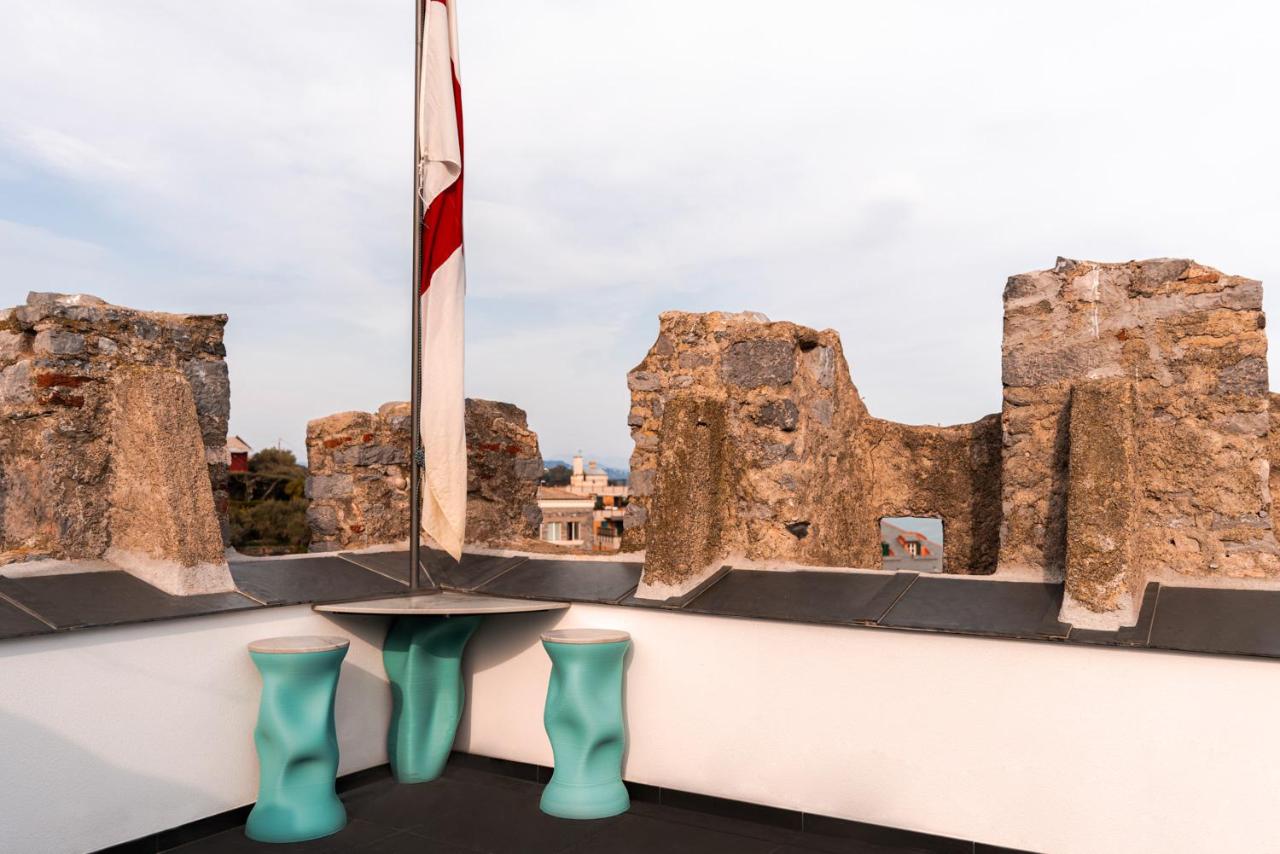
A team of architects, designers, and 3D printing experts joined forces to create a unique suite experience in an ancient Italian tower dating back to 1161. Overlooking the Ligurian Sea, the three-floor suite has been refurbished and is now ready to welcome tourists. At the heart of the project are dozens of 3D printed pieces of furniture and decor that beautifully contrast with the flair of the medieval Capitolare Tower in the ancient fishing village of Porto Venere, just south of the Cinque Terre region on the Italian Riviera.

3D printed exterior furniture in the Capitolare Tower suite.

3D printed exterior furniture at Capitolare Tower suite in Italy. Image courtesy of Capitolare.

Reimagining a Medieval Tower

It was a unique undertaking for Andrea Borlenghi, the founder and CEO of the Capitolare Suite Tower. His vision was to turn his love for Porto Venere and the Liguria region into a concrete project that would significantly impact tourism and local residents. After an in-depth conservative restoration, carried out using recycled materials and following the principle of eco-friendly architecture, the Capitolare team has returned the thousand-year-old tower to the community.

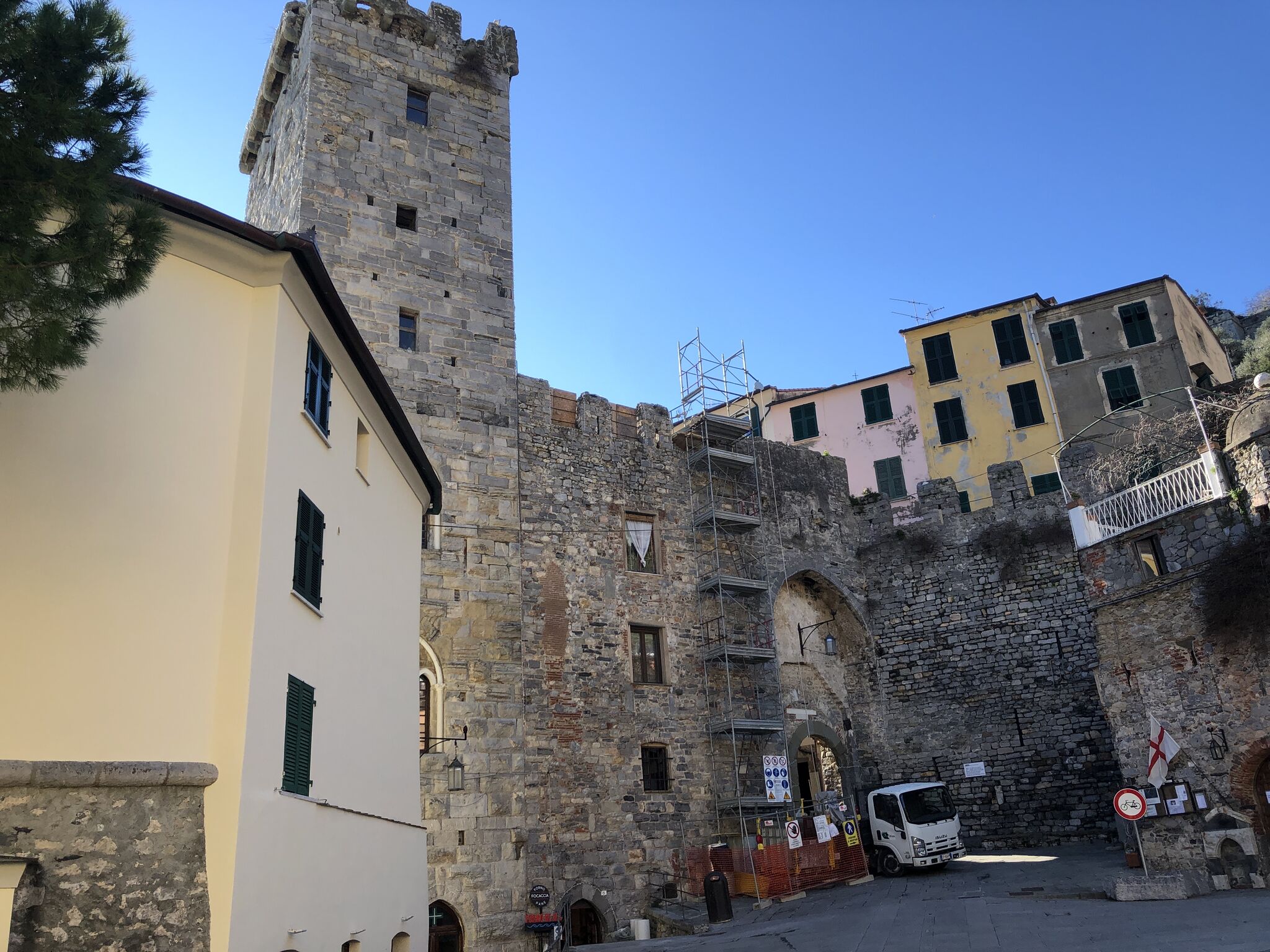
For centuries, the Capitolare tower – which translates to "surrender" in English – has been a rampant defense for the city. Adjacent to the city gate, this twelfth-century staple is "a wonder that has been hidden for too long," according to Borlenghi.

The Capitolare Tower in the ancient fishing village of Porto Venere.

The Capitolare Tower in the ancient fishing village of Porto Venere amid three-year restoration. Image courtesy of Capitolare.

Large Scale 3D Printing from Caracol

After having imagined, thought, and planned for three years, Borlenghi's Capitolare suite was finally inaugurated on April 9, 2022. Born from an idea to create a space that welcomes travelers into a truly exceptional environment, Capitolare demanded Borlenghi team up with local 3D printing company Caracol, designers Federica Cristaudo and Pietro Bonu, and architect Michele Bassi, who restored the antique tower.

Visually stunning, the exposed bricks of the structure are an ideal backdrop for the 3D printed furnishings, as the historic and modern technology find a unique balance. According to Cristaudol, all the furnishings were made using environmentally-friendly 3D printing and integrated precious raw materials such as Portoro, a golden veined black marble from the Liguori region, and gilding dating back to the same century of construction of the tower itself.

Dining room with 3D printed chairs at Capitolare Tower in Italy.

Dining room with 3D printed chairs at Capitolare Tower in Italy. Image courtesy of Capitolare.

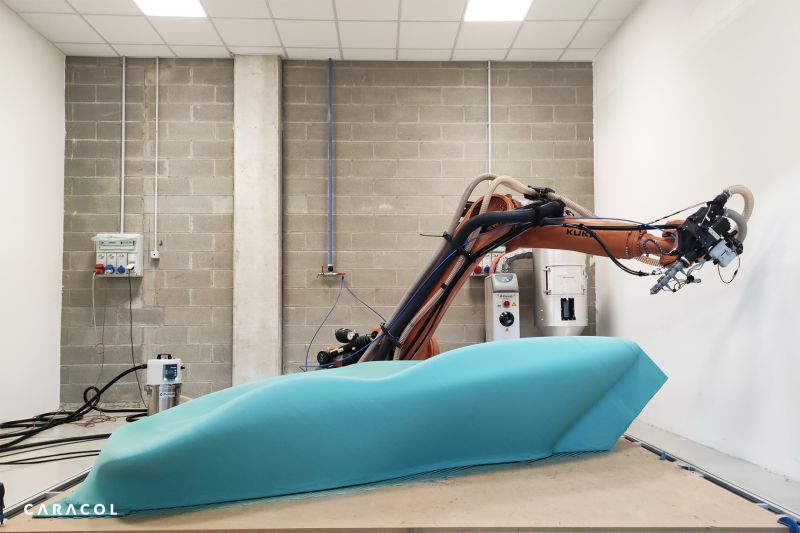
All the interior and exterior pieces were designed, engineered, and manufactured with Caracol's robotic additive manufacturing technology. For the task, Caracol chose an integrated solution that works with a patented extrusion head, six-axis robotic support, proprietary software platform, and automation control system.

Caracol's proprietary Scalprum 13800 proprietary AM robotic system is seen crafting some of the most visually stunning centerpieces of the suite. The six-axis technology and free-form slicing possibilities provide no limits in scale and complexity. These features enable the production of large monolithic parts, complex and organic geometries, and manufacturing with nonplanar slicing (at 45 or 60 degrees).

Caracol AM's 3D printed robot creating furniture for the Capitolare tower suite.

Caracol’s 3D printed robot creating furniture for the Capitolare tower suite. Image courtesy of Caracol.

Bespoke Details

At the tower, the space is evenly equipped with unique 3D printed creations that "recall the movement of the sea" and were inspired by the design concepts provided by Cristaudo. Each and every bespoke detail has been premeditatedly incorporated into the room, from the indoor chairs to the headboard and even the fixtures on the walls. The result is an eye-pleasing environment as inviting to tourists as the town's charm.

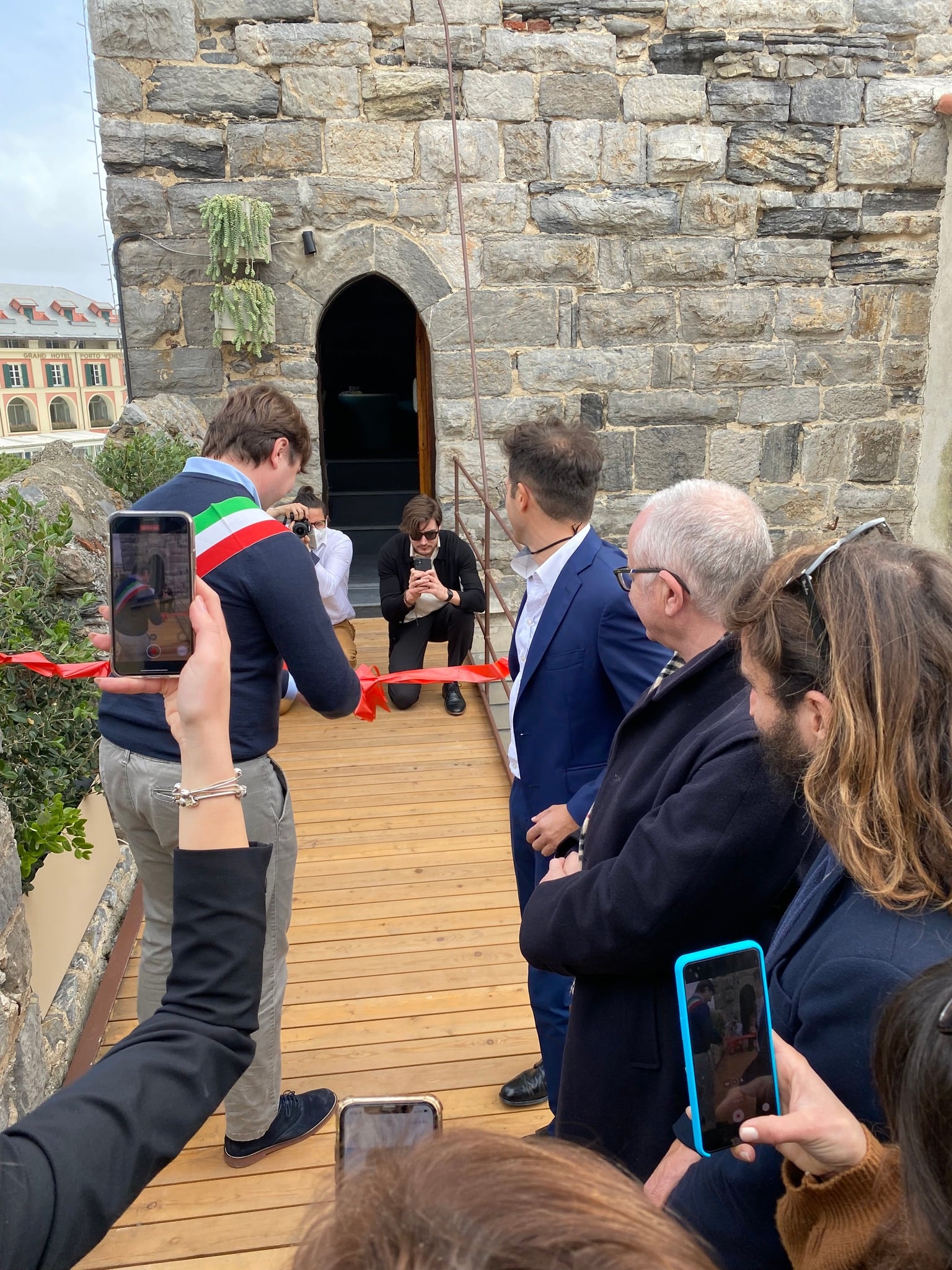
“We hoped for an intervention of this beauty, but we never imagined it. For the municipality administration it is a privilege to have a structure like this (… ) Now this adventure really begins,” announced Porto Venere's Mayor Matteo Cozzani during the ribbon cutting ceremony that inaugurated the tower.

Cutting ribbon ceremony of Capitolare Tower in Italy.

Cutting ribbon ceremony of Capitolare Tower in Italy. Image courtesy of Capitolare via Facebook.

The heart of this project was to save an ancient tower from decadence, but the result is a perfect blend of tradition and innovation. In its new guise, Capitolare stands as a staple of tourism, history, and beauty.

Borlenghi, who now works as Territory Business Manager for 9T Labs – a Swiss developer of the unique Additive Fusion Solution for manufacturing carbon fiber-reinforced thermoplastic (CFRTP) composite parts – and previously worked at Roboze, views 3D printing as an innovative technology that can even be at the service of the most ancient history. In fact, his undertaking is a huge testament to the potential of 3D printing in countless applications and a wide range of industries.

At the suite, travelers can take advantage of the spa center and room service and indulge in a balcony with a unique sea view. Tourists can now book a stay in the Capitolare tower here and experience the world’s first 3D printed luxury suite in one of the most ancient towns in Italy.

The post Medieval Italian Tower Reborn as Hotel Suite with 3D Printed Furniture and Decor appeared first on 3DPrint.com | The Voice of 3D Printing / Additive Manufacturing.

Siemens Discusses Industrialization of 3D Printing at New CATCH Lab in NC

Posted: 15 Apr 2022 05:30 AM PDT

Siemens has already had a substantial role in the additive manufacturing (AM) industry for some time. Not only has the German technology company seen its industrial controls integrated into countless 3D printers, but its software is involved in everything from design to production to quality control. However, more recently, the company's moves in AM have become bigger and much more visible.

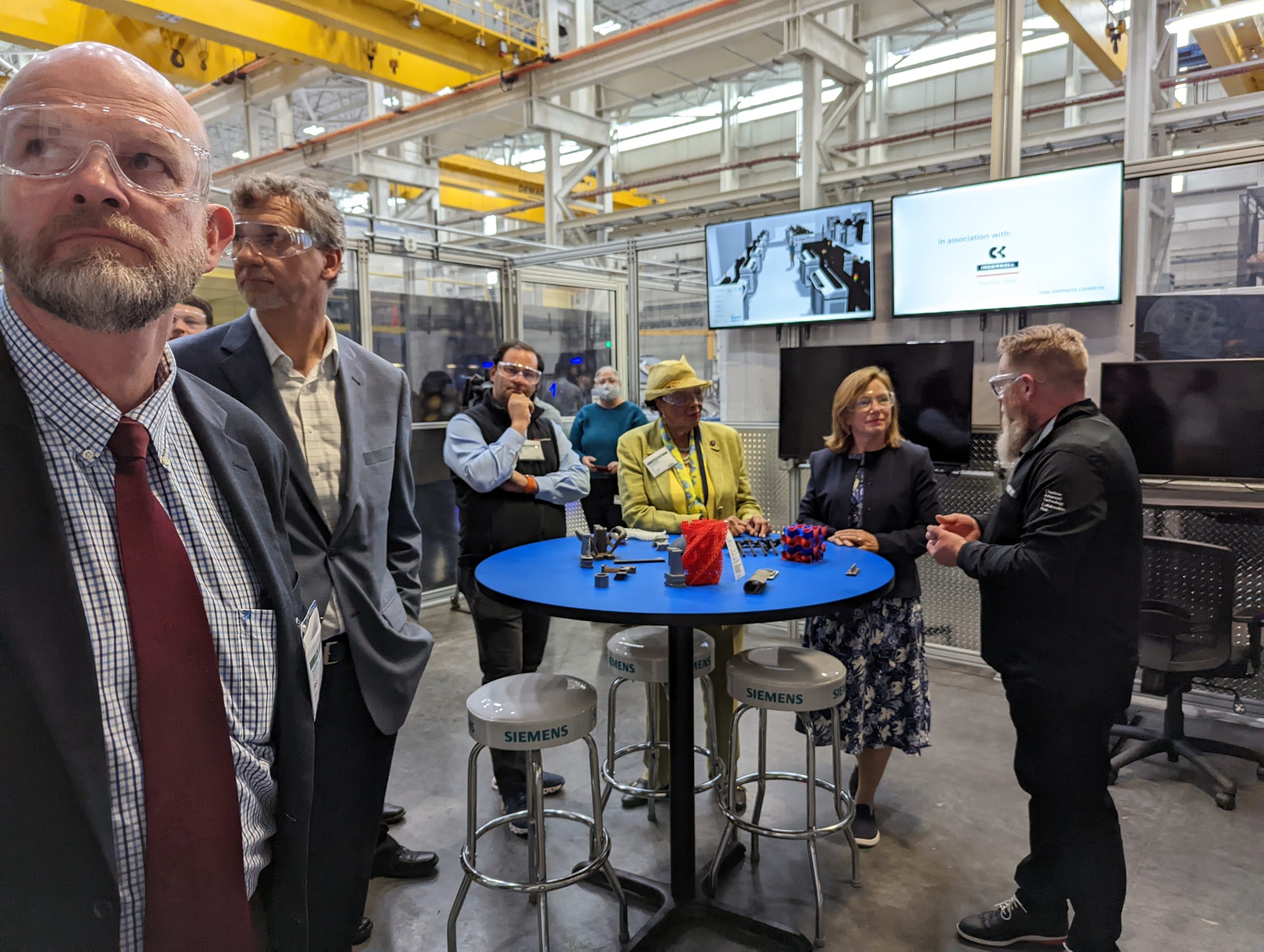
The latest is the opening of the Charlotte Advanced Technology Collaboration Hub (CATCH) in Charlotte, NC. Led by Siemens Digital Industries (DI), Siemens Technology and Siemens Energy, the site is a new research and development facility meant to aid customers in the industrialization of AM. To learn more about the location, we spoke to members of the Siemens team, Dr. Hallee Deutchman, Head of Research in Materials and Industrialized Manufacturing (US) for Siemens Technology, and Tim Bell, Additive Manufacturing Business Manager, Siemens Digital Industries.

Pictured alongside Tim Bell on the right are CEO of Siemens USA Barbara Humpton and congresswomen Dr. Alma Adams (NC-12). Image courtesy of Siemens.

Siemens itself is the largest industrial manufacturing company in Europe, with about 303,000 employees around the world and €62 billion in revenues, as of 2021. Siemens Energy, however, is a separate corporation that was spun off in 2020. It employs 91,000 people globally and boasted revenues of €28.5 billion in 2021.

The CATCH center demonstrates that the businesses still work together and both continue to have increasingly important roles in 3D printing. Bell acknowledged that, as AM matures, no single party will be able to advance it sufficiently for serial production. Instead, multiple stakeholders will need to collaborate to industrialize various aspects of various AM processes.

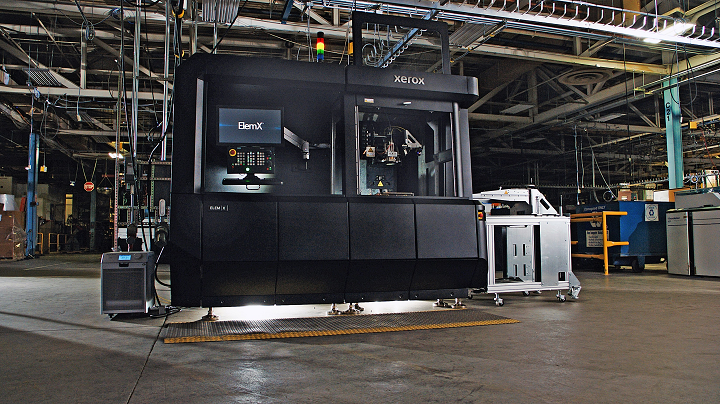
From the CATCH grand opening, a Xerox ElemX machine in operation. Image courtesy of Siemens.

"[The AM sector] is the wild, wild west, and nobody out there has managed to tame it alone. So, what we wanted to do was come up with a central hub, where we could collaborate with machine OEMs, end users and institutions to solve the hard problems that are preventing additive or become becoming a serial production process in some applications," Bell said.

CATCH is the latest of Siemens' six AM centers, but it is the only one located within a working factory. The larger Siemens Charlotte Energy Hub is a million square feet of industrial operations dedicated to repairing the multinational's massive turbines. CATCH is located within a tiny sliver of that area, where it acts as an R&D lab meant to drive the cutting edge of manufacturing. In turn, Siemens is working with companies that fit into that vision. Putting the "collaboration" in CATCH so far are OEMs ExOne, Xerox, and Roboze.

Xerox ElemX liquid metal 3D printer equipped with Siemens SINUMERIK CNC control system. Image courtesy of Xerox.

"When you look at CATCH, you notice that it is a next generation additive facility. We are not a museum. We are not a facility with beautiful white floors and white walls that people can come in and see what additive does in an industrial setting," Deutchman explained. "Rather, we are at the end of the repair line for Siemens Energy gas turbines, which are the size of a large car. We are dirty. And the intention is for all of our machines to be at the cutting edge of additive. So, not a lot of work with modalities that are very well established, like laser powder bed or electron beam powder bed, but really on what’s coming next. We want to learn how to satisfy customers, both internal and external, and solve problems that aren’t easily achievable with today’s technology."

Bell pointed out that these partners are often chosen to tackle a specific project either for internal or external customers, whether related to material or process development or because the existing manufacturing method isn't sufficient. The Siemens DI team then builds up the process and hands it off for a production application.

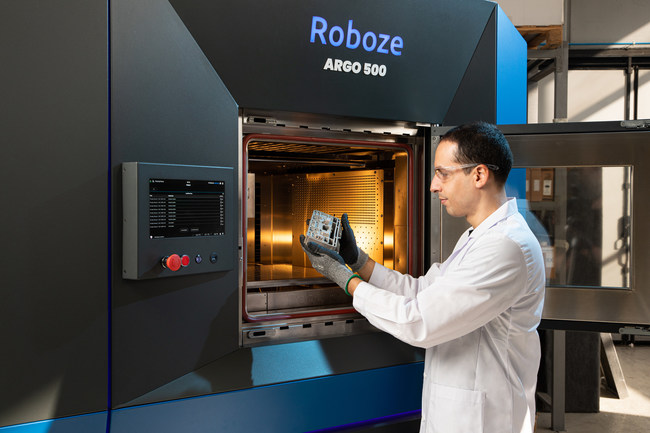
That was the case for binder jetting from ExOne. Siemens is in the process of developing material for the process, then scaling it up to hand off to a customer to produce large parts. With Roboze, Siemens is tackling the problem of long lead times for steel components. Obviously, PEEK polymers can replace metal parts at a lower cost with a faster turnaround due to its high strength and resistance to extreme temperatures and volatile chemicals.

Roboze’s Argo 500 3D printer. Image courtesy of Roboze.

How this works from a business standpoint varies depending on whether clients are within Siemens or outside of the business.

"For some [customers], especially our internal customers, the role of Siemens Technology is corporate R&D. We incubate and evaluate new technologies and interesting solutions for the Siemens business units. In that situation, Siemens Energy is an important partner in that work," Deutchman said. "From our perspective, it’s our job to incubate, take on the risk, do cool stuff, and break it, so that it can be industrialized to production and then they can actually make something real."

As for outside clients, Siemens will typically develop its own products to sell to others. However, it may license its more sophisticated tools, such as a physics-based simulation tool that is currently in development. Whereas most simulation software offers a visual representation of a 3D printing process, this program will incorporate multiple levels of physics of a machine.

This builds off of not only Siemens' expertise in software, but nearly 20 years of experience as a user of AM. The company has been relying on powder bed fusion and directed energy deposition for its turbine engine business. In turn, the company has been able to apply its manufacturing expertise across the entirety of the production workflow.

"Siemens has developed a complete end-to-end solution, meaning a software tool chain that leads right into an automation connection, back to a software tool chain for monitoring, planning, and quality feedback. We’re the only company in the world that can manage additive from a PLM perspective, all the way to the end to the industrial internet of things and linking that together. That gives us a leg up on how things work."

In particular, this means that Siemens can actually execute the use of digital twins. The company is able take the operations of physical machines and create digital twins of the process simulation, in addition to simulation of the actual component. This is becoming increasingly essential to the industrialization of AM, as predicting and compensating for the physics of 3D printers ensures that finished parts actually match their intended designs.

Naturally, this is only a small piece of the large workflow that Siemens plans on tackling. Beyond simulating the machines themselves, the company can simulate entire factories. Using edge computing, it is possible to capture the data coming out of a powder bed system and filter out the unnecessary information. This could be scaled up to multiple machines and entire factories using MindSphere Cloud.

Beyond edge and cloud computing, the German giant has access to other advanced tools. Siemens DI's Future Factory team can also introduce new methods of non-destructive testing, inspection, and quality control to further industrialize additive technology. Augmented, virtual, and mixed reality can be applied to examine AM in new ways. All of this is driven by a massive tech company that has the industrial clout that few others could introduce to 3D printing.

This includes the support of Siemens Financial Services (SFS), the multinational's financing arm. SFS supplied CATCH with the financing solution necessary to lease several of the 3D printers in the lab. The financing group sees AM as a strategic priority as digital manufacturing continues to evolve.

According to the Siemens team, CATCH already has its hands full with additive work. The facility only just opened, but it can't take on much work for the quarter. This bodes well for the future of the site, which, in turn, bodes well for Siemens and the 3D printing industry at large.

The post Siemens Discusses Industrialization of 3D Printing at New CATCH Lab in NC appeared first on 3DPrint.com | The Voice of 3D Printing / Additive Manufacturing.

Milk Cartons Get Second Life as 3D Printed Bench in Tuscany

Posted: 15 Apr 2022 05:00 AM PDT

As one of Italy's "città d'arte"' (or art towns), Lucca is encircled by its intact Renaissance-era city walls and a highly preserved historical center that makes this Tuscany location one of the most beautiful in northern Italy. Labeled the "land of princes and poets," Lucca's charm is the substance of century-old stories. Now thanks to a new 3D printing project, the old meets the new, as a team of architects, engineers and designers have installed a one-of-a-kind bench printed with recycled plastic from milk cartons and other similar container plastics.

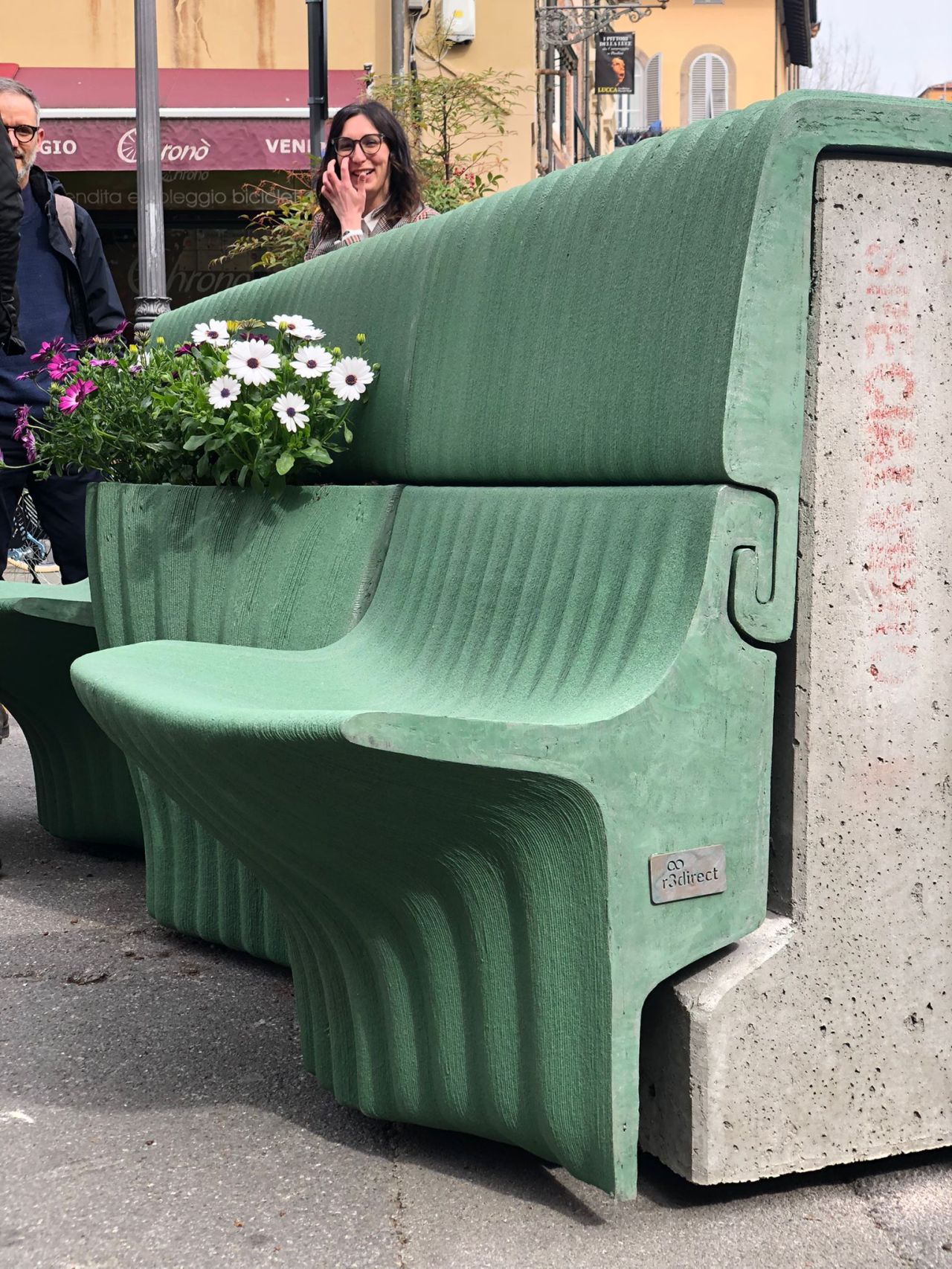
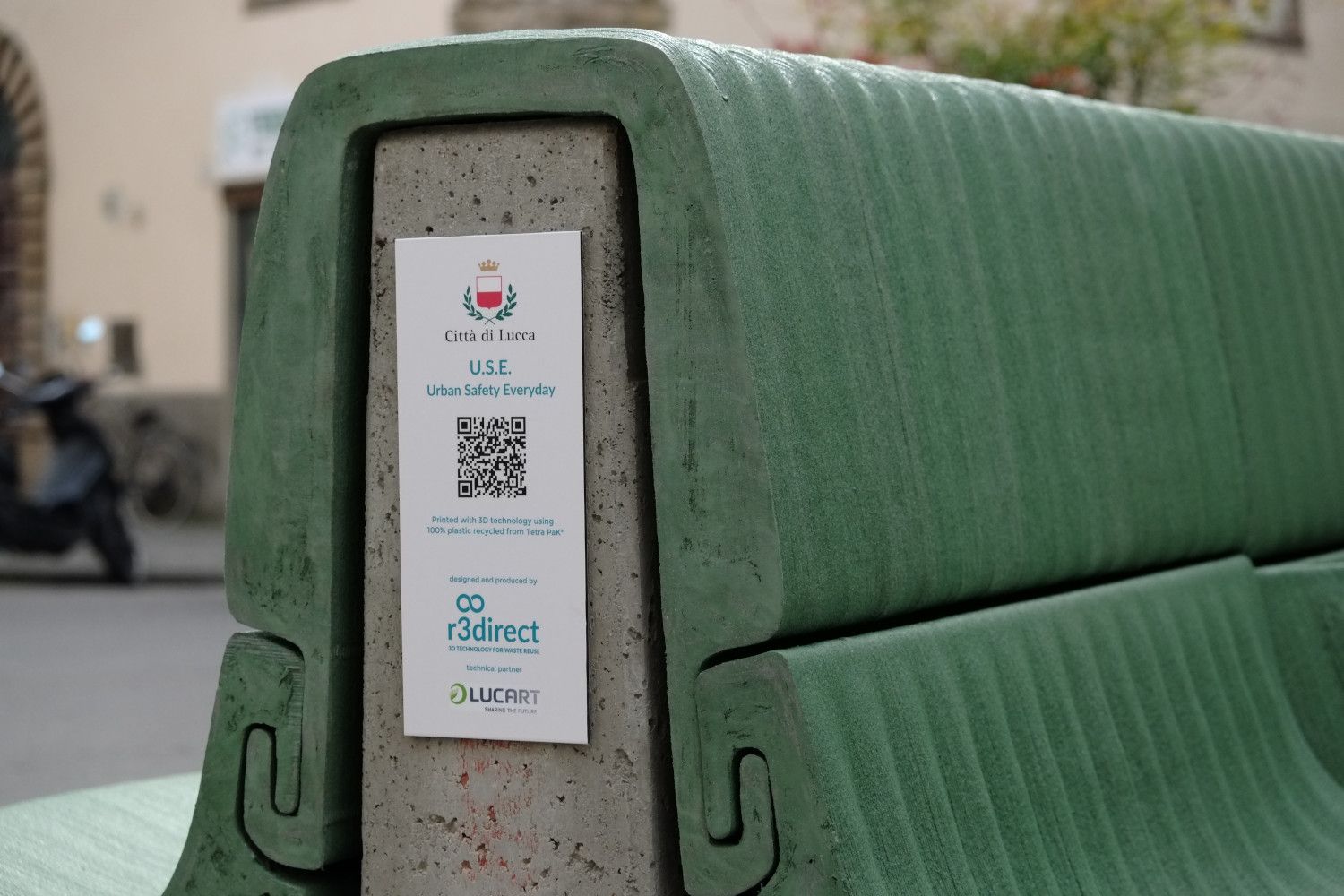
Adorning the landscape of this traditional city, the 3D printed bench is much more than what it seems. Not only is it a symbol of the potential of 3D printing technology but a testament to what can be achieved with upcycled materials. Furthermore, this project, which is called Urban Safety Everyday or USE, is the result of a master's thesis by architect Giulia Del Grande and her collaboration with R3direct, a local startup that designs and 3D prints furniture; Lucart, one of Europe's largest producer of machine glazed paper for flexible packaging; and the city of Lucca.

A 3D printed public furniture with recycled plastic installed in Italian city of Lucca.

3D printed public furniture with recycled plastic was installed in the Italian city of Lucca. Image courtesy of R3direct.

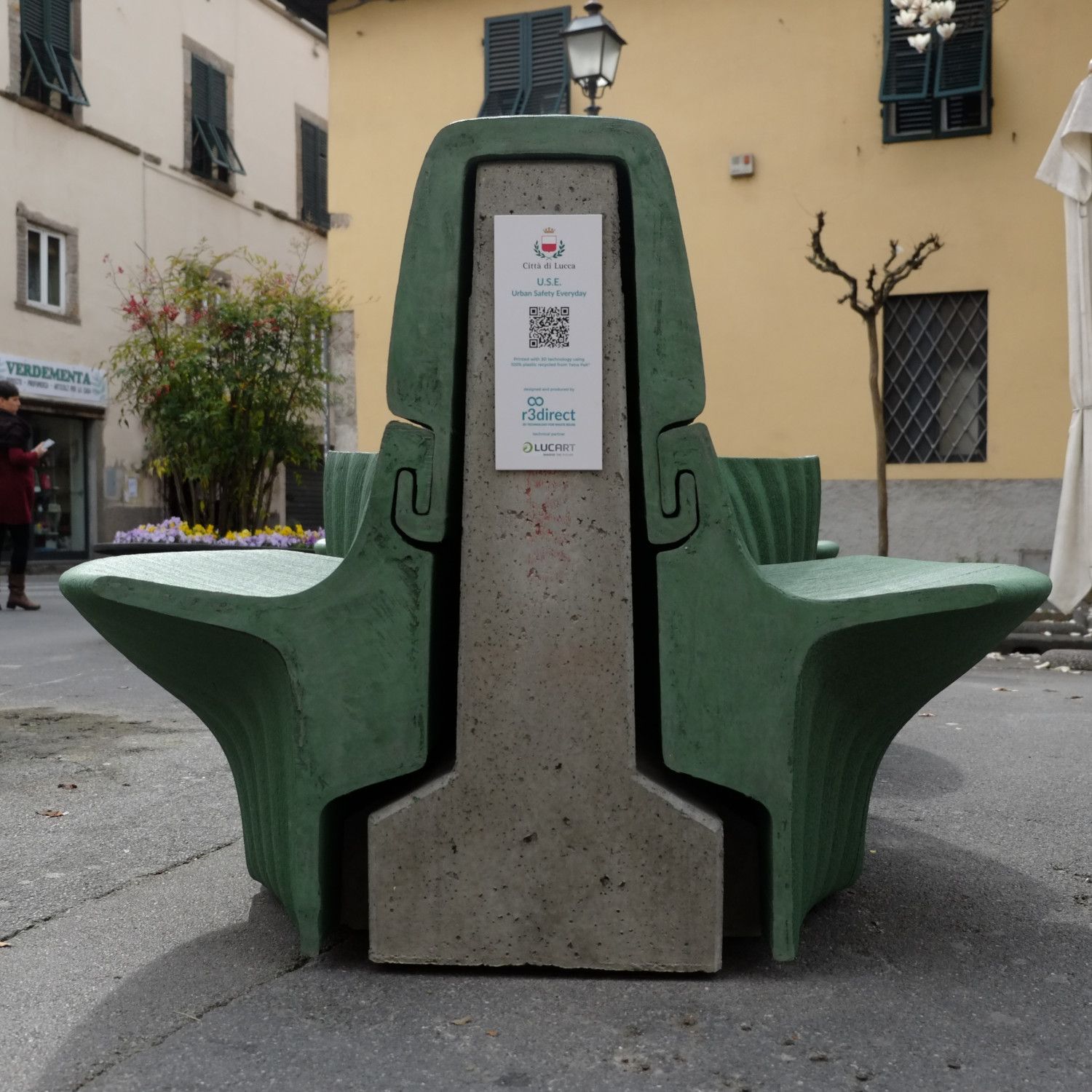
Inaugurated in time for world recycling day on March 18, 2022, the 3D printed public furniture has a functional feel as it can seat up to four people but maintains the town's local charm thanks to its central arrangement of flowers on both sides. On top of that, the original purpose of the furniture is to cleverly disguise traffic blockades (otherwise known as "Jersey barriers") that are used to keep cars in their lanes and prevent car bombs and other terrorist threats.

Italy has stepped up security in recent years, installing concrete barriers between pedestrian areas and motor vehicle traffic in many cities. The USE is the first prototype of a bench that slides on top of the barrier, and since it was installed in the city's historic center, it has already become part of the everyday life of its residents.

Concrete barriers hidden under a bench

In a social media post on LinkedIn, Del Grande explains that "the project aims to provide functionality and integration in the context to the elements that are related to safety management and that are commonly installed during events or exhibitions."

The USE is made from 3,300 Tetra Pak beverage cartons sourced at the Lucart paper mill in the city and then recycled to create a material for 3D printing. Even though Tetra Pak is a recyclable material, it is not the easiest to repurpose. Separating the plastic, paper, and aluminum layers require specialized plants and processes. Luckily, Lucart's mills process beverage cartons by separating cellulose fibers from polymers and aluminum, which can then be reused as raw material for manufacturing.

A 3D printed public furniture with recycled plastic installed in Italian city of Lucca.

3D printed public furniture with recycled plastic was installed in the Italian city of Lucca. Image courtesy of R3direct.

Once the plastic was recovered from the processing of the beverage cartons, R3direct used 3D printing technology to transform it into an innovative bench that "coats" and hides the shatterproof concrete barrier in Lucca's historical center.

USE designer and co-founder of R3direct, Stefano Giovacchini, said this local circular economy project could become an example for global actions. However, this is not a new concept for Giovacchini, who has been focused on a mission to recover post-consumer plastic and use it to make beautiful and durable objects.

Specializing in product design and 3D printing throughout his entire career, Giovacchini created a startup that would leverage the technology to develop flexible, economical, and scalable solutions. The results are objects like USE, precious, durable, and sustainable. Products that could become what the company describes as "icons of a contemporary concept of value and luxury."

According to R3direct, the team was the first in Europe to use this material for 3D printing. Still, the result has been so good that the town has already commissioned and plans to install more 3D printed benches just like USE to cover other bollards and serve as seating during city events.

A 3D printed public furniture with recycled plastic installed in Italian city of Lucca.

3D printed public furniture with recycled plastic was installed in the Italian city of Lucca. Image courtesy of R3direct.

The post Milk Cartons Get Second Life as 3D Printed Bench in Tuscany appeared first on 3DPrint.com | The Voice of 3D Printing / Additive Manufacturing.