3DPrint.com | The Voice of 3D Printing / Additive Manufacturing |
- World’s Largest Concrete 3D Printing Facility Opened by GE Renewable Energy
- 7 3D Printed Veggie Meats Rebuilding the Meat Industry
- Metal 3D Printing Powder Process from 6K Emits Less CO2 by up to 92 Percent
- Massivit 3D Launches Massivit 10000 3D Printing Tooling System
- Ultimaker’s Latest Cura Update is a Huge Step Forward for User Control
- Bound Metal 3D Printing to Make $54B in Metal Parts through 2030
- Nano Dimension’s Electronics 3D Printing HQ in US Moves to Massachusetts
- Markforged’s Larger, Faster 3D Printer Lands with First Customer, Phillips Corporation
- Next Generation Flashforge Adventurer 4 3D Printer Hits North American Market
| World’s Largest Concrete 3D Printing Facility Opened by GE Renewable Energy Posted: 22 Apr 2022 06:30 AM PDT The more that the renewable energy and additive manufacturing (AM) sectors evolve, the clearer it becomes how much the two industries have to offer one another. So far, this has mostly been true regarding wind turbines. Nonetheless, the wind industry's steadily increasing success with AM techniques could, soon enough, lead other renewable sectors to explore more seriously the possibility of adopting AM, as well. The latest example of companies leveraging AM for wind-power supply primarily involves three firms — GE Renewable, COBOD International, and Holcim — that have already been working together in this area for several years. The present project takes the collaboration to even greater heights: GE's now-operational concrete 3D-printing R&D facility in Bergen, NY, the world’s largest such site. Most notably, the research center is powered by entirely new hardware from COBOD, perhaps the world's most significant additive construction (AC) company.
COBOD's latest printing system, designed specifically for GE's research facility, is the size of a three story building, and can print concrete sections up to 60 feet high. The system achieves its hourly output rate of over 10 tons of concrete in part due to its having two X-axes — the only concrete 3D-printer in the world with this feature. As such, COBOD's founder and general manager, Henrik Lund-Nielsen, argues, "…the printer can better be described as a multifunctional construction robot than a printer."
Previously, in 2019 and 2020, GE Renewable, COBOD, and Holcim worked together on a similar project to print concrete bases for wind turbines. That the current, follow-up phase of the project will also be focused on printing bases for wind turbines indicates the success of the initial phase. In addition, when the project was originally being reported on, back in the summer of 2020, the companies involved were already mentioning plans to collaborate on the COBOD system currently being rolled out. This suggests that we can take as a fairly useful rough estimate, the timeline of five years which GE projects it will take for the R&D center's work to lead to turbine bases that are operating in the field. 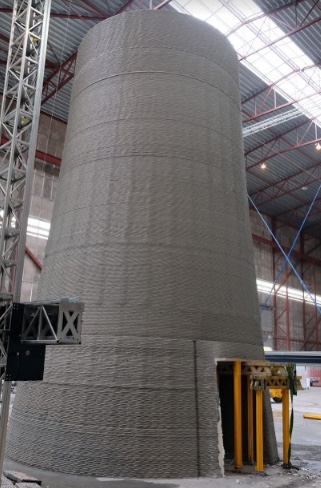 Image courtesy of COBOD. Most nations appear to have set an initial target of 2030 for reaching the first big threshold of carbon emission reductions, on the way to (what still seems an almost impossibly ambitious) target of net-zero carbon emissions. If GE Renewable is planning on the R&D project paying real-world dividends by about 2027, this is yet another recent sign that bodes well for AM techniques making a major contribution to the next generation of wind-power. Finally, this entire collaboration is a highly illuminating window into what is, for better or worse, the current state of the renewable energy sector. Aside from the three companies already mentioned, at least two other, more local companies are involved. So is the U.S. Department of Energy, which partially funded the project with a grant. The number of interests necessarily involved in a project of this magnitude illustrates how complex the economic conditions are in the business environment of the renewables sector. On the other hand, a business environment finally does seem to exist, which can realistically get a project like this off the ground. This hints that the idea of a new generation of renewable energy infrastructure may no longer be the mere pipe dream that it once was. The post World's Largest Concrete 3D Printing Facility Opened by GE Renewable Energy appeared first on 3DPrint.com | The Voice of 3D Printing / Additive Manufacturing. |
| 7 3D Printed Veggie Meats Rebuilding the Meat Industry Posted: 22 Apr 2022 06:00 AM PDT What makes a great meat substitute? Is it the perfect marriage of taste and texture, or the smell and juiciness that reminds people of the original deal? As subjective as that answer may be, one thing is for sure, the need for meat alternatives is pressing, and startups are getting better at recreating original meaty flavors with vegetarian or vegan ingredients thanks to 3D printing. Not only are red and processed meats associated with health conditions, like heart disease, diabetes, and several types of cancer, but replacing them with other options, mainly plant-based, can avoid harming the environment. Worldwide, meat consumption requires 30 million square kilometers of land to produce. That's roughly three times the size of Europe and close to 26 percent of the earth’s terrestrial surface used for livestock grazing. Instead, plant-based meat uses 41% less land than fish farming, 77% less land than poultry, 82% less land than pig farming, 89% less than beef from dairy cows, and a whopping 98% less land than beef from beef herds. That is heavily convincing evidence that meat alternatives are a more efficient use of resources. Successful startups like Impossible Foods and Beyond Burger have prioritized plant-based meats designed to look, cook, and satisfy like beef, spearheading a market that could grow to $23.4 billion by 2024. But newer startups are not just relying on other ingredients to recreate meat or traditional food fabrication. They are also driving the change with 3D printing and bioprinting technologies. Evidently, the quest to automate and industrialize the process of 3D printing alternative meats is turning into the next evolution in this market. Here, we break down the seven trendsetters that could become the next heavy hitters in 3D printed plant-based meat alternatives. Alt FarmHong Kong technology startup Alt Farm has begun 3D printing food from plant proteins thanks to a patented nozzle design that can recreate specific textures in its products, including the appearance of meat. One of the first products created is a 3D printed plant-based A5 Waygu beef (the highest grade for Japan's famous meat, which costs around $250 per pound). The company uses pea, soy, and algae protein to mimic the premium cuts' unique taste and marbling and says China and Australia are key markets where it hopes to launch in 2023. Created by three Hong Kong University of Science and Technology (HKUST) alumni, the startup began with a proprietary printer design to incorporate 3D food printing. Currently, Alt Farm reports that it can take up to four hours to print one Wagyu steak but believes more research and development will lead to scaling technologies and production capacity. NovameatEmulating the taste, feel and look of artificial meat, Novameat is racing to 3D print plant-based whole cuts of beef, pork, and chicken. The Spanish startup employs biomimetic microextrusion technology and custom 3D printing machines to recreate the tissue structure of muscles. Based on CEO and Founder Giuseppe Scionti's decade-long tissue engineering research, the company's microextrusion platform takes in vegetable fat (3%), water (72%), and plant protein sources (25%) to print a meat fiber matrix that looks and tastes like the real thing. As part of its growth strategy, Novameat is collaborating with Disfrutar, a spin-off from the famous molecular gastronomy pioneering restaurant El Bulli, to create new "meat" dishes. Getting ready to launch its first products in Spanish restaurants this year, the startup is already planning to expand its retail partnerships in 2023. 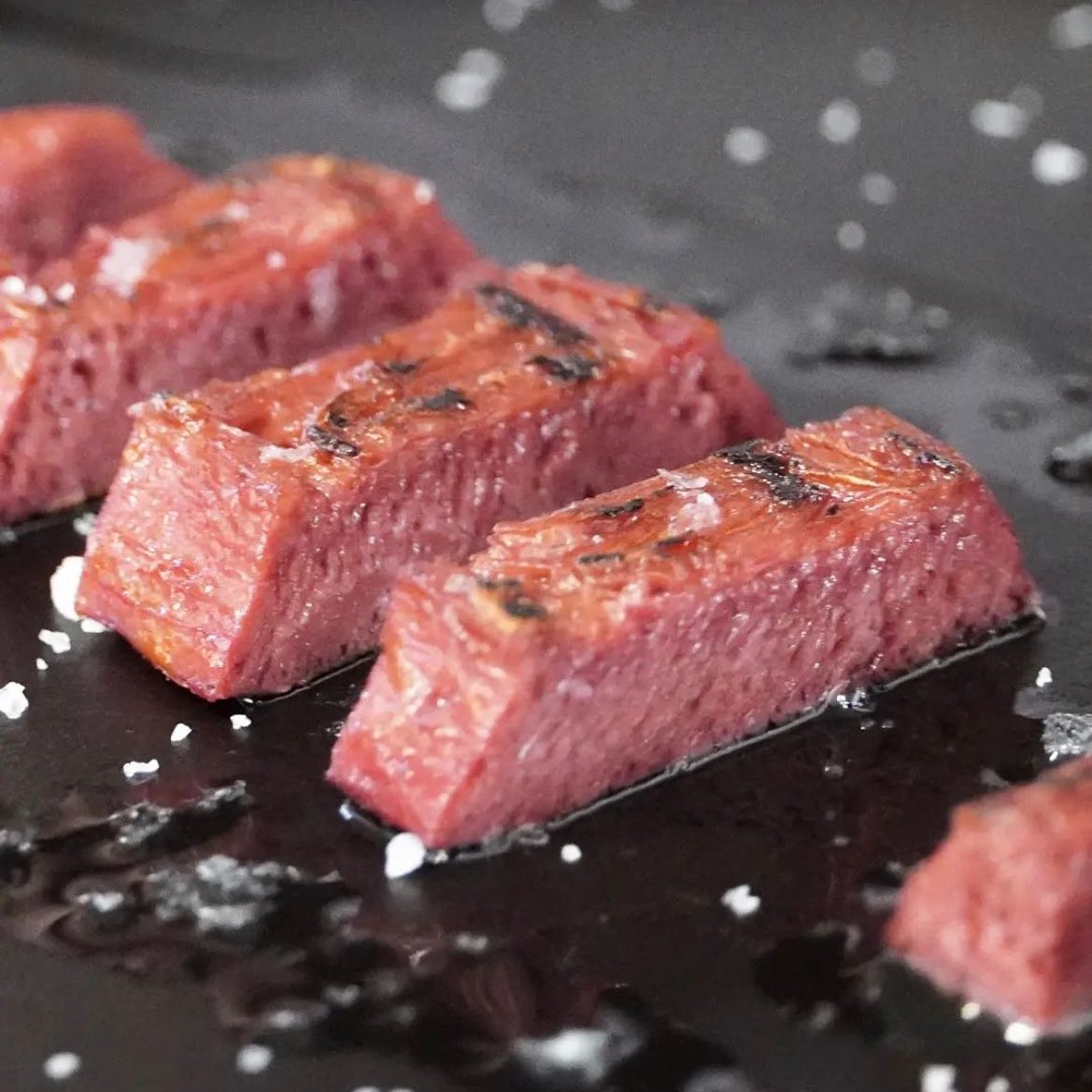 Novameat’s 3D printed plant-based whole cuts. Image courtesy of Novameat. PlantishAlternative plant-based seafood startup Plantish is raising millions to break into the foodservice industry and accelerate product development, including additive manufacturing (AM) technology used to produce alternative whole-cut fish filets at a low cost and massive scale. Founded in mid-2021, Plantish's mission is to save the oceans through its original fake fish products. Created using its own versatile, patent-pending 3D printing technology, Plantish's trademarked salmon prototype can be prepared and cooked using the same methods as conventional salmon. The Israeli startup will be launching Plantish salmon in pop-up locations at the end of the year and officially introduce its product in nationwide restaurants by 2024. 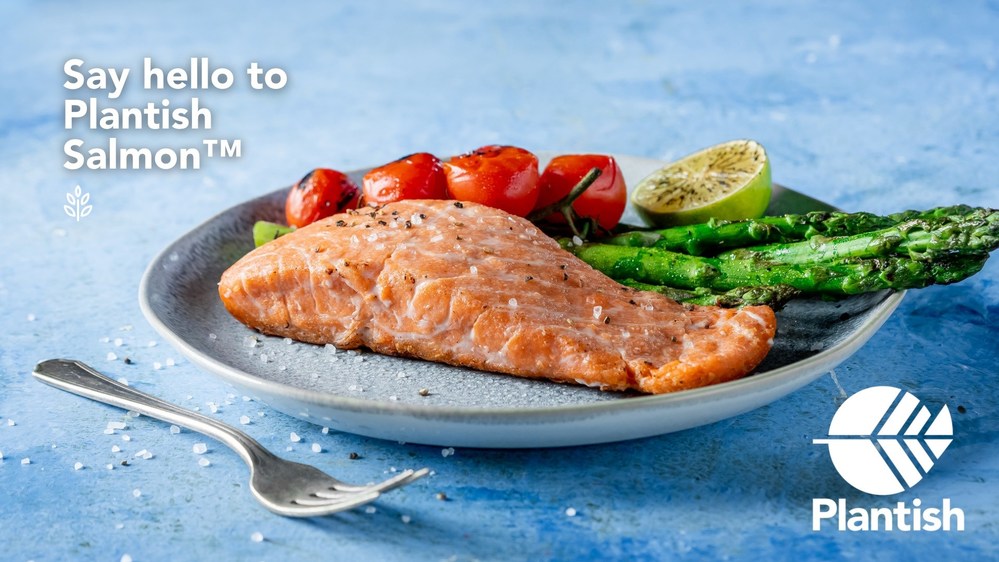 Plantish Salmon has the same nutritional value as conventional salmon, and is high in proteins and vitamins. Image courtesy of Asaf Karela/PRNewsfoto/Plantish. Redefine MeatOne of the most publicized 3D printed artificial meat producers, Redefine Meat, has developed proprietary 3D printing technologies to create a new category of high-quality meat products made from plant-based ingredients that guarantee the flagship plant-based "New Meat" has the same flavor, texture, and versatility as animal meat. Having made considerable strides in developing technology to replace the cuts in the entire cow, in July 2021, the company launched its first range of five products to Israel's demanding and vanguard alt-meat market. From a juicy steak to a smoky brisket, Redefine's meat can be tasted at restaurants in the UK, Germany, the Netherlands, and Israel, prepared by renowned chefs and ensuring animal-free, no GMOs or antibiotics will end up on your plate. With so many options to choose from, it's hard to resist. Its products have also pulled in over $170 million in funding in just three years. The future looks bright for this plant-based meat producer as it expands operations into other European countries, where it hopes to reach thousands of restaurants by the end of 2022. 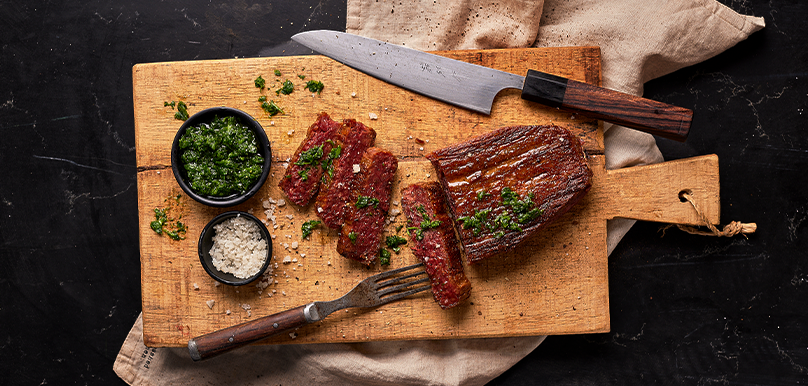 Redefine Meat’s 3D printed alternative meat product. Image courtesy of Redefine Meat. SavorEatBy now, it’s pretty clear that most 3D printed artificial meat businesses are emerging in Israel, so it’s no surprise that SavorEat would also be a local alternative. Recreating the unique experience, taste, and texture of meat without a single animal in sight, SavorEat uses a combination of a revolutionary chef robot, proprietary 3D printing technology, and unique non-GMO plant-based ingredients. With SavorEat's solutions, a patent plant-based formula is used to manufacture food that mimics real meat, with the possibility of expanding the solution to other foods, including seafood. SavorEat's meat is manufactured automatically and autonomously by a "robot chef," eliminating the chance of contamination through human touch. In addition, it personalizes or adapts the food to individual personal or health preferences. The customized aspect of the business is probably what sets it apart from the competition. The fully-automated technology also opens up the possibility of ready-to-eat highly-customized meat at the push of a button at home or in entirely-digital restaurants without humans operating them. The startup is currently pursuing a B2B-only approach initially (targeting restaurant chains) and is looking to test its technology at one of Israel's biggest burger chains, Burgus Burger Bar, with plans to commercialize it in the next two years. 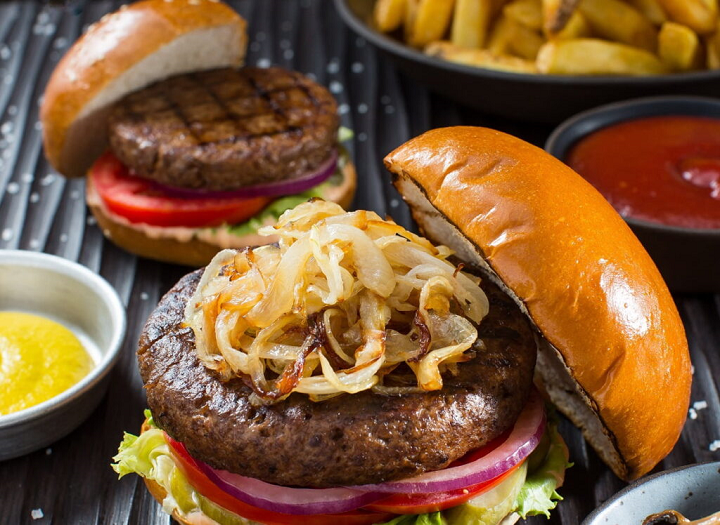 A plant-based burger from SavorEat. Solar FoodsFinish company Solar Foods has devised an entirely new way to make food. A spinout of the VTT Technical Research Centre of Finland and Lappeenranta-Lahti University of Technology (LUT University), Solar Foods produces a proprietary single-cell protein called Solein using just air and electricity. This revolutionary way to make a natural protein leads to food that is natural, can taste like anything, and unlike any other food, is not limited to the availability of land or the use of animals, agriculture, and aquaculture. Solein is produced by placing living microbes in liquid and feeding them carbon dioxide and hydrogen bubbles, which have been released from water by means of electricity. Then these microbes create protein, which is dried to make the powder. Finally, using 3D printing, the company gives texture to the powder to make any food product, including meat substitutes. Relying on a bioprocess that is ten times more efficient than photosynthesis and an estimated 100 to 300 times more sustainable than meat production, Solar Foods could have a powerful impact on the planet. 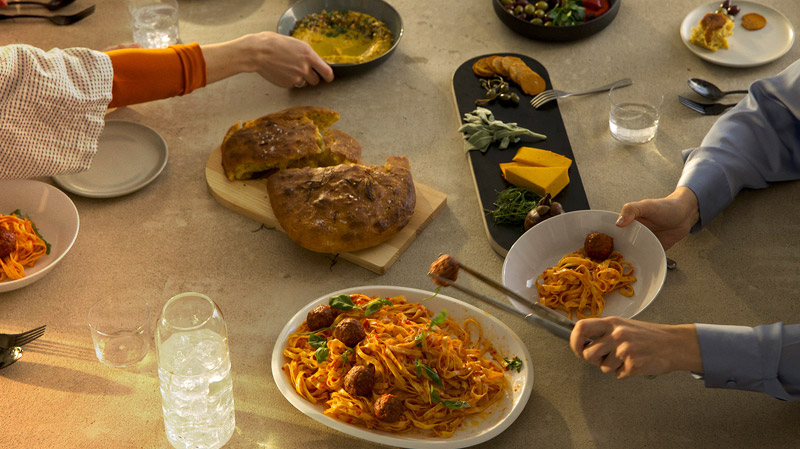 Solar Foods sustainable protein source. Image courtesy of Solar Foods. Revo FoodsPreviously known as Legendary Vish, Revo Foods is an Austrian-based developer of 3D printing technology designed to replicate the eating experience of seafood. Spinning out of a European Union-led research project, Revo was founded upon a 3D printing process initially developed for medicine. Later adapted for 3D printing plant proteins and binders into a realistic, structured form, the researchers behind the undertaking are now attempting to supply a novel option to the growing demand for plant-based seafood alternatives. Their 3D printed sustainable plant-based "fish," primarily salmon and tuna products, have already been tested by hundreds of people. The first products to hit the market in the summer of 2021 were smoked salmon strips and a creamy smoked salmon spread. However, the team is also focusing efforts on developing salmon and tuna sashimi, which is expected to be available in Austria before expanding to other European markets. The post 7 3D Printed Veggie Meats Rebuilding the Meat Industry appeared first on 3DPrint.com | The Voice of 3D Printing / Additive Manufacturing. |
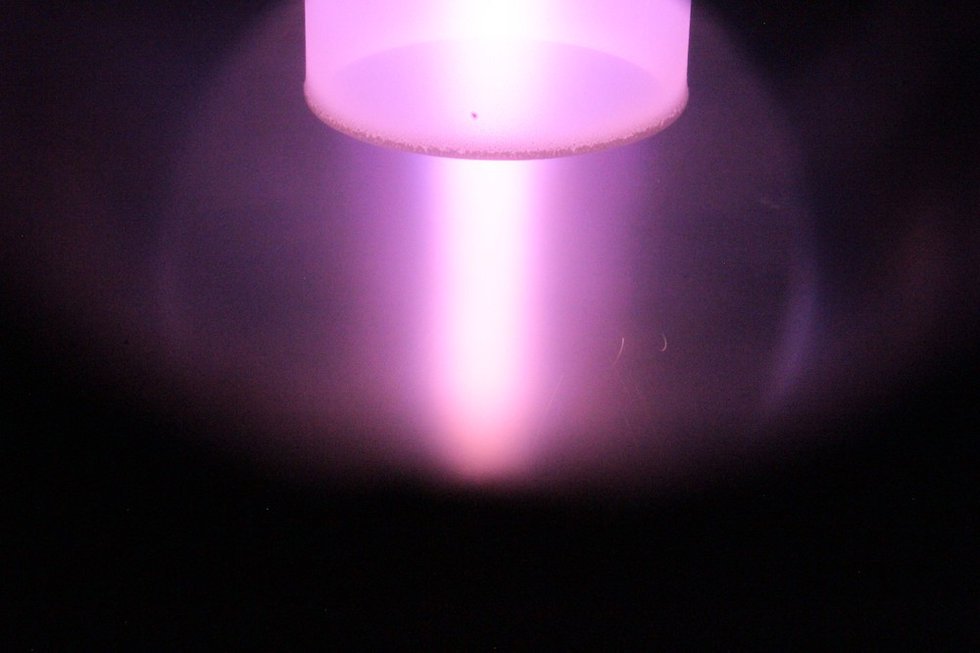
| Metal 3D Printing Powder Process from 6K Emits Less CO2 by up to 92 Percent Posted: 22 Apr 2022 05:30 AM PDT Massachusetts-based 6K has promoted the environmentally friendly nature of its metal production process, UniMelt. Now, the startup is backing up its claims with hard data. The results of an independent lifecycle assessment (LCA) by Foresight Management has shown that, when producing nickel powders, UniMelt requires 91 percent less energy and emitted 92 percent less CO2 than traditional powder making processes. 6K Additive is the 3D printing materials wing of 6K, which also develops materials for energy storage. These seem like disparate divisions, but due the potential crossover between additive manufacturing and battery production, they may not be as divided as they might seem. Regardless of any overlap, however, the UniMelt process is described as less energy intensive and, therefore, less carbon intensive for producing metals for both applications. The system uses a microwave production-scale plasma process to generate metal powders in less than two seconds. This includes nickel 718/625, titanium64 grade 5/23, copper 18450/GRCop, stainless steel 316/17-4, and refractories such as tungsten and tantalum. Now, sustainability and energy firm Foresight Management has validated 6K's technology. The Grand Rapids, Michigan-based company performs LCAs on products to determine their impacts on the global ecosystem. To do so, Foresight relies on primary and secondary data along with GaBi brand LCA software, resulting in data related to the environmental impact of sourcing, refining, and processing. The firm determined that, in its processing of nickel and titanium, UniMelt is significantly less harmful than other methods for producing metal powders, including gas atomization and other forms of plasma atomization.
This is a crucial breakthrough in the world of material processing at a time when resource use most needs to be limited. Numerous sources have concluded that we have less than 10 years to cut greenhouse gas emissions by at least 45 percent, while intensive agriculture and habitat destruction has resulted in biodiversity loss at a rate of 100 to 1,000 times that of the background late. These dual threats would result in total ecosystem collapse for the planet. Meanwhile, humanity has essentially reached peak resource use. 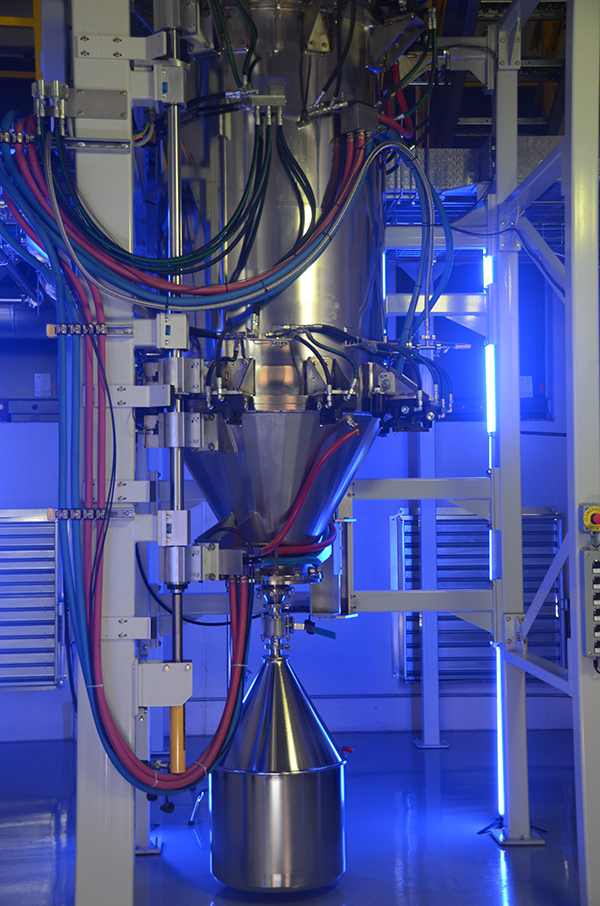 The 6K UniMelt system. Image courtesy of 6K. It is therefore admirable that 6K has developed such a process, but what makes it all the more exciting is the possibility that UniMelt could be used to recycle existing metal parts. In 2020, the company was awarded a Phase II SBIR grant from the Defense Logistics Agency to recycle scrap metal into quality powders. If such initiatives could be expanded more significantly, it could be possible to reverse some of the damage done to the planet while still maintaining some semblance post-industrial life. 6K will link to the LCA report in the near future. In the meantime, potential partners wishing to learn more about UniMelt can visit the company's website. The post Metal 3D Printing Powder Process from 6K Emits Less CO2 by up to 92 Percent appeared first on 3DPrint.com | The Voice of 3D Printing / Additive Manufacturing. |
| Massivit 3D Launches Massivit 10000 3D Printing Tooling System Posted: 22 Apr 2022 05:00 AM PDT Large-scale 3D printer provider Massivit 3D Printing Technologies Ltd. (Tel Aviv Stock Exchange: MSVT) announced that it will be officially launching its most recent printer, the Massivit 10000 additive manufacturing tooling system, at the Paris-based JEC World 2022 event. The already award-winning system was first introduced last year, and features the company’s Cast-In-Motion technology. It was created to overhaul composite materials manufacturing by using automation to get past the common tooling bottlenecks and speed up the process. The Massivit 10000 also represents a major company milestone, as it is the start of a new composites product line.
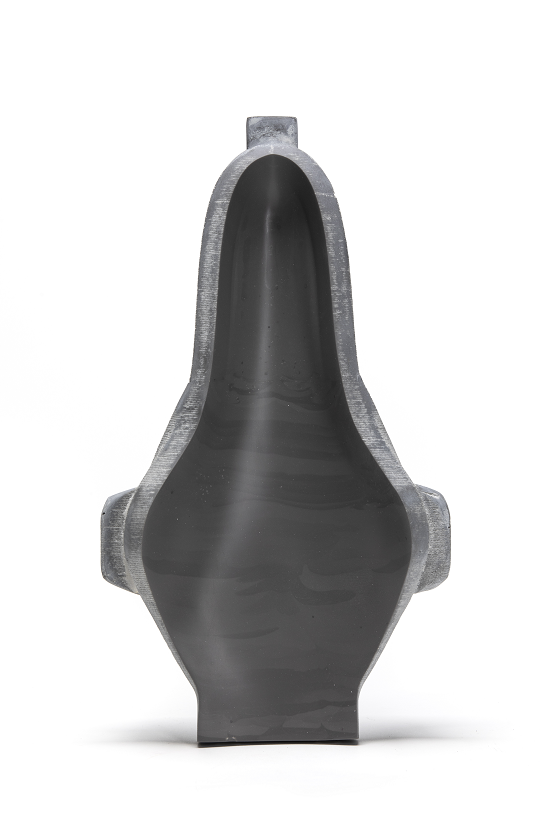
Most traditional composites tooling processes require manual skilled labor, and can also be wasteful, expensive, and slow. The Massivit 10000 makes the process faster by using the company’s second-generation Cast-In-Motion technology, which is based on its high-speed Gel Dispensing Printing for large-scale printing. 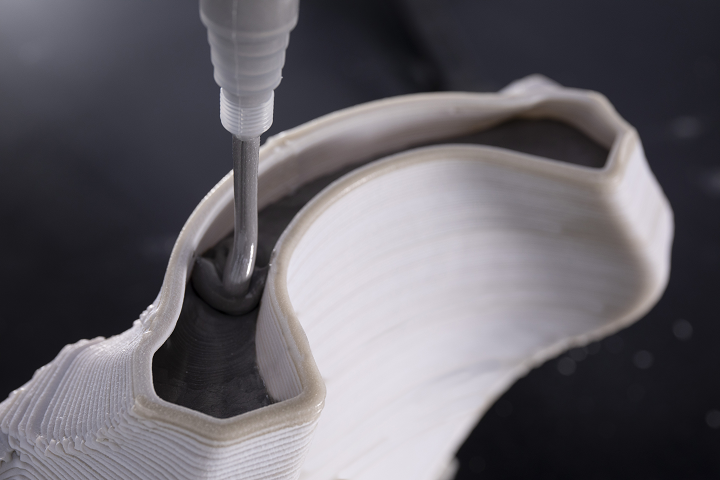 Casting between sacrificial walls Massivit 3D’s Cast-In-Motion process makes it possible to directly 3D print complicated molds, mandrels, masters, and prototypes. Additionally, users that fabricate composites can use the technology to majorly decrease their tooling workflows from 19 steps to four. That’s because the Massivit 10000 doesn’t require you to manufacture an initial master or plug. Instead, it uses industrial-grade casting materials to directly print and cast the mold at high speeds. This Cast-In-Motion technology is meant to be used in a wide variety of industries, such as aerospace, automotive, defense, rail, marine, sporting goods, and furniture. Massivit 3D says the process offers digital accuracy and freedom of geometry to create efficient designs, and also offers several other benefits as well. For instance, it’s said to shorten tooling time by 80%, reduce labor-associated costs by 90%, majorly decrease expensive material waste, and reduce manual labor and associated inventory and transportation. The new Massivit 10000 additive tooling system, according to the company, also brings the “first 3D printed isotropic mold for composites manufacturing” to market. The large-scale machine uses high-performance thermoset-based materials, instead of current thermoplastic additive tooling systems, to fabricate one uniform cast, the result of which is an isotropic mold. Additionally, the casting materials it uses are said to have a low coefficient of thermal expansion, predictable thermal and mechanical properties, and a high heat deflection temperature.
As of now, 17 preorders have already been made for the Massivit 10000, including beta agreements with US-based luxury bath ware specialists Lyons and Israel-based company Kanfit, which manufactures composite material parts for the global aviation market. At JEC World, from May 3-5, visitors can reserve a live demonstration of the new Massivit 10000 at the company’s stand in Hall 5, M46, and also see a variety of molds and parts printed on the system. Visitors will also have the chance to preorder the Massivit 10000 for a limited time. To learn more, visit the Massivit 3D stand at 3 pm on Tuesday, May 3rd for a press conference. Massivit 3D plans to deliver the systems to customers starting in Q2 of this year. The post Massivit 3D Launches Massivit 10000 3D Printing Tooling System appeared first on 3DPrint.com | The Voice of 3D Printing / Additive Manufacturing. |
| Ultimaker’s Latest Cura Update is a Huge Step Forward for User Control Posted: 21 Apr 2022 07:00 AM PDT Ultimaker has just announced the release of the beta version for Cura 5.0, the latest edition of its widely-used, open-source slicing software. The company revealed the new upgrade at this year's Ultimaker Showcase, and is touting Cura 5.0 as “the biggest leap forward in print quality that the software has ever seen." Ultimaker specializes in fused filament fabrication (FFF) technology, and makes some of the world's most popular desktop 3D-printers, including the Ultimaker 2+. The prevalence of its products, combined with an open-source — and free — operating system, attribute a significance to Ultimaker's actions that goes far beyond the scope of just one company. In other words, the changes Ultimaker effects can surely be expected to change the industry, as a whole. In this vein, the biggest upgrade ushered in by Cura 5.0 involves the user's ability to control the line width of 3D models. On its face this may sound like a minor tweak, but in practice, it in fact addresses a highly significant limitation to FFF 3D-printers. Without this capability, users can only change the line width of FFF prints by changing the print head nozzle, yielding a print with identical line widths across the object's entirety. The main obstacle this presents for the user is that, if a portion of the print is designed to be two-and-a-half lines thick, only two lines are printed. A small empty space, representing the remaining half-a-line, is left in the middle of the two lines. Thus, any attempt to create details between the one-line thresholds can only be achieved by leaving gaps in the final product.  As a result, one of the biggest advantages to the increase in user control — and decrease in gaps — that Cura 5.0 facilitates is a stronger end-product. As Steve Cox, an engineer and 3D printing consultant who has already used this latest Cura update puts it, "…fewer limitations have to be considered in CAD, so the software is less of a limiting factor towards the end result. Thin walls, and the kind of small design features that are often featured in injection molded parts, are created much more efficiently…" 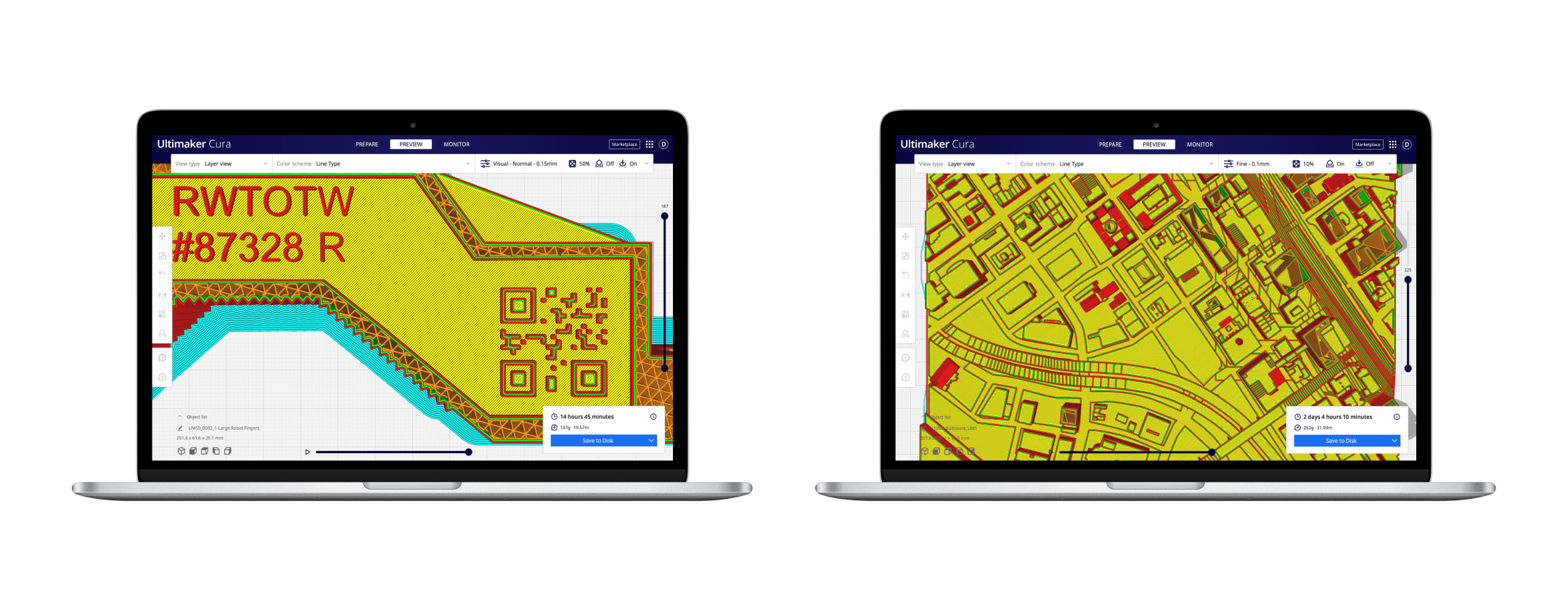 Other features of the newest update mostly entail similar, gradual improvements that have been part of previous updates. These include an improved user interface, faster print profiles for users of Ultimaker printers (yielding print time reductions of up to 20%), and better integration between Cura and Ultimaker Marketplace — a sort of app store where users can get continuously updated plug-ins for the Cura software. Finally, one additional, novel feature of Cura 5.0, is that it has been designed specifically with products that use Apple M1 chips in mind. However, the biggest improvement is variable line width. The aforementioned special influence Ultimaker has in the industry, if only due to its being so pervasive, will be proven by how quickly this feature spreads to other FFF operating systems and machines. Moreover, it's likely that this initial step will have a ripple effect on the evolution of printer head control in the sector. Images courtesy of Ultimaker The post Ultimaker’s Latest Cura Update is a Huge Step Forward for User Control appeared first on 3DPrint.com | The Voice of 3D Printing / Additive Manufacturing. |
| Bound Metal 3D Printing to Make $54B in Metal Parts through 2030 Posted: 21 Apr 2022 06:00 AM PDT SmarTech Analysis has released the latest edition of its report on bound metal 3D printing. Dubbed "Bound Metal & Metal Binder Jetting AM 2022," the report projects that metal binder jetting and bound metal extrusion technologies will produce $54 billion in parts through 2030. The report tracks a segment that SmarTech describes as "evolving at a pace faster than any other technical 3D printing segment, even exceeding that of the incumbent and more widely adopted metal powder bed fusion sector." This is reflected in the numerous companies that have entered the space, ranging from established industrial firms, like ExOne/Desktop Metal, to low-cost extrusion manufacturers, such as 3DGence. 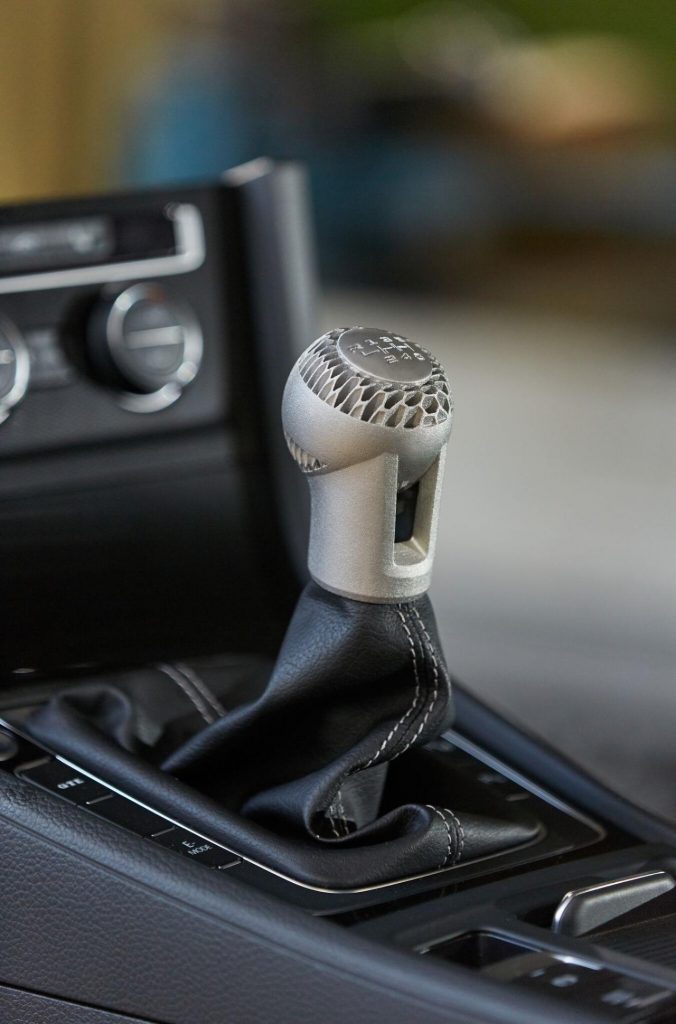 A 3D printed gearshift knob that VW revealed with the unveiling of MetalJet in 2018. Image courtesy of HP. SmarTech looks at the sector from its roots, with the invention of metal binder jetting by ExOne, and continues to present day, projecting into the future. While ExOne previously required the secondary infiltration of metal binder jet parts, typically one-off components or short runs. As a result, binder jetting suffered from less market adoption and growth. More recently, however, the technology has received renewed interest as a result of new players, like HP, Desktop Metal, and GE.
The study analyzes the roles of the most important companies in the segment as they attempt to confront the casting industry. This is a significant development, as these technologies were previously targeted toward metal injection molding (MIM) suppliers. Names discussed in the report include: Desktop Metal, MarkForged, GE Additive, ExOne, HP Inc., Xerion, Smith Metal Products, IndoMIM, Digital Metal, Hoganas, GKN Powder Metallurgy, Triditive, Ipsen USA, Elnik Systems, Abbot, SECO Warwick, FreeFORM Technologies, Riven, Hexagon, MSC, and more. The market research company notes that metal 3D printing is sold for the unique value it can provide a specific application. This includes bound metal AM. SmarTech suggests that much of what is holding back binder jetting in particular is the perception of its capabilities. To do away with those preconceptions, power users could advertise their use cases for production parts. This is one major take away from the report and we've already seen that the public teasing of mass binder jet usage by Volkswagen and Ford have generated a great deal of press. 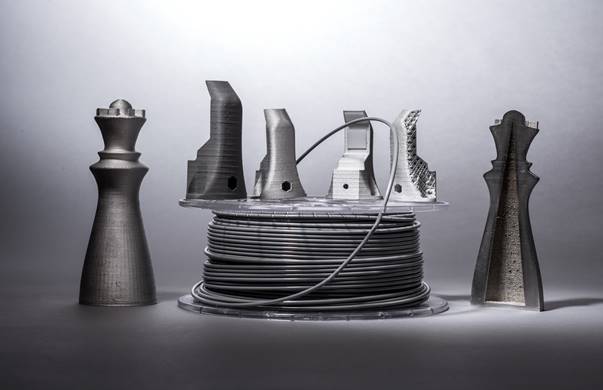 BASF's Ultrafuse 316L – Metal filament for 3D printing stainless steel parts Meanwhile, bound metal extrusion is also extremely promising. Still new, it hasn't picked up the steam that it will. So far, Desktop Metal and Markforged make equipment dedicated to this process, while BASF and The Virtual Foundry produce bound metal filaments for use with standard desktop 3D printers. In general, these may be used to prototype metal parts, but there could be strong potential to manufacture end parts in large batches with printer farms. The entire bound metal segment is an exciting one, due to its low cost and we have yet to see its full potential. SmarTech describes this as "the first full featured market study specific to bound metal additive manufacturing processes." It combines both a broad database of market forecast data and an extensive analysis of the current innovators, strategic considerations, and the key applications and adopters of the technology. To learn more or to purchase the study, visit the SmarTech report page here. The post Bound Metal 3D Printing to Make $54B in Metal Parts through 2030 appeared first on 3DPrint.com | The Voice of 3D Printing / Additive Manufacturing. |
| Nano Dimension’s Electronics 3D Printing HQ in US Moves to Massachusetts Posted: 21 Apr 2022 05:30 AM PDT Recently, I had the opportunity to visit the Israeli headquarters of printed circuit board (PCB) leader Nano Dimension (Nasdaq: NNDM), which specializes in Additively Manufactured Electronics (AME), micro additive manufacturing, Printed Electronics (PE), and High-Performance Electronic Devices (Hi-PEDs). The company has now announced the opening of its new US headquarters in Waltham, Massachusetts, located in the Boston metropolitan area. This relocation to an area much closer to several strategic R&D institutions is part of Nano Dimension’s business plan.
As Hanan Gino, CPO and Head of Strategic M&A at Nano Dimension, told me, the company wants to “revolutionize the electronics industry.” The best way to do this is by partnering with and acquiring companies that can help it reach this goal. Nano Dimension is working off a technology roadmap that will progress a new production model for 3D printed electronic (and other) devices through advanced materials, 3D printing, deep learning AI, and integrated surface mount technology (SMT). The production model will allow for self-improving, intelligent automation and processes that are more environmentally friendly and secure. Nano Dimension looks for companies in materials development, equipment vendors in its chosen sector, and, as Gino said, “companies who will give us the presence in the right market,” as well as those with complementary technology to its own AME solution. With its US headquarters relocating to the Boston area, the company is well-positioned near academic and research institutions, like Harvard, MIT, and Boston University, that have already adopted its AME, Micro-AM, and PE solutions. The new facility is also near several R&D labs and more public and private universities as well, which means Nano Dimension is also close to an extremely high-tech talent pool. 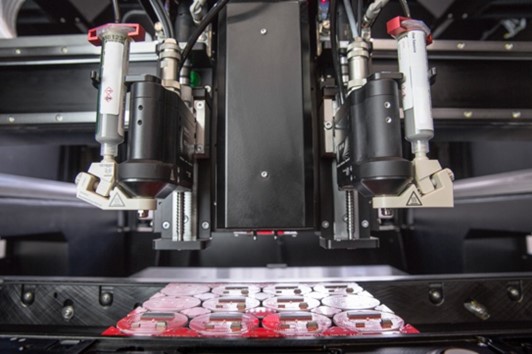 3D printing electronics. Image courtesy of Nano Dimension.
Nano Dimension’s new headquarters will feature customer support and fabrication facilities, which can be used to support its AME Academy events and other local organizations. The facility will also house increased sales operations. To help lead the way in its new home, Nano Dimension has welcomed PCB marketplace veteran Gene Howard Weiner, through his Massachusetts firm Weiner International Associates, as a consultant. Additionally, the new AME Standards Manager in the company’s US home is Dana Korf, Principal Consultant at Korf Consultancy.
Nano Dimension will keep its marketing, sales support, NaNoS printing services and logistics center open in Sunrise, Florida. The company plans to host an official open house for its new Massachusetts office later this summer, though current and prospective customers can come visit by appointment. The post Nano Dimension’s Electronics 3D Printing HQ in US Moves to Massachusetts appeared first on 3DPrint.com | The Voice of 3D Printing / Additive Manufacturing. |
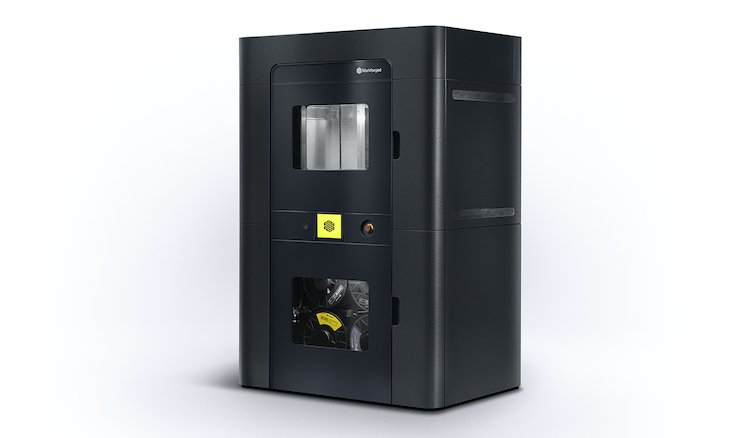
| Markforged’s Larger, Faster 3D Printer Lands with First Customer, Phillips Corporation Posted: 21 Apr 2022 05:00 AM PDT It's been a little under a year since Markforged announced the latest update to its continuous composite 3D printer line, the FX20. The system was described as the largest, quickest, and "most sophisticated" 3D printer yet produced by the company. The systems are now shipping and the first unit has landed with its first customer, Phillips Corporation. Maryland-based Phillips Corporation is a manufacturing services company that supplies a variety of production technologies. More recently, this has come to include a growing additive division that includes the sale of EOS metal 3D printers and Markforged equipment. As a Haas distributor, it also partnered with Haas and Meltio, to develop a hybrid directed energy deposition and CNC machine platform. Additionally, Phillips Corporation's is involved in a number of projects with the U.S. Department of Defense. 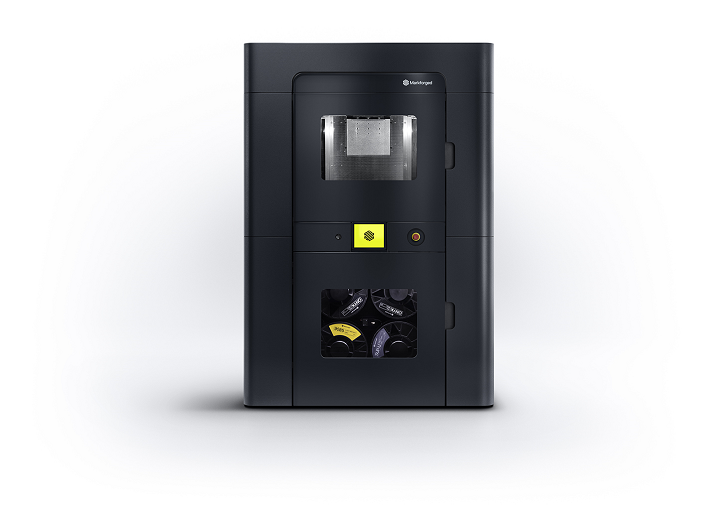 The FX20 3D printer by Markforged The FX20 expands Phillips Corporation's existing Markforged portfolio, which already includes its various composite and metal extrusion systems. It is five times larger than preceding composite 3D printers from the company, with a build volume of 525 mm x 400 mm x 400 mm. It is also eight times faster and extra-large spools make it possible to 3D print with four times the material without spool changeover. Additionally, the system can 3D print with high-temperature filament, specifically UTLEM 9085. This SABIC brand of PEI features high strength and resistance to extreme heats and chemicals, making it ideal for oil and gas. Its qualification for aerospace, however, makes it the additive polymer of choice for aerospace applications. This pairs with flame retardant carbon fiber reinforcement from Markforged so that durable parts can be 3D printed for use in aircraft interiors. While Markforged more or less invented 3D printing with continuous carbon fiber reinforcement, newer firms have since released their own versions of the technology. This duo of materials allows Markforged to remain competitive with the more recent market entrants. 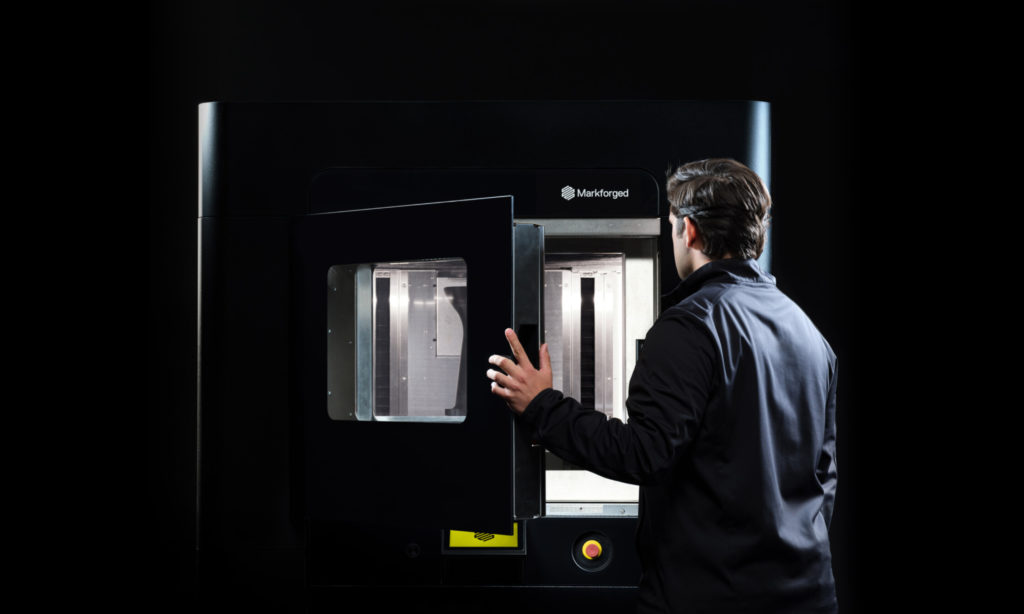 Markforged FX20 3D printer. Image courtesy of Markforged. To provide potential customers with a taste of the FX20 experience, Phillips Corporation is inviting manufacturers to see the system at its showroom in Colfax, North Carolina. The post Markforged's Larger, Faster 3D Printer Lands with First Customer, Phillips Corporation appeared first on 3DPrint.com | The Voice of 3D Printing / Additive Manufacturing. |
| Next Generation Flashforge Adventurer 4 3D Printer Hits North American Market Posted: 21 Apr 2022 04:30 AM PDT Nearly two and a half years after the initial release of the popular Adventurer 3, Flashforge has come out with a refresh that offers several upgrades to improves the printing experience and capabilities. Touted as the next generation in the Adventurer series lineup, Adventurer 4 boasts features at the mid-tiered price point that will give users their money's worth, such as an auto-leveling print bed, a much larger build area, and an extruder that can use a variety of materials. A versatile machine that caters to a broad audience baseFlashforge is a global 3D printer brand and one of the pioneers of bringing 3D printing to consumers through its printer quality and price. Founded in 2011, Flashforge first offered 3D printers to at-home hobbyists and tinkers and has since expanded its footprint to provide printers for businesses, schools, and even the government.
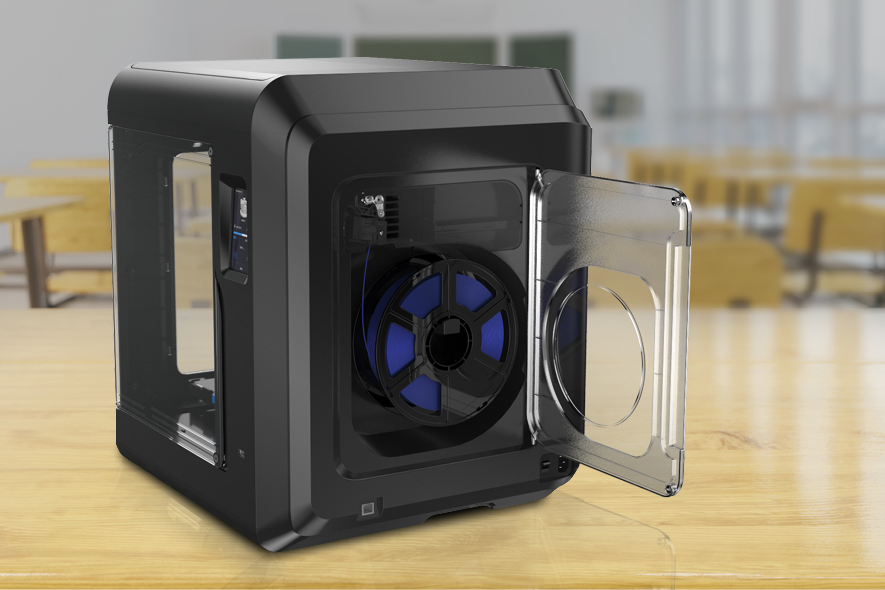
Adventurer 4 is an all-around printer aimed at a broad user base. Beginners can tap into the world of 3D printing right out of the box, and as printing skills grow, Adventurer 4 is able to accommodate more advanced print jobs also. It is also just as capable being used in business environments for applications such as prototyping, production lines, and more. Flashforge USA partnered with Layerbylayer to provide a 3D printing curriculum bundle, so schools can leverage Adventurer 4 to provide 3D printing lessons in classrooms. More than a good-looking machineFlashforge has kept its design cue the same for the most part. On the outside, Adventurer 4 can easily be identified as part of the Adventurer series lineup. Those coming from the previous generation will find a much larger footprint that extends to the build chamber as well. At 220 x 200 x 250mm (8.7 x 7.9 x 9.8 in), Adventurer 4 has a build volume that is over 2x its predecessor. Inside the chamber, there is a HEPA 13H air filter that can effectively eliminate 99% of TVOC powder and activated carbon filter odor. It is also fully enclosed with a see-through door in the front. Removing the side panel reveals the filament tray that can accommodate 1kg spool.
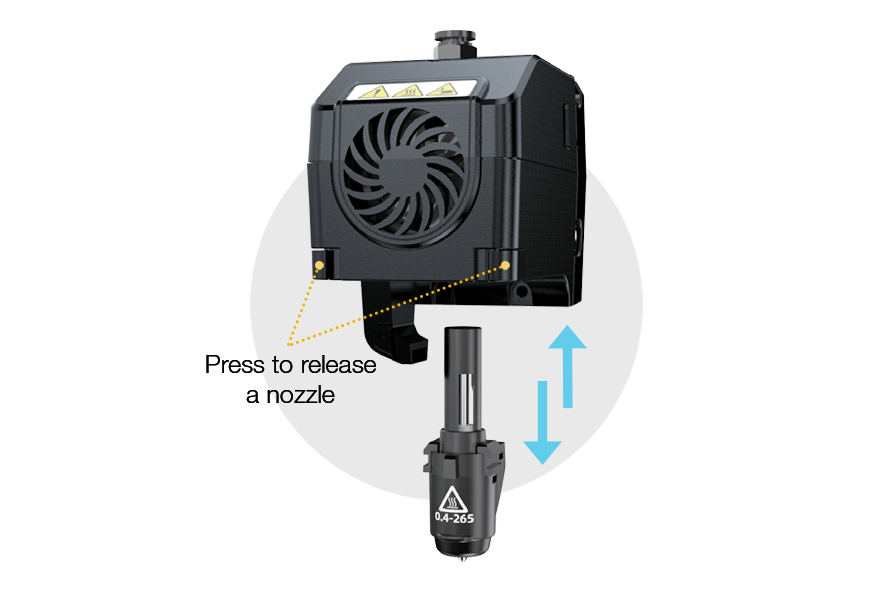
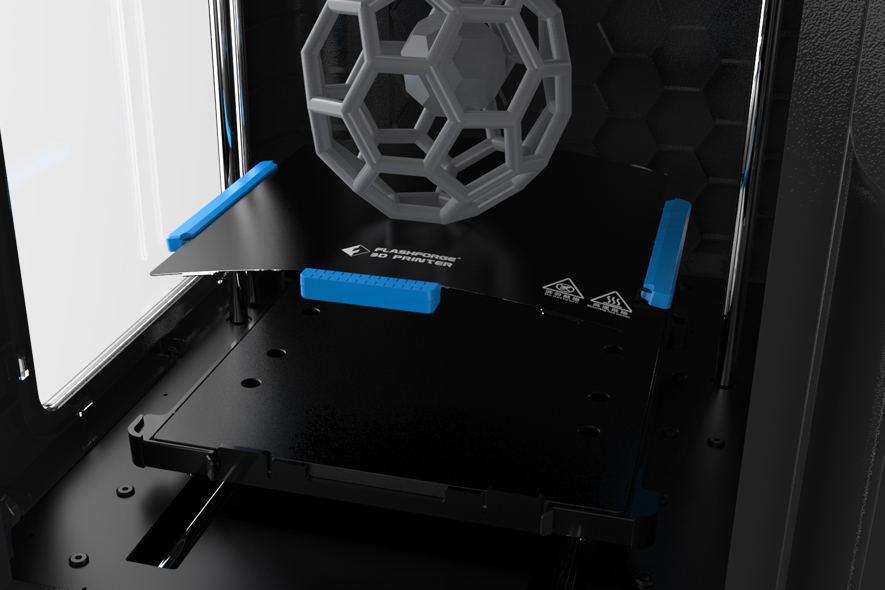
Based on FFF (fused filament fabrication) technology, Adventurer 4 uses filament extrusion method to print objects. It can use a variety of materials ranging from the standard ABS, PLA, PETG to PC, PLA-CF, PETG-CF, ASA, and more. Depending on the filament used, extrusion temperature will need to vary. Adventurer 4's versatile single extruder has a maximum temperature of 265°C (509°F) and uses a patented buckle design that allows users to quickly swap between different Flashforge nozzles. In addition, the nozzle can reach 200°C (392°F) in just 60 seconds, saving users time between prints. An intelligent self-leveling platformFlashforge Adventurer 4 is one of the few printers on the market that offers true auto-leveling print bed. Compared to manual or assisted bed leveling, time is saved from having to align the bed. The flexible magnetic plate can also heat up to 110°C (230°F) to accommodate different types of filament.
Other notable featuresAdventurer 4 uses the latest FlashPrint software from Flashforge. The printer can be monitored remotely through FlashPrint and the build-in camera. Multiple printers can also be connected to form a production line. Adventurer 4 also features filament run out detection and resume print from power outages, so print jobs will not be interrupted. Technical specificationPrint Technology FFF (Fused Filament Fabrication) Number of extruders 1 Print volume 220 x 200 x 250 mm (8.7 x 7.9 x 9.8 in) Printer Dimension 500(L) x 470(W) x 540(H) mm, (19.7 x 18.5 x 21.3 in) Connectivity USB, Wi-Fi, Ethernet, and Cloud Printing Adventurer 4 is available today and can be purchased directly from Flashforge USA with fast delivery from its facility in Southern California. The post Next Generation Flashforge Adventurer 4 3D Printer Hits North American Market appeared first on 3DPrint.com | The Voice of 3D Printing / Additive Manufacturing. |
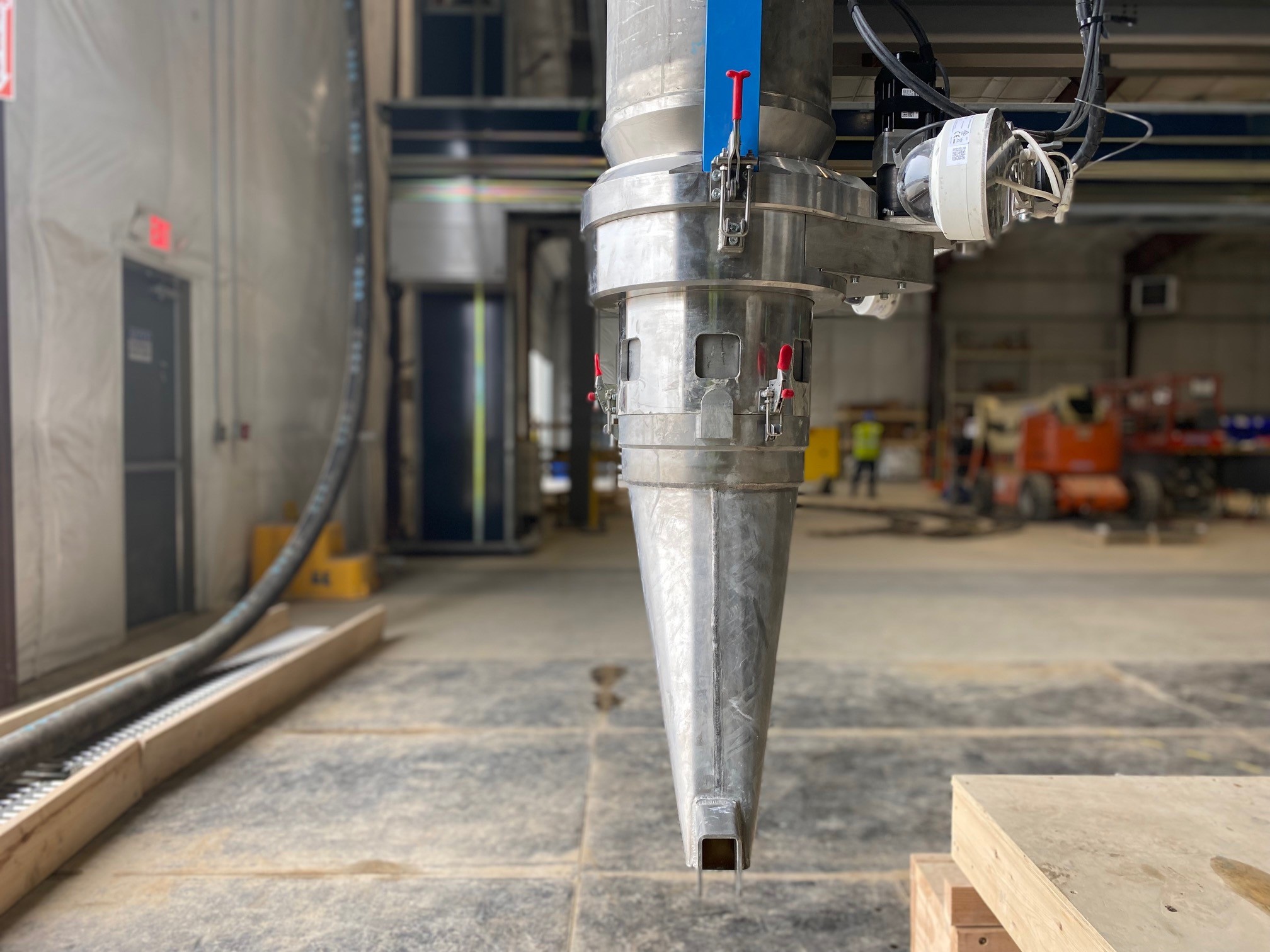 Image courtesy of GE Renewable Energy
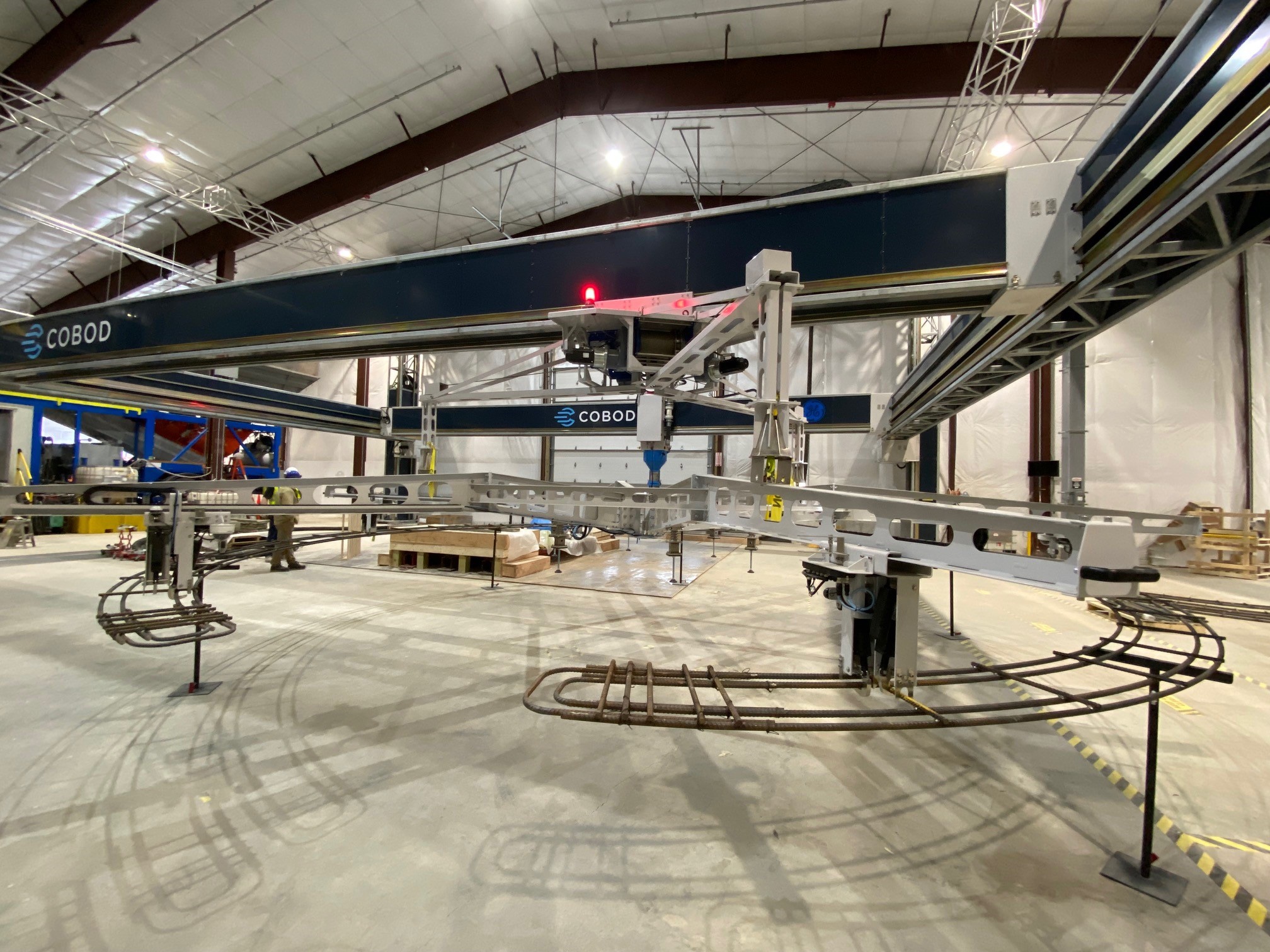 Image courtesy of GE Renewable Energy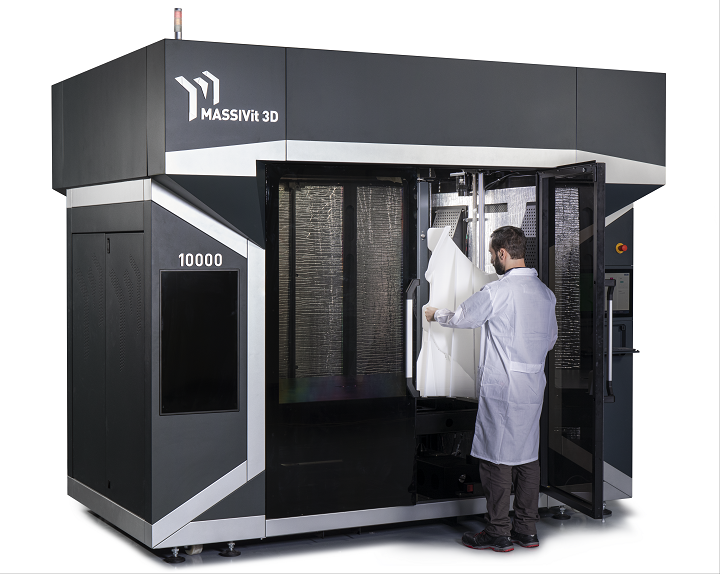



| You are subscribed to email updates from 3DPrint.com | The Voice of 3D Printing / Additive Manufacturing. To stop receiving these emails, you may unsubscribe now. | Email delivery powered by Google |
| Google, 1600 Amphitheatre Parkway, Mountain View, CA 94043, United States | |





 Image courtesy of Spare Parts 3D