Thursday, June 9, 2022

3DPrint.com | The Voice of 3D Printing / Additive Manufacturing

3DPrint.com | The Voice of 3D Printing / Additive Manufacturing


1st Inkbit Vista 3D Printer Operational at Saint-Gobain Research North America

Posted: 08 Jun 2022 06:30 AM PDT

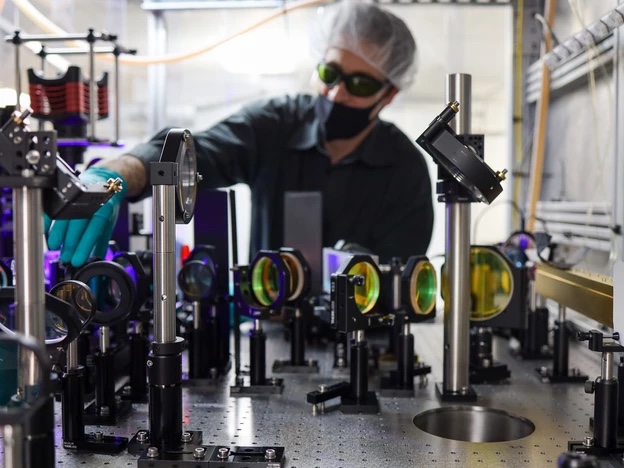
Marking the finish line of a marathon lasting the better part of a decade, Medford, MA-based 3D printer startup Inkbit has announced that the first commercial Vista printer to be installed is now operational. Inkbit's inaugural customer is Saint-Gobain, the French manufacturing conglomerate. The company is deploying the Vista at Saint-Gobain Research North America, in Northboro, MA (the Boston metropolitan area).

A spinoff of the MIT Computer Science and Artificial Intelligence Laboratory (CSAIL), Inkbit was co-founded by two MIT engineers: Davide Marini, who is now the company's CEO, and Wojciech Matusik, the company's CTO. With this background in mind, it's unsurprising that Inkbit would design a product that represents a new threshold being crossed in the history of 3D printing. Specifically, the Vista is the first commercially available 3D printer utilizing machine vision to achieve real-time feedback control.

In a press release, Marini commented, "This is an important milestone for Inkbit: an idea conceived in an academic laboratory at MIT is now a commercial manufacturing system operating outside our building. We are thrilled to be working with Saint-Gobain at exploring novel applications of our technology."

Saint-Gobain is among the oldest companies in the world, one of well under 1,000 on the planet founded before the 17th century that's still continuously operating. It's perhaps thanks to its willingness to innovate that it's still thriving. Recently, Saint-Gobain released an analysis about the promising results possible with additive manufacturing (AM) techniques at its Barcelona Sekurit automotive glass plant.

Saint-Gobain found that by adopting AM in its production line, it was able to save $182,000 and reduce lead times required for tooling by 93%. In the post about that report, I wrote, "When you start to consider the possibilities for Saint-Gobain increasing the number of AM applications it employs, as well as its incorporation of AM in additional divisions beyond Sekurit, the potential for significant long-term cost reduction becomes clear." Additionally, the company has become increasingly involved in additive construction. Adding machine learning and AI to that foundation, on top of what it has already done with AM, illustrates how serious Saint-Gobain is about the role of the technology in its future.

Thus, Inkbit’s first customer is a keen one. The fact that the Vista is already capable of volume production means that Saint-Gobain has moved past merely testing how it wants to use AM, and has moved onto the phase of testing how it can create entire alternative digital supply chains that are automated from top-to-bottom (or if you prefer, "end-to-end"). The entire industry, as well as any sector banking on the future of AM, will be watching closely what's done with the Vistas sold in the first year of the machine's availability. It's likely that AM will only scale up once the precedent for automation that Vista has set becomes commonplace.

The post 1st Inkbit Vista 3D Printer Operational at Saint-Gobain Research North America appeared first on 3DPrint.com | The Voice of 3D Printing / Additive Manufacturing.

3D Printing News Briefs, June 8, 2022: Clear Aligners, Standards, & More

Posted: 08 Jun 2022 06:00 AM PDT

In 3D Printing News Briefs today, we’re discussing software first, as Arburg says its Freeformer software speeds up 3D printing by up to 55%. Then, Prodways Group announced that a major industrial project is accelerating with new orders for its 3D printers and materials. A new ASTM standard provides powder bed fusion design guidance for metal 3D printing. Finally, TU Delft researchers are working on the optimal design of 3D micro-architected implants.

Arburg’s Freeformer Software Speeds Up 3D Printing

Applying support materials in a grid structure allows complex geometries to be achieved with a short build time. This example shows an S-shaped pipe made from white PP with Armat 12 as the support material.

At the recent RAPID + TCT, Arburg demonstrated its updated software solution, which can speed up 3D printing time on its Freeformer by more than 50%. The software enables water-soluble Armat support materials for application in a lattice or grid structure optimized for its Arburg Plastic Freeforming (APF) technology. It speeds up print times for complex components, reduces the consumption of support materials, and negates manual finishing, since the supports can just be washed out. Arburg worked with established material partners and universities to develop its new water-soluble support material, which comes in two grades: Armat 11 for standard materials like ABS, and Armat 12 for polypropylene (PP).

Using its optimized software, the Freeformer lays down the support materials to build up a lightweight lattice or grid with tiny air pockets, and because it’s only about 20% solid, it can be formed much more quickly. Pair this with the water-soluble Armat support materials, and the printing time—along with material costs—goes way down. Arburg demonstrated how its Freeformer software speeds up 3D printing by fabricating an S-shaped pipe out of PP and Armat 12 at the RAPID show. The optimized grid structure required internal support, but the print time was reduced by about 50% in comparison to a fully solid structure.

Prodways Group Announces Orders for 3D Printers & Materials

At the end of 2021, Prodways Group landed a major industrial project from a worldwide leader in medical and dental products distribution, which generated an order for eight of its MovingLight 3D printers to mass produce clear aligners. Now, the company announced that its customer, which manufactures more than 1.5 million clear aligner parts a year, is accelerating the project, and has ordered six additional LD20 3D printers, scheduled to be delivered this month and next. This brings the customer’s installed global base of Prodways Group printers to 14.

The six additional 3D printers aren’t the only thing the client ordered, however: Prodways Group also received large orders of its high-performance PLASTCure Absolute Aligner liquid resin from this customer as well. The company had already delivered eight tons of this material to the client since the beginning of 2022, and will now provide it with an additional ten tons of resin for 3D printing clear aligners. With 14 MovingLight LD20 3D printers, the customer could consume nearly 20 tons of resin a year, and as the project continues to develop, even more 3D printer and resin orders could be coming for Prodways Group.

New ASTM Standard for Metal PBF Design

ASTM International recently announced a new standard, which will offer advice to designers and engineers who are thinking about using powder bed fusion (PBF) technology to 3D print metal parts. The standard, which will soon be published as F3530, was developed by ASTM’s F42 Committee on Additive Manufacturing. The new guidance will offer an overview of common post-processing operations for PBF 3D printing, difficulties in completing these operations, and the best ways to address the challenges. According to ASTM International member Farhan Khan, managers and other decision-makers considering the use of PBF 3D printing will also benefit from new standard F3530.

“In spite of the rapidly growing interest from the industry in laser powder-bed fusion for metals (PBF-LB), there is a lack of guidance on how and why post-processing is carried out leading to inefficient designs, expensive post-processing, high non-conformity, and scrap rates. This standard provides specific guidance on how to design a component to ensure it can be effectively post-processed for operations such as powder removal, thermal post-processing, build plate removal, support removal, machining, and surface finishing,” Khan said.

Optimizing Design of 3D Micro-Architected Implants

Figure 10. The design and performance of (a) solid, (b) uniform lattice, (c) optimized heterogeneous lattice titanium implants in terms of local bone remodelling and the Hoffman interface stress risk indices.

A trio of researchers from TU Delft recently published a paper on their work to optimize the design of 3D micro-architected implants, which resulted in computational methods for designing orthopaedic hip implant stems to make them last longer. These types of devices are often made out of solid materials, and can majorly change load transmission to surrounding bone tissue, which can lead to issues such as bone resorption and interface instability. The TU Delft team developed a parametric micro-architecture with good mechanical properties and functional attributes, and their computational method was used to synthesize 3D printed patient-specific implants with what they called “heterogeneous micro-architecture.” These implants consider functional constraints, in addition to lowering the risk of “load-induced interface fracture and peri-prosthetic bone remodelling.”

“The procedure is applied to the design of 3D titanium hip implants with prescribed conventional geometries and compared, in silico, to both a conventional solid implant and a homogeneous low-stiffness lattice design. The optimized implant results in a performance improvement of 64.0% in terms of bone remodelling, and 13.2% in terms of interface fracture risk, compared to a conventional solid implant design,” the abstract states.

The post 3D Printing News Briefs, June 8, 2022: Clear Aligners, Standards, & More appeared first on 3DPrint.com | The Voice of 3D Printing / Additive Manufacturing.

3D Printed Gun Arrests Tripled in Less Than Two Years – 3DPrint.com Investigates

Posted: 08 Jun 2022 05:30 AM PDT

3D printed gun violence is on the rise. Recent events, including mass shootings at an elementary school in Texas, a deadly assault at a medical facility in Oklahoma, and last year's anti-Semitic rampage at a German synagogue, led to serious concerns surrounding ghost guns, particularly 3D printed ones. Taking these events into account, as well as a cascade of 3D printed gun-related arrests worldwide, several governments are taking measures to restrict privately made firearms without serial numbers.

Specifically, Europol organized a 3D printed firearms conference in the Hague last May (the first one in Europe), while the Biden administration called for an assault weapons ban and other measures to curb gun violence. Undoubtedly, 3D printed guns or gun parts that some people choose to create at home with their machines have increased concerns that homemade 3D guns could live up to their prematurely violent reputation.

How Many People Have Been Arrested for 3D Printed Guns?

In light of these events, 3DPrint.com began exploring recent 3D printed gun incidents and confirmed that over 90 people have been arrested in the last three years. The number of arrests is higher in countries like Canada, the U.S., and Australia, representing 18%, 44%, and 17% out of total arrests, respectively. As we dive more deeply into the emerging trends, it is noticeable that North America leads the arrest statistics, followed by Europe, and then Oceania.

However, it's important to note that not every country reports all of its arrests, so there will be more than we accounted for. For example, in the U.S., arrest records are public, yet each state can determine whether they want them to be readily accessible. Even in states that consider arrest records to be public information, there may be exceptions, and some will not be released publicly. In countries like Australia, if a case attracts media attention, there is little a defendant can do to avoid the information getting published.

Because ghost guns and 3D printed guns in particular are almost impossible to trace, the job of law enforcement agencies to prosecute them is made even tougher. In the last decade, police forces found out several people were making guns at home with 3D printers as part of organized crime raids or investigations into other criminal activities. For instance, in May 2021, two men and one woman were arrested in the town of Keighley in the United Kingdom as part of an investigation into right-wing terrorism. All three were charged with possessing components of 3D printed weapons, and two were members of an online group where terror manuals and weapons guides were shared among neo-Nazis. As a result, they were all found guilty of terror offenses a year later and convicted.

3D printed gun parts.

3D printed gun parts. Image courtesy of Saskatoon Police Service.

The Era of Homemade Firearms

Ever since 2013, when gun-rights activist Cody Wilson built the Liberator, the world's first-ever 3D printed gun, he launched what would be known as an era of homemade firearms. Using a Stratasys Dimension series 3D printer purchased on eBay, the then law student spend very little money to create the gun, using metal only for the firing pin, which strikes the primer of a cartridge to ignite the charge and fire the weapon.

From the public data available, we have noted that the number of arrests has gone up significantly since 2019.  Only 15% of the total arrests for 3D printing guns occurred between 2013 and 2019. In October 2013, a man from Manchester, U.K., was arrested after police suspected he was making 3D printed components for what they called at the time "next-generation weapons." Thought to be the first-ever seizure of 3D printed gun parts in the U.K. (and most likely the world), these, along with a 3D printer, were discovered during a gang raid as part of Challenger, one of the largest multi-agency operations to target organized crime in that city.

Then, in 2014, a man was arrested in Japan for possessing 3D printed handguns, after five devices were found during a police raid on his house. The 27-year-old college employee from Kawasaki was charged for illegally possessing firearms made with 3D printers, marking the first such case in Japan, a country that takes pride in its low crime rate and has strictly regulated gun ownership.

Several cases followed, including at least five in Australia, eight in the U.S., as well as a few in Europe, including in Sweden and the U.K. But that was before 2020, when the number of arrestees began to increase from just a handful to more than a dozen. The number of arrests then doubled and tripled in 2021 and 2022 respectively, compared to the previous year.

2022: The Year of 3D Printed Gun Arrests

According to the data, 42% of all 3D printed gun-related arrests were in 2022, that’s roughly 44 people arrested. We also estimate that roughly 31% of all arrests occurred in 2021, and 12% in 2020. This jump in the number of 3D printed gun crimes detected through police activity has alerted law enforcement worldwide. During the International Conference on 3D Printed Firearms, organized by Europol and the Dutch National Police in the framework of EMPACT Firearms and hosted at the University of Leiden, some 120 participants from 20 countries addressed the latest challenges that security forces face to counter this threat.

The team leader of Europol's Analysis Project Weapons and Explosives, Martin van der Meij, said at the conference that there is a growing number of 3D printed weapons being seized in investigations across Europe and that the threat is "very much on Europol's radar."

A 3D printed gun showcased at The International Conference on 3D Printed Firearms, organised by Europol.

3D printed guns showcased at the International Conference on 3D Printed Firearms. Image courtesy of Europol.

Across the Atlantic, President Joe Biden is trying to persuade a reluctant Congress to tighten gun laws in the aftermath of horrific mass shootings in recent weeks in the U.S. According to the Gun Violence Archive, there have already been more than 240 mass shootings this year in the US in which four or more people were shot or killed. That's not to say that 3D printed guns were involved in all of these events, but they have been found in a few of attackers' homes in 2022 and earlier.

The U.S. hasn't passed a major federal gun control measure since the 2012 Sandy Hook Elementary School shooting in Connecticut that left 26 dead. Finding a middle ground to compromise over gun safety legislation will not be easy. In late May, President Joe Biden talked about banning most handguns. Then, on June 2, the House Judiciary Committee approved a wide-ranging package of gun control legislation called the "Protecting Our Kids Act." The eight-bill package includes calls to raise the age limits on semi-automatic rifle purchases from 18 to 21 years old; creating a grant program to buy back large-capacity magazines; establishing voluntary, safe practices for firearms storage; and building on executive measures to ban bump stock devices and so-called ghost guns made with 3D printing.

Earlier this year, the Biden Administration said it would introduce ghost gun reforms to the 3D printing industry. Known as "Final Rule 2021R-05F," this rule redefines firearm parts and bans the business of manufacturing the most accessible ghost guns. In addition, the rule will affect upper receivers, suppressors, and CAD files for 3D printing. Even simple marketing materials—like instructions for how to assemble an 80 lower jig or how to mill an 80 percent lower receiver—may be rendered illegal at the sole discretion of the U.S. Bureau of Alcohol, Tobacco, Firearms, and Explosives (ATF) on a case by case basis.

Whether partly or entirely manufactured with a 3D printer, these types of "ghost guns" are becoming a headache for many law enforcement agencies worldwide. Especially since many of the people arrested have been directly related to white supremacist and neo-Nazi movements. However, it will be difficult to curtail 3D printed guns, mainly since any efforts to regulate or even ban 3D guns must satisfy constitutional scrutiny under both the First and Second Amendments. So, even though the debate over 3D printed guns is far from over, the striking number of arrests in recent years is drawing attention from lawmakers and security forces, but where that trail will lead, we still don't know.

The post 3D Printed Gun Arrests Tripled in Less Than Two Years – 3DPrint.com Investigates appeared first on 3DPrint.com | The Voice of 3D Printing / Additive Manufacturing.

Wednesday, June 8, 2022

3DPrint.com | The Voice of 3D Printing / Additive Manufacturing

3DPrint.com | The Voice of 3D Printing / Additive Manufacturing


3D Printed Tactical Dog Camera Gear Takes Post-Processing to the Field of Duty

Posted: 08 Jun 2022 05:00 AM PDT

Post-processing, which used to be thought of as the 3D printing industry’s “dirty little secret,” is now a well-known fact and not something to hide. The various post-print finishing processes, from merely removing supports and washing parts to painting and polishing them, are almost always a necessary part of the AM workflow, and a growing number of companies, including AM Technologies and DyeMansion, offer these techniques. heliguy, a British commercial drone innovator that uses 3D printing to make parts, recently called on fellow UK company, AM post-processing solution provider AM Solutions—part of the Rösler Group—to optimize and improve the aesthetics and performance of some of its products.

AM Solutions, according to its Head of Sales Colin Spellacy, has been “working at the forefront of surface finishing for 80 years,” and acknowledges that when it comes to post-processing 3D printed parts, a “unique set of requirements” applies.

“Many companies planning to use AM as a production technology are unaware of the fact that post-processing can account for 50-60% plus of the cost of a finished AM part or component, and as such the use of efficient, automated post-processing technologies is vital,” Spellacy continued. “We are delighted to be working with heliguy, and it is great to see how our M1 Basic machine has become such an integral asset in the heliguy lab.”

The M1 Basic from AM Solutions is refining AM parts produced by heliguy, providing better-looking and better quality commercial-grade end-use products.

heliguy already has a range of various 3D printing equipment in its production facilities, including a Formlabs 3L and Markforged X7, and has also added AM Solutions’ compact M1 Basic post-processing system to its in-house collection.

“It adds the finishing touches to treat or refine 3D-printed parts, such as removing excess material, washing and curing, or sanding and polishing,” heliguy wrote about the M1 Basic. “The enhanced surface finish helps to improve component performance and the general aesthetic of the part.”

The entry-level, all-round solution is used to smooth and polish the surface of both plastic and metal single parts and small batches. It’s supposed to be easy to use and integrate into manufacturing lines, and features an integrated process water recycling system, noise protection, and a comprehensive software package that allows users to store post-treatment processing programs, which helps reduce operator errors. Additionally, by installing divider plates, separate processing chambers can be set up to treat multiple parts at the same time and enable excellent, repeatable surface finishing.

“AM Solutions' M1 Basic machine not only enhances the surface of our 3D printed parts which both improves performance and look and feel, but it has helped in the development of innovative drone solutions. It is a fantastic machine and it is helping to drive our in-house design and development capabilities to manufacture our own parts, as well as working with third-party organisations to bring their concepts to life,” said Ross Embleton, Lead Product Designer at heliguy. “The M1 Basic is refining the parts we've made using the AM process, providing better-looking and better quality commercial-grade end-use products. In smoothing and polishing parts, it also enables us to create a perfect surface for painting or dye, which is another important element of improving the aesthetics. Crucially, the M1 Basic is a very versatile machine, allowing us to work with a greater ecosystem of materials to expand our product offering and truly keep our manufacturing in-house.”

It appears that one of the specific products heliguy used the M1 Basic for comes from its heliguy Lab for 3D printing and rapid prototyping, which works to, according to the website, “create add-ons for drones to enhance their capabilities.” The heliguy design team created a Tactical Dog Camera for police and security personnel: a high-definition camera is attached to a trained dog via some cool headgear, and then transmits footage to a screen that police and surveillance crews can wear and monitor during firearms operations and search and rescue missions. Heliguy says that its bespoke dog cam “reflects our approach of taking drone-industry technology into other areas.”

By using 3D printing and its related technologies, such as AM Solutions’ M1 Basic post-processing system, to manufacture parts and products in-house, heliguy can help lower costs and speed up project timelines.

heliguy’s Tactical Dog Camera

“AM truly democratises and localises production for manufacturers, and as such opens up huge possibilities for expanding companies such as heliguy,” Spellacy finished. “In the area of post-processing for AM parts, AM Solutions – 3D post processing technology provides a range of processes and machines that are all focused on elevating post-processing from a necessary evil to an enabling technology. We exist to automate the post-processing of AM parts in order to overcome the sometimes, slow, costly, and disconnected AM process chain, and to ensure that AM is an efficient and viable production alternative to legacy manufacturing technologies. We promote innovative, customer-focused process development for AM operations, and we collaborate with customers to ensure the optimal post-processing solution for each application.”

The post 3D Printed Tactical Dog Camera Gear Takes Post-Processing to the Field of Duty appeared first on 3DPrint.com | The Voice of 3D Printing / Additive Manufacturing.

3DPrint.com | The Voice of 3D Printing / Additive Manufacturing

3DPrint.com | The Voice of 3D Printing / Additive Manufacturing


Seurat Plans to Multiply Metal 3D Printing Workforce Tenfold by 2025

Posted: 07 Jun 2022 06:30 AM PDT

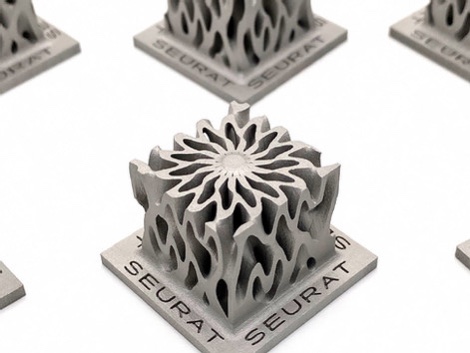
Seurat, a metal additive manufacturing (AM) technology and services startup, has announced an ambitious plan to increase its number of employees from 100 to 1,000 by 2025. In a press release announcing this goal, the well-funded Massachusetts-based firm cited the doubling of its workforce over the past year as a primary point in favor of the feasibility of its expansion plan. It also referenced recent news of the Biden administration's allocation of $7 million from the Department of Energy (DOE) to the Industrial Assessment Center (IAC) program.

This is only the beginning of the expansion of the IAC program planned for this decade. The administration has set aside a total of $550 million more in funding for IAC-related initiatives over the next five years, which includes $400 million in grants for manufacturers who implement projects recommended by IAC or another similar assessor. The IAC program, established in 1976, works via 31 assessment centers — each at a participating U.S. public university — that release no-cost analyses aimed at helping small and medium businesses increase the energy efficiency of their industrial processes.

The $7 million just allocated, in addition to creating IACs at five more universities, will also be used to create workforce training programs to familiarize students, as well as apprentice and existing workers, with new technologies and more efficient practices. With an additional amount of funding 80 times the size of this being devoted to the IAC program over the next five years, it doesn't seem unreasonable to think that it could help add thousands of emerging technologies (including AM) workers to the economy by 2030.

Beyond the potential of that funding for the labor pool in the AM sector as a whole, Seurat is ideally positioned to attract a talented workforce simply from its being headquartered in New England in general, and the Boston area, specifically. Along with the sheer abundance of world-class higher education, it's hard to imagine an environment with a greater concentration of metal AM activity. And, even with that in mind, Seurat stands out owing to its unique Area Print technology, which utilizes a system of two million tiny points of laser light to print much larger areas of a layer simultaneously than is possible with other laser powder bed fusion (LPBF) machines.

Moreover, in its most recent round of funding, led by the investment arm of Xerox, Seurat gained $21 million, bringing the company's total investments at this point to about $80 million. One of the other investors included the holding company that owns Porsche, which is extremely bullish on AM. In this vein, Seurat could be an excellent fit for engineers and technicians hoping to work on the series production scale, and to work towards eventual implementation of mass customization.

Finally, the company is also fairly unique in terms of its position as a developer of its own tech that nonetheless operates as a service bureau instead of as an original equipment manufacturer (OEM). Thus, working at Seurat could allow employees to work on a much wider diversity of products than at a manufacturer/distributor of machines and/or materials.

The company would have to do slightly better than it did the past year, over the next three years, for it to reach its goal. This is obviously lofty, but certainly not impossible, especially given the combination of factors described above. However it turns out, Seurat is astute to focus on the entire industry's need to push for more workforce training, and I would think that focus will pay off in terms of its likelihood to reach 1,000 employees.

Images courtesy of Seurat

The post Seurat Plans to Multiply Metal 3D Printing Workforce Tenfold by 2025 appeared first on 3DPrint.com | The Voice of 3D Printing / Additive Manufacturing.

PEEK 3D Printed Oil and Gas Valves Now Available via 3ntr and Valland

Posted: 07 Jun 2022 06:00 AM PDT

Italian industrial 3D printer manufacturer 3ntr has partnered with custom industrial valve company Valland SpA to 3D print PEEK oil and gas valves. Using 3ntr's Smart Power A4SP 3D printer, Valland has made PEEK components for internal usage and is now transitioning to making PEEK end products for oil and gas companies.

Valves have been a focus area for very few people in the 3D printing set. However, given their vast numbers and the high degree of differentiation of custom valve designs, the sector is ripe for additive manufacturing (AM). Many valves are unique, low-volume, or are now out of production. At the same time, valve companies, national oil companies, or private oil majors have to warehouse a large number of these components, tying up capital. If a particular valve can’t be found or made quickly, the costs can be very high in the oil business. These factors contribute to making an ever stronger, and perhaps surprising, case for metal and polymer valves made with 3D printing.

Particolare stampat0 in 3D da 3nter
PEEK, and other similar materials in the PAEK family, is very strong and chemically resistant. Its stiffness, low weight, and inherent flame retardancy makes well suited to oil and gas. The PAEK family of materials are already widely used in oil and gas for seals and valves manufactured with conventional manufacturing techniques. PEEK, therefore, is not as exotic to an oil and gas company as it may be to many fields.
However, PEEK is notoriously difficult to process with AM. Often, poorly printed parts can turn to a rather expensive glass-like brown structure that has none of the strength that you need it to have. Problems with temperature control can also lead to the appearance of black specs on parts. It’s a good sign that 3ntr´s printers can process this material well for an industrial client.

¨Since 2020, the company has decided to create an internal department dedicated to Additive Manufacturing, officially established at the beginning of 2022, and to make the definitive leap in quality, it was decided to focus on 3ntr's A4SP. Since the first tests performed, the printer has given extremely positive feedback both in terms of the quality of printing superpolymers such as PEEK, and in terms of precision and repeatability. Having a printer of this level in house has enabled us to definitely accelerate our research and development processes, giving us an important competitive advantage….Also, thanks to the flexibility of 3D printing, we can respond even more punctually and quickly to the special needs of our customers,” said Gianluca Acquistapace, Additive Manufacturing Engineer at Valland.

Valland went from outsourcing its PEEK parts from a service to internal prototype printing to making their own tooling before venturing into 3D printing commercial products. Recently, it got the first order for its PEEK 3D printed valves.
3ntr previously made very well built industrial AM machines with reliability and repeatability in mind. By moving into higher temperature 3D printing, they’ve had to up their game with nozzle temperatures of over 400°C and built plate and build chamber temperatures of around 200°C. This is not enough, however. The company will have had to improve their thermal management in order to coherently print these parts. If 3ntr is successfully able to port its reliability and repeatability to high-temperature materials, then the likes of Roboze, miniFactory, 3DGence, Vshaper and AON3D will have a tough competitor on their hands.
This is good for the industry. I really believe that if you can 3D print high-temperature materials well, then you will automatically make an excellent 3D printer for other materials, as well. So, I applaud any progress in this arena specifically. I also really believe that the oil and gas sector, and the energy sector more broadly, is an exciting area for AM.
Energy components may often be critical. When they’re out of service, unavailable, or fail, the costs are very high. Part libraries in these industries are enormous and they are geographically very spread out. By their very nature, oil and gas installations can be found all over the world, often in places very far away from your nearest city or transport hub. The high cost of part failure and the remoteness of installations also makes the energy industry an extremely good candidate for adopting AM.

The post PEEK 3D Printed Oil and Gas Valves Now Available via 3ntr and Valland appeared first on 3DPrint.com | The Voice of 3D Printing / Additive Manufacturing.

3D Printed Hypercar to Be Distributed by Czinger Vehicles Global Dealer Network

Posted: 07 Jun 2022 05:30 AM PDT

Having raised $160 million just this April, 2022 is the year that Divergent 3D and Czinger Vehicles truly ventured into the public eye. Beginning with the lead up to AMUG 2022, CEO and founder Kevin Czinger has revealed an increasing amount of information about the plans and partners for his unique blend of 3D printing and automation technology. The latest is the establishment of the Czinger Vehicles Global Dealer Network, a group of approved merchants for the sale and service of Czinger Vehicles.

KUKA robots used in DAPS located at the Divergent 3D factory. Image courtesy of Marc Weisberg.

The Divergent Adaptive Production System (DAPS) that powers Czinger Vehicle's manufacturing is an end-to-end workflow that begins with generative design to optimize parts that are then fabricated on 12-laser metal 3D printers from SLM Solutions and assembled by a robotic cell. The first vehicle to be released by Czinger is the 21C, an impressive hypercar made up of numerous 3D printed metal parts that will be rolled out in a lot of over 80 units. The company will then release a luxury coupe and SUV made with Divergent's DAPS workflow.

The Czinger 21C 3D printed hypercar. Image courtesy of @iamted7.

Now, these vehicles will have a network through which they can be delivered and maintained. The first in the group is Czinger Beverly Hills, which was followed by a long list of dealers around the world: Czinger Tokyo (Sky Group), Czinger Greenwich (Miller Motorcars), Czinger Miami (Prestige Imports), Czinger Dallas (Boardwalk Group), Czinger Frankfurt (Doerr Group), Czinger London (H.R. Owen), Czinger Canada (Pfaff Automotive Partners), Czinger San Diego (O’Gara Coach Company), Czinger Los Gatos (Los Gatos Luxury Cars), Czinger Chicago (Mouse Motors), Czinger Barcelona (Spirits of Speed), and Czinger Saudi Arabia.

“We are extremely happy to be working with such a sought-after group of dealerships,” said Czinger Founder and CEO Kevin Czinger. “These are auto groups that have shown time and again through their proven track records that they are in the vanguard of the automotive world. We could not be more pleased to be working with partners that recognize the promise and possibilities that our innovative design and sustainable manufacturing systems bring to the table. We also feel that our partners are positioned in key markets around the world that will strategically grow the brand, while ably servicing a very discerning clientele.”

Czinger Beverly Hills provided the following statement in a press release: “We were thrilled to be the first dealership in the United States to partner with Czinger.  Czinger is re-defining the future of high-performance cars as well as making leaps forward in digital automotive manufacturing.  How can you not love a hypercar inspired by the ‘fastest air breathing manned aircraft?’  We look forward to working with Kevin and Lukas Czinger and their talented team as they pioneer changing the way cars will be designed and manufactured for generations to come. Czinger Beverly Hills will lead the nation in deliveries and create the best experience for Czinger clients.”

Kevin Czinger has said that his firm, Divergent 3D, which produces the vehicles for Czinger Vehicles, has partnerships with eight of the leading original equipment manufacturers in automotive. However, he hasn't revealed which ones. Previously, the company was working with Stellantis's PSA Group. More recently, the CEO posted on social media about a trip to visit Mercedes in Germany. The first official partnership will be revealed this September.

Divergent’s future vehicles. Image courtesy of AMUG/Divergent 3D.

If all goes as planned, DAPS microfactories could do the globe and revolutionize the way auto manufacturing is done. Until then, we will have to wait and see.

The post 3D Printed Hypercar to Be Distributed by Czinger Vehicles Global Dealer Network appeared first on 3DPrint.com | The Voice of 3D Printing / Additive Manufacturing.

3DPOD Episode 108: AM for Space & Defense with Brian Neff, Sintavia Founder and CEO

Posted: 07 Jun 2022 05:00 AM PDT

Sintavia‘s Brian Neff has built a company that uses a fleet of large metal powder bed fusion systems to 3D print some of the most demanding and technically challenging parts that can be made. In the U.S. aerospace and defense markets, Sintavia is already well-known. Outside of that arena, not so much. We talk with Brian about Sintavia’s journey and what the company produces. We talk about the potential of 3D printing for heat exchangers and heat sinks as well as for space. Really interesting episode and we really hope that you enjoy it as well!

The post 3DPOD Episode 108: AM for Space & Defense with Brian Neff, Sintavia Founder and CEO appeared first on 3DPrint.com | The Voice of 3D Printing / Additive Manufacturing.

Tuesday, June 7, 2022

3D Printing Media Network – The Pulse of the AM Industry

3D Printing Media Network – The Pulse of the AM Industry


SSYS 2Y22 Reflection Collection debuted by Stratasys

Posted: 07 Jun 2022 10:33 AM PDT

Stratasys has introduced the SSYS 2Y22 Reflection Collection. The collection was created using the new Stratasys J850 TechStyle 3D printer, curated by Stratasys and made possible through close collaboration with …

The post SSYS 2Y22 Reflection Collection debuted by Stratasys appeared first on 3D Printing Media Network - The Pulse of the AM Industry.

Inkbit ships first Vista AM system to Saint Gobain

Posted: 07 Jun 2022 07:12 AM PDT

The first of its kind Vista production additive manufacturing system from Medford-based Inkbit is now operational at the Saint-Gobain Research Cross-Business R&D Center. The multidisciplinary research site is currently developing …

The post Inkbit ships first Vista AM system to Saint Gobain appeared first on 3D Printing Media Network - The Pulse of the AM Industry.

3dpbm Pulse Podcast, episode 7: a new AM MakerVerse is born

Posted: 07 Jun 2022 06:59 AM PDT

The guest of this 8th episode of the 3dpbm Pulse Podcast is Markus Seibold. For those who don't already know him, Mr. Seibold has led the AM service and production …

The post 3dpbm Pulse Podcast, episode 7: a new AM MakerVerse is born appeared first on 3D Printing Media Network - The Pulse of the AM Industry.

WCAC (water charge air cooler) launched by Conflux Technology

Posted: 07 Jun 2022 03:30 AM PDT

Conflux Technology has used its extensive knowledge in additively manufactured heat exchangers to deliver its first product: a premium, scalable, configurable, ultra-high performing water charge air cooler (WCAC) that outperforms …

The post WCAC (water charge air cooler) launched by Conflux Technology appeared first on 3D Printing Media Network - The Pulse of the AM Industry.

Humabiologics and REGEMAT 3D to provide human-derived biomaterials

Posted: 07 Jun 2022 01:00 AM PDT

Humabiologics, an industry leader in providing human-derived biomaterials for regenerative medicine, and REGEMAT 3D, a company at the forefront of personalized biofabrication solutions, have entered into a non-exclusive distribution agreement, …

The post Humabiologics and REGEMAT 3D to provide human-derived biomaterials appeared first on 3D Printing Media Network - The Pulse of the AM Industry.

Sterling silver qualified on Desktop Metal’s Production System

Posted: 06 Jun 2022 11:58 AM PDT

Desktop Metal has qualified 925 sterling silver for 3D printing on its Production System platform, including both the P-1 and P-50 – offering jewelry and luxury goods manufacturers one of …

The post Sterling silver qualified on Desktop Metal’s Production System appeared first on 3D Printing Media Network - The Pulse of the AM Industry.

TCT Magazine | Additive Manufacturing & 3D Printing Intelligence | News, Interviews, Features | Additive Manufacturing | Product Development Technology

TCT Magazine | Additive Manufacturing & 3D Printing Intelligence | News, Interviews, Features | Additive Manufacturing | Product Development Technology


Desktop Metal qualifies 925 sterling silver as it steps up play in jewellery sector

Posted: 07 Jun 2022 08:14 AM PDT

Desktop Metal has announced the qualification of 925 sterling silver on its P-1 and P-50 Production System machines, as well as collaborations with Formula 3D Corporation & Neoshapes.

This posting includes an audio/video/photo media file: Download Now

AMGTA appoints Sherri Monroe as new Executive Director

Posted: 07 Jun 2022 07:00 AM PDT

The Additive Manufacturer Green Trade Association (AMGTA) has announced Sherri Monroe as its new Executive Director.

This posting includes an audio/video/photo media file: Download Now

3DPrint.com | The Voice of 3D Printing / Additive Manufacturing

3DPrint.com | The Voice of 3D Printing / Additive Manufacturing


3D Printed Human Lung Scaffold Showcased by 3D Systems and United Therapeutics

Posted: 06 Jun 2022 09:04 AM PDT

Ever since 3D Systems (NYSE: DDD) partnered with biotech firm United Therapeutics (Nasdaq: UTHR) in 2017, the duo have focused on printing scaffolds for human lungs. The hope is that ultimately (a few decades from now) they can create a substantial supply of lungs ready to replace transplants. Now, the partners have showcased a fully printed human lung scaffold at this year's CNN-sponsored Life Itself conference.

During the sold-out three-night event in San Diego, United Therapeutics founder and CEO Martine Rothblatt, along with 3D printing pioneer Chuck Hull, explained to attendees during their “What's the Future of Organ Transplantation?” presentation that their 3D-printable lung scaffold designs consisted of a record 44 trillion voxels that lay out 4,000 kilometers of pulmonary capillaries and 200 million alveoli. As a reference, each lung has, on average, around 350 million alveoli.

Commenting on the latest milestone, Rothblatt said that it was exciting to show the public at the event a 3D printed human lung scaffold. Furthermore, the expert confirmed that the 3D printed lung scaffolds are now demonstrating gas exchange in animal models, a vital process whereby oxygen moves from the lungs to the bloodstream, and carbon dioxide passes from the blood to the lungs.

"We are regularly printing lung scaffolds as accurately as driving across the United States and not deviating from a course by more than the width of a human hair. With the continued hard work of dedicated scientists and engineers at United Therapeutics and 3D Systems, we hope to have these personalized, manufactured lungs cleared for human trials in under five years," continued Rothblatt.

According to United Therapeutics, the lung scaffolds developed in partnership with 3D Systems and revealed at the Life Itself event represent the most complex objects ever printed and what Hull describes as "the culmination of our efforts with United Therapeutics." Their work includes not only 3D printed lungs but two additional organs under development, kidneys and livers.

According to Hull, these lung designs can be printed in as little as three weeks using 3D Systems' latest advanced photopolymer-based bioprinting technology. Known as Print to Perfusion, this is a newly developed process that enables 3D printing of high-resolution scaffolds, which can be perfused with living cells to create tissues. The AM platform capable of printing full-size, vascularized, micron-level lung scaffolds is part of the 3D Systems regenerative medicine segment.

Human vasculature model created using Print to Perfusion process.

Human vasculature model created using Print to Perfusion process. Image courtesy of United Therapeutics.

Eventually, scientists at United Therapeutics plan to cellularize these 3D printed scaffolds with a patient's own stem cells to create tolerable, transplantable human lungs that should not require immunosuppression to prevent rejection. Considering that over 1,000 patients in the U.S. alone are waiting for a transplant and more than 150,000 Americans die from lung disease each year, Rothblatt highlighted the importance of working towards the ultimate goal of creating an unlimited supply of transplantable lungs.

In the meantime, United Therapeutics has been keeping busy, following up on its mission to find a cure for pulmonary arterial hypertension and other life-threatening diseases. For example, it has been using a process called ex-vivo lung perfusion (EVLP) – the first FDA-approved method of this kind on the market – to add to the supply of transplantable lungs. The technology enables otherwise discarded lungs, which would be unable to be used in furtherance of their donors' generous intent, to instead be frequently restored to transplantable and hence a life-saving condition.

The key to this method lies in extending the period of assessment and viability for human donor lungs by several hours, resulting in over 230 lives extended to date. Currently, United Therapeutics' centralized EVLP service model is part of a clinical study, which Rothblatt believes will benefit thousands of patients who die "needlessly awaiting transplants."

Dr. Sanjay Gupta and Marc Hodosh.

LIFE ITSELF conference with Dr. Sanjay Gupta and Marc Hodosh. Image courtesy of Life Itself.

The 3D printed human lung scaffold breakthrough was one of several novelties showcased at the Life Itself event, including a so-called "ghost heart," which was built from the scaffolding of a pig and a patient's cells and may soon be ready for transplant into humans; as well as advances in cooking lab-grown chicken, and ways to repair mutated genes.

Overall, the event brought together experts and thinkers across a wide range of disciplines, including research, technology, government, business, and entertainment. Hosted by Dr. Sanjay Gupta, chief medical correspondent for CNN, and Marc Hodosh, entrepreneur and co-creator of TEDMED, the gathering had renowned personalities like Anthony Fauci, Chelsea Clinton, and Norman Lear, along with thought leaders such as Dr. Kizzmekia Corbett, Scott Kelly, Goldie Hawn, and Laurene Powell Jobs, widow of Apple co-founder Steve Jobs, among others.

The post 3D Printed Human Lung Scaffold Showcased by 3D Systems and United Therapeutics appeared first on 3DPrint.com | The Voice of 3D Printing / Additive Manufacturing.